主动控货、压缩产能、改革渠道——洋河正在用一场“刮骨疗伤”为过去的激进买单。代价,比想象中更大。
8月26日晚,洋河股份(002304)发布2026年半年度报告。上半年营业收入105.4亿元,同比下降28.76%;归母净利润26.02亿元,同比下降40.10%。
这已经是洋河连续第二年交出“双降”的半年成绩单。
2025年全年,洋河营收192.11亿元,同比下滑33.47%,归母净利润22.06亿元。把时间轴拉长,从2024年全年288.76亿元的营收高点,到2025年的192亿元,再到2026年上半年仅105亿元——一家头部酒企的体量,正在以每年近百亿的速度“蒸发”。
更令市场不安的是二季度的断崖式表现。单季度营业收入23.55亿元,同比下降36.86%,环比一季度暴跌71.23%;归母净利润仅1.55亿元,同比下降78.04%,环比下降93.66%。扣非净利润更为惨烈——二季度仅2118.33万元。
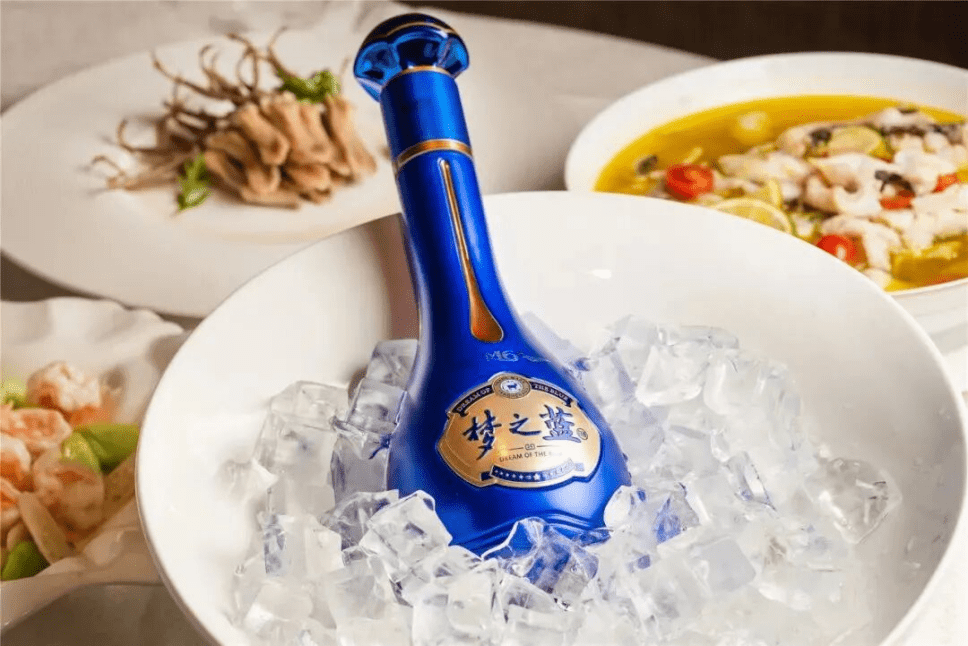
在消费志看来,这份半年报最扎眼的不是利润下滑本身,而是经营质量的全面恶化。经营活动现金流净额3.35亿元,同比下滑45.65%;加权平均净资产收益率从上年同期的8.54%降至5.41%。现金流的萎缩意味着经销商回款意愿低迷,渠道补货情绪趋于谨慎——这是比报表利润下滑更危险的信号。
券商已开始大幅下调预期。国金证券将洋河2026全年归母净利润预测下调至14.3亿元,按照该机构预测测算,下半年公司归母净利润或将转负,该推演为媒体测算,并非券商原文观点。市场的共识是:洋河的底部,还没到。
主动“挤泡沫”的代价有多大?
洋河管理层对这份成绩单的解释并不意外——“主动调整”“渠道去库存”“以短期降速换长期健康”。
从数据上看,调整确有效果。成品酒总库存(含白酒、红酒)从2025年年末的3.15万吨骤降至2026年6月末的1.05万吨,半年消化超2万吨;其中半年报单列白酒产品期末库存为1.01万吨,同比下降38.32%。公司主动压缩产能,上半年成品酒实际产能2.58万吨,较去年同期的3.94万吨收缩35%。
这套“控量保价”的打法,确实守住了价格底线。上半年白酒销量5.37万吨,同比下降31.36%,但吨价同比提升3.7%至19.24万元/吨,形成“量跌价升”。毛利率维持在73.35%的相对高位。

但问题在于——这场“主动调整”的代价,正从企业端向渠道端和资本市场加速传导。
上半年白酒产量仅3.26万吨,同比下降33.32%。产销两端同步收缩超三成——这不是简单的“去库存”,而是整个经营体系的被动收缩。
更令人担忧的是区域市场的表现。省内营收43.91亿元,同比暴跌38.3%——几乎是省外降幅(19.7%)的两倍。大本营市场的坍塌,是洋河最致命的隐忧。江苏省内作为洋河的基本盘,历来贡献四成以上营收,如今以近四成的速度萎缩,说明洋河在自家后院的防线正在失守。有分析指出,这与今世缘等区域竞品的贴身肉搏不无关系。当大本营被蚕食、省外扩张乏力,洋河的“全国化”叙事正在遭遇严峻考验。
改革的“排异反应”
洋河这轮调整的核心,是对运行多年的营销体系进行“推倒式”重构。
2025年股东大会上,公司宣布完成营销架构战区制改革:73个事业部精简至47个,575家分支机构压缩至289家。考核逻辑从“回款导向”彻底转向“开瓶导向”——终端开瓶率、渠道库存周转、批价稳定性成为一线人员的核心考核指标。
这套改革在逻辑上无可挑剔——告别压货式增长,拥抱真实动销。但在执行层面,改革正在经历剧烈的“排异反应”。
上半年省外经销商减少422家,省内减少116家,合计净减少538家。在行业下行周期大规模削减经销商,意味着主动放弃渠道网络和市场份额。虽然公司强调“淘汰低效、聚焦优质”,但在终端动销本就疲软的环境下,缩减经销商数量只会进一步压缩渠道触达能力。
销售费用同比减少22.77%,但销售费用率因收入下滑反而同比上升了1.22个百分点至15.7%。费用绝对值下降、费用率却上升——这是典型的“收缩型衰退”特征,说明规模缩水的速度超过了成本削减的速度。
在消费志看来,洋河正在经历管理学上的“双杀”困境:营收下滑导致规模效应消失,固定成本摊薄能力下降;而为了维持价盘和渠道健康所付出的改革成本,又在短期内进一步侵蚀利润。这是一个经典的“转型陷阱”——越改革、越痛苦;不改革、更痛苦。
行业分化中的位置焦虑
把洋河放在2026年白酒行业的大图景中,位置更加尴尬。
19家白酒上市公司上半年合计营收1794亿元,同比减少97亿元,下降5.1%;合计归母净利润674亿元,同比减少95亿元,下降12.3%。行业整体在收缩,但洋河的降幅——营收28.76%、净利40.10%——显著跑输行业均值。
次高端阵营成为本轮调整的重灾区。泸州老窖上半年营收104.72亿元,同比下降36.35%;洋河营收105.4亿元。两大次高端龙头不约而同开启控货调整。但泸州老窖在营收规模几乎持平的情况下,归母净利润43.39亿元远高于洋河的26.02亿元——盈利能力差距接近一倍。
高端阵营的茅台营收微增1.3%、利润微降1.95%,展现出极强的抗周期属性。区域龙头今世缘上半年营收仅下滑7.12%。洋河夹在中间——向上够不到高端品牌壁垒,向下守不住区域市场基本盘。
更值得关注的是行业景气度的持续恶化。中国酒类流通协会数据显示,2026年二季度酒类市场景气指数(ACI)为43.41,低于50的景气分界线。“强分化、慢出清”正在成为行业主线。
“长期主义”的资本耐心
洋河管理层反复强调“长期主义”“战略定力”。但资本市场的耐心,正在被持续下滑的业绩一点点耗尽。
截至8月28日收盘,洋河股份总市值已跌至589亿元左右,市盈率(TTM)约127倍(为8月28日收盘时点数据,随行情动态变动)。对于一个营收、利润双双大幅下滑的企业来说,这个估值反映的不是成长预期,而是市场对“困境反转”的押注。一旦反转逻辑被证伪,估值崩塌的风险不容忽视。
合同负债(即预收账款)从一季度末的54亿元降至二季度末的43亿元,环比减少11.1亿元。合同负债是酒企的“业绩蓄水池”,它的持续萎缩意味着经销商打款意愿低迷,未来收入转化的动能正在枯竭。
从2024年的288亿元营收、66.73亿元净利润,到2025年的192亿元营收、22.06亿元净利润,再到2026年上半年105亿元营收、26.02亿元净利润(仅为半年数据)——洋河的业绩曲线勾勒出一条陡峭的下行通道。即便考虑主动调整的因素,这样的下滑速度在白酒行业头部企业中也是罕见的。
在消费志看来,洋河正站在一个危险的十字路口。一方面,主动去库存、改革渠道、重塑考核体系,这些动作在长期逻辑上都是正确的;另一方面,改革的“阵痛期”可能比管理层预期的更长,而市场的耐心可能比管理层预期的更短。
白酒行业已经告别了“压货就能增长”的黄金时代。当行业从增量竞争转入存量博弈,谁能率先完成从“渠道驱动”到“消费者驱动”的转型,谁就能在新周期中占得先机。洋河的改革方向没有错,但改革的节奏、力度和代价把控,将决定这家昔日的行业探花能否真正穿越周期。
中秋国庆旺季将至,这或许是洋河证明“调整见效”的第一个窗口期。但如果动销数据依然疲软,市场的耐心恐怕就要到头了。
Proactive supply control, production capacity cuts, and channel reform – Yanghe is paying a heavy price for its past aggressive expansion through a painful restructuring. The cost is greater than expected.
On the evening of August 26, Yanghe Co. (002304) released its 2026 semi-annual report. First-half revenue was RMB 10.54 billion, down 28.76% year-on-year; net profit attributable to shareholders was RMB 2.602 billion, down 40.10% year-on-year.
This marks the second consecutive year that Yanghe has delivered a “double-decline” half-year performance.
In the full year of 2025, Yanghe recorded revenue of RMB 19.211 billion, down 33.47% year-on-year, with net profit attributable to shareholders of RMB 2.206 billion. Extending the timeline: from the 2024 revenue peak of RMB 28.876 billion, to RMB 19.2 billion in 2025, and to just RMB 10.54 billion in the first half of 2026 – the scale of this leading distiller is “evaporating” at a rate of nearly RMB 10 billion per year.
Even more alarming to the market is the precipitous second-quarter performance. Single-quarter revenue was RMB 2.355 billion, down 36.86% year-on-year and plunging 71.23% quarter-on-quarter; net profit attributable to shareholders was only RMB 155 million, down 78.04% year-on-year and 93.66% quarter-on-quarter. Core net profit was even more severe – just RMB 21.1833 million in Q2.
In the view of Xiaofeizhi, the most striking aspect of this semi-annual report is not the profit decline itself, but the comprehensive deterioration in operating quality. Net cash flow from operating activities was RMB 335 million, down 45.65% year-on-year; the weighted average return on equity fell from 8.54% in the same period last year to 5.41%. The contraction in cash flow indicates weak distributor payment willingness and cautious channel replenishment sentiment – a more dangerous signal than falling reported profits.
Brokerages have begun to sharply lower their expectations. Guojin Securities revised its full-year 2026 net profit forecast for Yanghe down to RMB 1.43 billion. Based on this projection, the company’s second-half net profit could turn negative – though this is a media calculation, not the brokerage’s direct wording. The market consensus is that Yanghe’s bottom has not yet been reached.
Part 01: How High Is the Cost of Proactively “Squeezing the Bubble”?
Yanghe management’s explanation for this performance is unsurprising – “proactive adjustment,” “channel destocking,” and “trading short-term slowdown for long-term health.”
The data does show that the adjustment is having an effect. Total finished liquor inventory (including baijiu and wine) plummeted from 31,500 tonnes at the end of 2025 to 10,500 tonnes at the end of June 2026 – digesting over 20,000 tonnes in six months. Among these, baijiu finished goods inventory at the half-year stood at 10,100 tonnes, down 38.32% year-on-year. The company proactively reduced production capacity, with actual finished liquor production in the first half at 25,800 tonnes, a 35% contraction from 39,400 tonnes in the same period last year.
This “volume control and price support” strategy has indeed held the pricing floor. First-half baijiu sales volume was 53,700 tonnes, down 31.36% year-on-year, but the average price per tonne increased 3.7% year-on-year to RMB 192,400, creating a “volume down, price up” dynamic. Gross margin remained relatively high at 73.35%.
But the problem is that the cost of this “proactive adjustment” is spreading from the corporate side to the channel and capital markets.
First-half baijiu production was only 32,600 tonnes, down 33.32% year-on-year. Production and sales both contracted by over one-third – this is not simply “destocking,” but a passive contraction of the entire operating system.
Even more concerning is the performance of regional markets. Provincial revenue was RMB 4.391 billion, down a sharp 38.3% year-on-year – nearly double the decline of the provincial market (19.7%). The collapse of the home market is Yanghe’s most fatal concern. Jiangsu Province, as Yanghe’s core base, has historically contributed over 40% of revenue, and its contraction at nearly 40% signals that Yanghe’s defences in its own backyard are failing. Some analysts point to the intense competition from regional rival Jinshiyuan as a contributing factor. With its home base being eroded and provincial expansion faltering, Yanghe’s “nationalisation” narrative is facing a severe test.
Part 02: The “Rejection Reaction” of Reform
The core of Yanghe’s current adjustment is the radical restructuring of its long-standing marketing system.
At the 2025 shareholder meeting, the company announced the completion of a marketing architecture reform into a theatre-style command structure: 73 business units were streamlined to 47, and 575 branch offices were reduced to 289. The performance evaluation logic has been completely shifted from “collection-oriented” to “bottle-opening-oriented” – terminal opening rates, channel inventory turnover, and wholesale price stability have become the core performance indicators for frontline staff.
This reform is logically impeccable – moving away from inventory-pushing growth toward genuine sell-through. But in execution, the reform is experiencing a severe “rejection reaction.”
In the first half, provincial distributors decreased by 422, and intra-provincial distributors decreased by 116, for a net reduction of 538. Aggressively cutting distributors during an industry downturn means voluntarily surrendering channel networks and market share. Although the company emphasises “eliminating the inefficient and focusing on quality,” in an environment where terminal sell-through is already weak, reducing distributor numbers further compresses channel reach.
Selling expenses fell 22.77% year-on-year, but the selling expense ratio actually rose 1.22 percentage points to 15.7% due to declining revenue. Absolute expense reductions coupled with a rising expense ratio – this is a classic feature of “contractionary recession,” indicating that the pace of scale shrinkage exceeds the pace of cost reduction.
In the view of Xiaofeizhi, Yanghe is experiencing a management “double-bind” dilemma: revenue decline erodes scale economies and the ability to absorb fixed costs; meanwhile, the reform costs incurred to maintain pricing and channel health further erode profits in the short term. This is a classic “transformation trap” – reform brings pain, but not reforming is even more painful.
Part 03: Position Anxiety Amid Industry Divergence
Placing Yanghe within the broader 2026 baijiu industry picture reveals an even more awkward position.
The 19 listed baijiu companies recorded combined first-half revenue of RMB 179.4 billion, down RMB 9.7 billion year-on-year, a decline of 5.1%; combined net profit attributable to shareholders was RMB 67.4 billion, down RMB 9.5 billion, a decline of 12.3%. The industry as a whole is contracting, but Yanghe’s declines – 28.76% in revenue and 40.10% in net profit – significantly underperform the industry average.
The sub-premium tier has been hit hardest in this adjustment. Luzhou Laojiao’s first-half revenue was RMB 10.472 billion, down 36.35% year-on-year; Yanghe’s revenue was RMB 10.54 billion. The two sub-premium leaders have both initiated supply controls. However, with nearly identical revenue scale, Luzhou Laojiao’s net profit attributable to shareholders of RMB 4.339 billion far exceeds Yanghe’s RMB 2.602 billion – a nearly twofold gap in profitability.
At the premium tier, Moutai’s revenue edged up 1.3% and profit declined just 1.95%, demonstrating strong counter-cyclical resilience. Regional leader Jinshiyuan saw first-half revenue decline only 7.12%. Yanghe is caught in the middle – unable to reach the premium brand barrier at the top, and unable to hold its regional market base at the bottom.
More concerning is the continued deterioration of industry sentiment. According to the China Liquor Circulation Association, the second-quarter 2026 Liquor Market Sentiment Index (ACI) stood at 43.41, below the 50 threshold. “Strong divergence and slow clearing” are becoming the industry’s defining themes.
Part 04: Capital’s Patience for “Long-Termism”
Yanghe management has repeatedly emphasised “long-termism” and “strategic resolve.” But capital market patience is being slowly eroded by the sustained performance decline.
As of the close on August 28, Yanghe’s total market capitalisation had fallen to approximately RMB 58.9 billion, with a P/E ratio (TTM) of about 127x (based on August 28 closing data, subject to market fluctuations). For a company with such sharp declines in both revenue and profit, this valuation does not reflect growth expectations, but rather the market’s bet on a “turnaround.” Should that turnaround narrative prove false, the risk of valuation collapse cannot be ignored.
Contract liabilities (i.e., advance receipts) fell from RMB 5.4 billion at the end of Q1 to RMB 4.3 billion at the end of Q2, a sequential decrease of RMB 1.11 billion. Contract liabilities are the “performance reservoir” for liquor companies; their continued contraction signals weak distributor payment willingness and a drying-up of future revenue conversion momentum.
From 2024 revenue of RMB 28.8 billion and net profit of RMB 6.673 billion, to 2025 revenue of RMB 19.2 billion and net profit of RMB 2.206 billion, to 2026 first-half revenue of RMB 10.54 billion and net profit of RMB 2.602 billion (half-year data only) – Yanghe’s performance trajectory traces a steep downward slope. Even accounting for proactive adjustments, such a rate of decline is rare among top-tier baijiu companies.
In the view of Xiaofeizhi, Yanghe stands at a dangerous crossroads. On one hand, proactive destocking, channel reform, and performance system restructuring are all correct moves in the long-term logic. On the other hand, the “pain period” of reform may last longer than management anticipates, and the market’s patience may be shorter than management expects.
The baijiu industry has already left behind the golden era of “growth through inventory loading.” As the industry shifts from incremental growth to stock-market competition, whoever can complete the transformation from “channel-driven” to “consumer-driven” will gain the advantage in the new cycle. Yanghe’s reform direction is not wrong, but the pace, intensity, and cost control of the reform will determine whether this former industry leader can truly transcend the cycle.
The Mid-Autumn Festival and National Day peak season is approaching – this may be Yanghe’s first window to prove that “adjustment is working.” But if sell-through data remains weak, the market’s patience may soon run out.
原创文章版权归本网所有;转载文章归原作者所有。发布者:酒业时报,转载请注明出处:https://www.thewinetimes.com/gongsi/12257