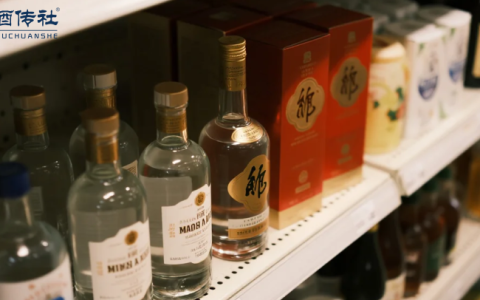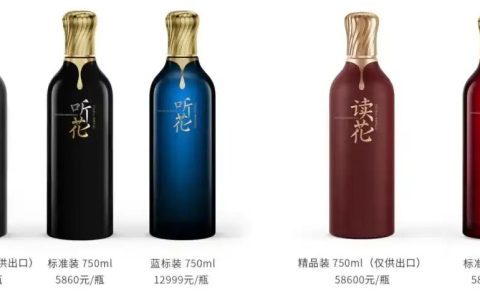

“这是我第一次希望一项新技术发展得慢一点。”比尔·盖茨在12页长文中写道。白酒行业,也到了该“希望慢一点”的时候——13家酒企60款新品扎堆、32万家烟酒店消失、900天才能卖完库存。这场变革的终局,没人知道。
文|酒业时报
“人工智能要么成为有史以来最伟大的均衡器,要么成为最严重的不公之源。”
这是比尔・盖茨在8月26日发表的近6000字长文中,对AI时代最沉重的判断。他警告说,即便在最理想的情况下,向AI时代的过渡也将是“人类历史上最动荡的时期之一”。更值得注意的是另一句话——“这是我第一次希望一项新技术发展得慢一点。”
读完这篇长文,白酒从业人士也在想:白酒行业,是不是也该“希望慢一点”?

2025年(1-10月),据媒体不完全统计,13家白酒企业年内狂推接近60款新品;全年超过32万家烟酒店关门;行业平均存货周转天数飙升至900天。产量连续第九年下滑,从2016年的1358.4万千升跌至354.9万千升,累计降幅近74%。
这不是周期,是结构。而结构的崩塌,从来不会提前打招呼。

“第一次希望慢一点”:新品狂飙与同质化陷阱
盖茨说,AI的发展速度已经超过了他的预期。“从我记事起,我就一直希望创新能够来得更快……但我认为,我们需要时间,为即将到来的社会、政治与经济动荡期做好准备。”
白酒行业的新品开发,也需要时间。

过去,企业推一款新品,从市场调研到酒体设计、包装打样、渠道测试,没有一年半载下不来。经销商接一款新品更是慎之又慎。现在,新品像下饺子一样扎堆上市。
据《每日经济新闻・将进酒》2025年曾进行不完全统计,当年至10月,就有13家白酒企业推出新品接近60款,有的酒企甚至一次性发布十余款。值得注意的是,其中超过30款选择在国庆中秋消费旺季前夕的8月、9月集中发布。
问题是,这些新品真的需要存在吗?

在酒业时报看来,这一轮新品潮和过去有本质区别。过去推新品是“打井”——找到新的价格带、新的消费场景、新的细分市场。现在推新品更像是“撒网”——同一个价位段、同一套话术、同一种包装风格,十几款产品扎堆往里扔。消费者根本分不清谁是谁。这不是创新,是内卷的另一种表现形式。
为什么推这么快?逻辑很简单:老产品价格透明了,经销商没利润。厂家要回款,经销商要差价——换件新衣服重新卖。但所有人都这么想的时候,新衣服很快就成了统一工装。
盖茨担心AI消灭的不是最顶尖的岗位,而是大量帮助年轻人积累经验的初级岗位。白酒行业的新品狂飙,消灭的也不是创新能力,而是真正需要时间和耐心打磨的产品差异化。当新品不再稀缺,“新品战略”就失去了战略意义。

“永久消失的岗位”:终端大撤退与渠道逻辑重构
盖茨在文章中花大量篇幅讨论就业问题。
他指出,许多岗位将永久消失,初级和中级岗位面临最大风险。“AI可以替代思考本身,”盖茨警告说,法律、客户服务、软件和制造业等行业将在十年内感受到冲击。
更关键的是——“当AI能够产出零差错的工作时,它将能够独立运作,无需人工检查,而企业将有充分的经济动机放手让它去做。”
烟酒店正在经历类似的“永久消失”。
自20世纪80年代末开放酒水专卖权后,成千上万的烟酒店构成白酒流通系统的“毛细血管”。
现在,这条“毛细血管”正在大面积坏死。据中国烟酒流通协会调研测算,2025年全年,全国烟酒店数量同比减少约19%,一年约32万家门店退出市场。折算下来,每天大约有900家门店关门倒闭。拉长到五年维度看,累计退出超过130万家。

三股力量同时挤压。
第一股来自上游——越来越多的企业开始做C端,跳过终端直接面对消费者。六家头部白酒上市公司直销收入占比从上一年的30%提升至33.43%,有酒企直销渠道占比甚至首次超过了经销渠道。
第二股来自平台——京东、美团持续加码酒业即时零售,“半小时达”成为城市白酒消费新常态。
第三股来自成本——房租涨、人工涨、客流降。
在酒业时报看来,终端消失最可怕的不是网点减少,而是行业与消费者之间“触点”的单一化。社区烟酒店不只是一个卖酒的地方——它是街坊邻居的“信息站”,是熟人社会的“信任节点”。一个消费者在烟酒店里被推荐了一瓶酒,和在电商平台被算法推荐了一瓶酒,背后的决策逻辑完全不同。
更值得警惕的是:一个烟酒店退出某个产品体系,往往意味着在整个白酒行业退出。它没有能力转型做别的品牌,也没有资源开辟新渠道。关店就是彻底离场。这套沿用了三十年的深度分销体系,正在快速失效。
盖茨说,AI消灭的岗位大概率不会随经济周期回转。烟酒店的消失,大概率也不会。

“作恶的门槛被降低”:内卷加速与信息壁垒消失
盖茨警告的第二个主要风险是:AI正在降低“作恶的门槛”。
“AI意味着即使是技能非常有限的犯罪分子也能针对各个层面的受害者发起攻击。”AI驱动的诈骗、深度伪造和监控,将是普通人感受最深的危害。网络安全、生物技术等领域,过去只有专业机构才能做的事,如今普通人借助AI也可能触及。
白酒行业的竞争内卷,门槛也在被快速降低。如今AI不仅用来整理竞品情报,也被广泛用于酒企产品命名、文案包装、消费者舆情研判,行业信息透明化进一步提速。
过去,企业之间竞争靠信息差——派市场人员去终端蹲点、找经销商侧面了解、分析竞品的财报和渠道政策。这是技术活,也是资源活。
现在,信息几乎透明。AI可以快速整理公开数据,经销商之间的信息交换比以往任何时候都便捷。想了解竞品的新品规划和渠道策略,可能只需要几个电话、几条微信。厂家之间的战略透明度前所未有地高,门槛前所未有的低。
当信息壁垒消失,竞争就只剩下价格战。
2025年,白酒行业价格倒挂全面蔓延。中国酒业协会数据显示,60%的企业面临价格倒挂,其中800—1500元价格带倒挂尤为严重。全国白酒批发价格持续承压,飞天茅台渠道一批价一度跌破1499元。
内卷的终点,是所有人都赚不到钱。
在酒业时报看来,当信息差不再是护城河,白酒行业的竞争必须从“信息战”转向“价值战”——比谁更懂消费者,比谁的产品更有差异化,比谁的品牌更有温度。在同质化的泥潭里,价格是唯一的武器;在差异化的赛道上,价格只是其中一个变量。

“批判性思维岌岌可危”:厂商关系从“同盟”到“博弈”
盖茨还提出了一个容易被忽略的风险:AI可能削弱人类的批判性思维能力
。“对人类来说,现在失去批判性思维能力将是最糟糕的时刻,”他写道,“在这个深度伪造和错误信息可以为你量身定制的时代,辨别真伪的能力已成为一项必不可少的生活技能。”聊天机器人具有成瘾性,能提供一种毫无摩擦的陪伴,这可能让人不再努力发展社交技能。
白酒行业的厂商关系,也在失去“批判性思维”。
过去,厂商之间是“商量”的关系——经销商有市场判断,有区域经验,有独立意见。厂家尊重经销商的判断,经销商执行厂家的战略,这是一种双向的、需要批判性思维的博弈关系。
现在呢?企业喊着“归零”再创业,谈起了“命运共同体”,甚至收回产品经营权,终止与原总经销商合作,将该产品转入厂商一体化模式。
关键词在变。从“商量”到“共识”,从“合作”到“一体”——厂家的潜台词是:你不需要有太多想法,照做就行。

但经销商的现实是:库存压着、现金断着、团队养着。
中国酒业协会《2025中国白酒市场中期研究报告》显示,2025年上半年,58.1%的经销商表示库存增加,超过一半存在价格倒挂问题,超过40%的零售商面临现金流压力。
行业走访中,有头部白酒品牌经销商反馈,2025年预计亏损3000多万元,为从业13年最大亏损。部分茅台经销商反馈“卖酒赚不到钱了”,另一个更直接——“已经没有利润了,还怕失去经销权吗?”
厂家让多打款、多压货,市场根本不卖。听话等于慢性自杀,不听话可能立马出局。
在酒业时报看来,经销商不会消失,但“搬运工型”经销商正在被淘汰。未来还能活下来的经销商,必须从“差价商”变成“服务商”——从只管收货发货,到深度参与消费者运营、品牌推广、场景营销。这个转型很痛苦,但没有第二条路。

“恶性循环”:一边减产一边扩产
盖茨描述了一个“恶性循环”:企业会利用AI与机器人削减成本、压低产品价格,行业竞争会加速这一技术普及,迫使竞争对手跟进效仿。
白酒行业也有自己的“恶性循环”。
白酒产量在2016年达到1358.4万千升的峰值后,连续九年下滑,到2025年只剩354.9万千升。但与此同时,多家上市酒企在逆势扩产。2025年,A股多家上市白酒企业营业收入同比下滑,净利润普遍出现双位数下降,但过半数上市酒企却在推进产能扩建或技改。2025年末,19家上市白酒公司存货总额达到1858.02亿元,同比增长近11%。行业平均存货周转天数飙升至900天,同比增长10%。

一边产量九连跌,一边产能还在扩。一边库存高得吓人,一边新品还在狂推。这套左手踩刹车、右手踩油门的打法,还能跑多远?
在酒业时报看来,这恰恰说明白酒行业正处于“旧逻辑失效、新逻辑未立”的过渡期。旧逻辑是“渠道为王、铺货制胜”——产能就是话语权。新逻辑是什么?没人说得清。于是大家一边减产应对现实,一边扩产赌未来,两头下注。

行业需要一点“生态缓冲区”
面对汹涌而来的AI浪潮,盖茨没有只泼冷水,也拿出了“解药”。
他提议设立“人类保留”岗位,把某些需要温度与情感的工作明确留给人类。“我喜欢‘人类保留区’这个说法,因为它想到自然保护区,那些我们本可以盖楼修路,但选择不去这么做的地方,因为代价实在太大了。”
他举例说,机器人完全可以告知患者罹患不治之症的噩耗,但“它不应该这么做”。照顾老年病患的医护人员也是需要留给人类的工作——“他们给予我父亲的照护中,有些东西是无可替代的,是任何机器人都无法也不应该做的。”
白酒行业,同样需要属于人的生态缓冲区。
不是所有的增长都要靠新品堆砌,不是所有的渠道都要被“优化”掉,不是所有的经销商都要被“听话化”。一个健康的生态系统,需要保留多元的生态位——大企业有大企业的活法,小终端有小终端的价值,经销商有经销商的不可替代性。
盖茨说,各国政府需要用比应对“9・11”更彻底的思路来正视AI。白酒行业也需要用比应对上一轮调整更彻底的思路,来正视这场变革。
盖茨对AI的警告,归根结底是一句话:新技术出现,不光要关心好处,还要关心代价。
白酒行业的新品竞赛、终端消失、经销商压缩、内卷加剧,每一件事单独看都有其“合理性”——企业要活下去,要增长,要应对竞争。
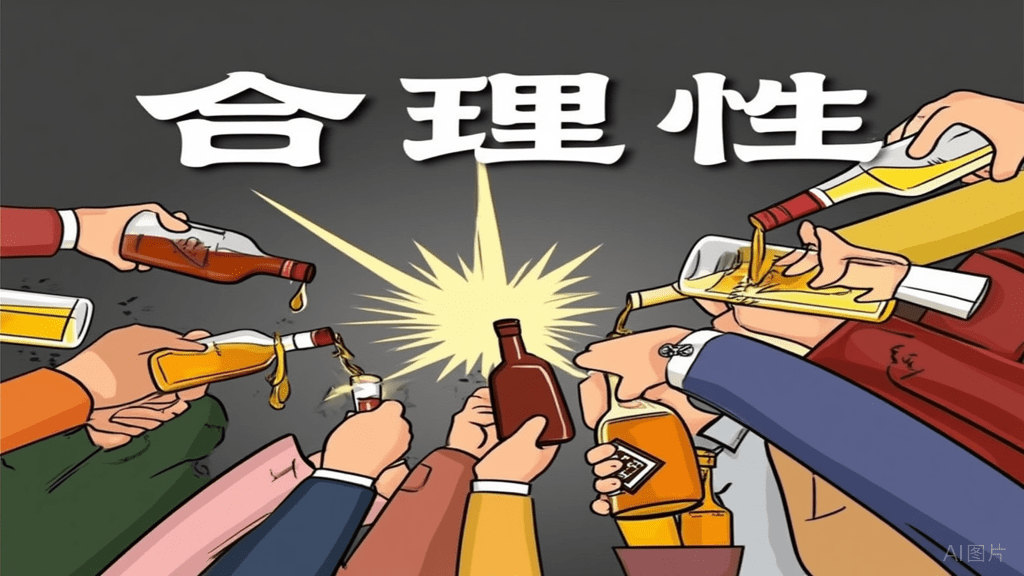
但当这些“合理性”叠加在一起,可能把整个行业推向谁都没准备好的结果。
据21家A+H股白酒上市公司2025年年报汇总,20家营收下滑,19家净利润下滑,18家营收与净利双降。892家规上企业销售收入同比下降7.5%,利润同比下降13.1%。
2013年的调整,行业用三四年时间完成了从政务消费到商务消费、大众消费的切换。但这一次,切换的不仅是消费场景,是整个产业逻辑——从渠道驱动到用户驱动、从规模导向到价值导向、从铺货思维到体验思维。
这个切换,没那么快完成。
技术不会自动站在普通人这边。市场也不会自动站在弱者这边。但一个行业如果只剩下强者,这个行业也就没什么意思了。
当所有玩家都在用同一种逻辑卷向同一个方向,行业的韧性就在消失。而韧性,才是穿越周期的真正底牌。
“This is the first time I’ve hoped a new technology would develop a little more slowly.” Bill Gates wrote this in a 12-page essay. The baijiu industry has also reached a point where it should “hope for a slower pace” – 13 distillers launching 60 new products in a crowded market, 320,000 tobacco and liquor stores disappearing, and 900 days needed to clear inventory. No one knows the final outcome of this transformation.
Text | JiuYe Times
“AI will either be the greatest equaliser in history, or the most profound source of inequality.”
This is Bill Gates’s most sobering judgement on the AI era, expressed in a nearly 6,000-word essay published on August 26. He warned that even in the best-case scenario, the transition to the AI era would be “one of the most turbulent periods in human history.” Even more noteworthy was another line: “This is the first time I’ve hoped a new technology would develop a little more slowly.”
After reading this essay, those in the baijiu industry might also wonder: shouldn’t the baijiu industry also “hope for a slower pace”?
In 2025 (January–October), according to incomplete media statistics, 13 baijiu companies aggressively launched nearly 60 new products within the year; more than 320,000 tobacco and liquor stores closed nationwide; and the industry’s average inventory turnover days surged to 900. Production declined for the ninth consecutive year, plummeting from 13.584 million kilolitres in 2016 to 3.549 million kilolitres – a cumulative drop of nearly 74%.
This is not a cycle – it is a structural shift. And structural collapse never announces itself in advance.
“The First Time I Hope for Slower”: New Product Frenzy and the Trap of Homogenisation
Gates said that the pace of AI development has exceeded his expectations. “For as long as I can remember, I have always wanted innovation to come faster… But I think we need time to prepare for the coming social, political, and economic upheaval.”
The baijiu industry’s new product development also needs time.
In the past, launching a new product – from market research to liquor body design, packaging sampling, and channel testing – took at least a year. Distributors were even more cautious about taking on a new product. Now, new products are hitting the market like dumplings in a pot.
According to incomplete statistics from National Business Daily · Jinjiangjiu in 2025, by October of that year, 13 baijiu companies had launched nearly 60 new products, with some even releasing more than a dozen at once. Notably, more than 30 of these were concentrated in August and September, just ahead of the National Day and Mid-Autumn Festival peak consumption season.
The question is: do all these new products really need to exist?
In the view of JiuYe Times, this wave of new product launches is fundamentally different from the past. In the past, launching a new product was like “digging a well” – finding a new price band, a new consumption scenario, or a new market segment. Now, it’s more like “casting a net” – dozens of products thrown into the same price band, with the same messaging and the same packaging style. Consumers can’t tell them apart. This is not innovation – it is another form of involution.
Why the rush? The logic is simple: old products have become price-transparent, leaving distributors with no profit margin. Manufacturers need payment, distributors need margins – so they dress up old products in new packaging and sell them again. But when everyone thinks the same way, the new packaging quickly becomes standard-issue workwear.
Gates worries that AI will not eliminate the most sophisticated jobs, but rather the entry-level positions that help young people gain experience. The baijiu industry’s new product frenzy likewise does not eliminate innovation – it eliminates the product differentiation that genuinely requires time and patience to develop. When new products are no longer scarce, the “new product strategy” loses its strategic meaning.
“Permanently Disappearing Jobs”: Terminal Retreat and the Restructuring of Channel Logic
Gates devoted substantial space to discussing employment.
He noted that many jobs will permanently disappear, with junior and mid-level positions facing the greatest risk. “AI can replace thinking itself,” Gates warned, with industries such as law, customer service, software, and manufacturing feeling the impact within a decade.
Even more critically – “When AI can produce zero-error work, it will be able to operate independently without human oversight, and companies will have every economic incentive to let it do so.”
Tobacco and liquor stores are undergoing a similar “permanent disappearance.”
Since the liberalisation of liquor retail licences in the late 1980s, hundreds of thousands of tobacco and liquor stores have formed the “capillaries” of the baijiu distribution system.
Now, these capillaries are dying off en masse. According to research by the China Tobacco and Liquor Circulation Association, in 2025, the number of tobacco and liquor stores nationwide decreased by approximately 19% year-on-year, with about 320,000 stores exiting the market over the year. That translates to roughly 900 store closures per day. Over a five-year horizon, cumulative exits exceed 1.3 million.
Three forces are squeezing simultaneously.
The first comes from upstream – more and more companies are going directly to the C-end, bypassing retail terminals to reach consumers directly. The direct sales share of six leading listed baijiu companies rose from 30% to 33.43% year-on-year, with one distiller’s direct channel exceeding its traditional distribution channel for the first time.
The second comes from platforms – JD.com and Meituan continue to expand their instant delivery services for liquor, with “30-minute delivery” becoming the new norm for urban liquor consumption.
The third comes from costs – rising rents, rising labour costs, and falling foot traffic.
In the view of JiuYe Times, the most frightening aspect of terminal disappearance is not the reduction in outlets, but the homogenisation of “touchpoints” between the industry and consumers. A community tobacco and liquor store is not just a place that sells alcohol – it is a “information hub” for neighbours, a “trust node” in a community network of acquaintances. The decision-making logic behind a consumer being recommended a bottle of liquor at a corner store versus being algorithmically recommended one on an e-commerce platform is fundamentally different.
More concerning is the fact that when a tobacco and liquor store exits a specific product system, it often exits the entire baijiu industry. It lacks the capability to transition to another brand or the resources to open new channels. Closing the store means a complete exit. This distribution system, which has been in place for thirty years, is rapidly becoming obsolete.
Gates said that the jobs AI eliminates will likely not return with the economic cycle. The disappearance of tobacco and liquor stores will likely not return either.
“The Threshold for Doing Harm Is Being Lowered”: Accelerated Involution and the Erosion of Information Barriers
The second major risk Gates warned about is that AI is lowering the “threshold for doing harm.”
“AI means that even criminals with very limited skills can attack victims at every level.” AI-driven fraud, deepfakes, and surveillance will be the most tangible harms for ordinary people. In fields like cybersecurity and biotechnology, things that only specialised institutions could do in the past can now be done by ordinary people with the help of AI.
In the baijiu industry, the threshold for competitive involution is also being rapidly lowered. AI is now used not only to collate competitive intelligence, but also widely for product naming, copywriting, and consumer sentiment analysis – accelerating industry-wide information transparency.
In the past, competition between companies relied on information asymmetry – sending market researchers to monitor terminals, gathering intelligence through distributors, and analysing competitors’ financials and channel policies. This was both a technical and resource-intensive task.
Now, information is almost transparent. AI can quickly organise publicly available data, and information exchange between distributors is easier than ever. Finding out about a competitor’s new product plans and channel strategies might take just a few phone calls or WeChat messages. Strategic transparency between manufacturers is higher than ever, and the barriers are lower than ever.
When information barriers disappear, competition reduces to price wars.
In 2025, price inversions spread across the baijiu industry. China Alcoholic Drinks Association data showed that 60% of enterprises faced price inversions, with the RMB 800–1,500 price band being particularly hard hit. National wholesale baijiu prices came under sustained pressure, with Feitian Moutai’s wholesale price briefly breaking below RMB 1,499.
The end point of involution is that no one makes money.
In the view of JiuYe Times, when information asymmetry is no longer a moat, competition in the baijiu industry must shift from “information warfare” to “value warfare” – competing on who understands consumers better, who offers more differentiated products, and whose brand has more warmth. In the quagmire of homogenisation, price is the only weapon; on a differentiated track, price is just one variable.
“Critical Thinking Is at Risk”: The Manufacturer-Distributor Relationship from “Alliance” to “Game”
Gates also raised a risk that is easily overlooked: AI may weaken human critical thinking skills. “For humanity, losing critical thinking ability at this moment would be the worst possible timing,” he wrote. “In an era where deepfakes and misinformation can be tailored to you, the ability to distinguish truth from falsehood has become an essential life skill.” Chatbots are addictive and can provide frictionless companionship, potentially discouraging people from developing social skills.
The baijiu industry’s manufacturer-distributor relationship is also losing its “critical thinking.”
In the past, the relationship was one of “consultation” – distributors had market judgment, regional experience, and independent opinions. Manufacturers respected distributors’ judgment, and distributors executed manufacturers’ strategies. This was a two-way game that required critical thinking.
Now? Companies talk about “starting from zero” and “communities of shared destiny,” even reclaiming product operation rights, terminating cooperation with original general distributors, and moving products into an integrated manufacturer-distributor model.
The keywords are changing. From “consultation” to “consensus,” from “cooperation” to “integration” – the manufacturer’s subtext is: you don’t need to have too many ideas, just follow instructions.
But the distributor’s reality is: inventory piling up, cash flow drying up, and teams to maintain.
The China Alcoholic Drinks Association’s 2025 China Baijiu Market Mid-Year Report showed that in the first half of 2025, 58.1% of distributors reported increasing inventory, more than half faced price inversions, and over 40% of retailers struggled with cash flow pressure.
During industry site visits, one distributor of a leading baijiu brand reported an expected loss of over RMB 30 million in 2025 – the largest loss in 13 years in the business. Some Moutai distributors commented that “selling liquor no longer makes money,” and even more bluntly – “there’s no profit left, so what’s there to fear about losing distribution rights?”
When manufacturers demand more payments and more inventory, but the market simply won’t move, compliance is slow suicide, while non-compliance risks immediate elimination.
In the view of JiuYe Times, distributors will not disappear, but “transporter-type” distributors are being eliminated. To survive in the future, distributors must transform from “margin traders” to “service providers” – moving beyond simply receiving and shipping goods to deeply engaging in consumer operations, brand promotion, and scenario marketing. This transformation is painful, but there is no alternative.
“Vicious Cycle”: Cutting Production While Expanding Capacity
Gates described a “vicious cycle”: companies will use AI and robotics to cut costs and lower product prices, and industry competition will accelerate the adoption of these technologies, forcing competitors to follow suit.
The baijiu industry has its own “vicious cycle.”
Baijiu production peaked at 13.584 million kilolitres in 2016, then declined for nine consecutive years, falling to just 3.549 million kilolitres by 2025. But at the same time, multiple listed distillers have been expanding capacity against the trend. In 2025, while revenue for many A-share listed baijiu companies declined year-on-year and net profits generally fell by double digits, more than half of listed distillers were advancing capacity expansion or technical upgrades. At the end of 2025, total inventory of 19 listed baijiu companies reached RMB 185.802 billion, up nearly 11% year-on-year. The industry’s average inventory turnover days surged to 900, up 10% year-on-year.
Production has fallen for nine consecutive years, yet capacity is still expanding. Inventory is alarmingly high, yet new products are still being launched aggressively. How much further can this strategy of pressing the brake with one foot and the accelerator with the other go?
In the view of JiuYe Times, this precisely illustrates that the baijiu industry is in a transitional period where “old logic has failed, and new logic has not yet been established.” The old logic was “channel is king, distribution wins” – capacity meant bargaining power. What is the new logic? No one can say for certain. So companies are cutting production to cope with reality while expanding capacity to bet on the future – hedging on both sides.
The Industry Needs a “Buffer Zone”
Facing the surging tide of AI, Gates did not simply pour cold water – he also offered a “prescription.”
He proposed the establishment of “human retention” roles, explicitly reserving certain jobs that require warmth and human connection for people. “I like the term ‘human preserves’ because it evokes nature preserves – places where we could build roads or structures but choose not to, because the cost is simply too high.”
He cited examples: a robot could inform a patient that they have an incurable disease, but “it should not do that.” Caregiving for elderly patients is also work that should be left to humans – “there is something irreplaceable in the care they gave my father, something no robot could or should do.”
The baijiu industry also needs its own “human buffer zone.”
Not all growth must be built on piles of new products; not all channels need to be “optimised” away; not all distributors need to be made “compliant.” A healthy ecosystem requires diverse ecological niches – large companies have their ways of operating, small terminals have their value, and distributors have their irreplaceability.
Gates said governments need to approach AI with even more thorough thinking than they did after 9/11. The baijiu industry similarly needs to approach this transformation with more thorough thinking than it did in previous adjustments.
Gates’s warning about AI, in essence, comes down to one sentence: when a new technology emerges, we must not only consider its benefits, but also its costs.
The baijiu industry’s new product race, terminal disappearance, distributor compression, and intensifying involution each have their own “rationality” when viewed in isolation – companies need to survive, to grow, to respond to competition.
But when these “rationalities” are stacked together, they may push the entire industry toward an outcome that no one is prepared for.
According to a summary of the 2025 annual reports of 21 A+H listed baijiu companies, 20 saw revenue decline, 19 saw net profit decline, and 18 saw both revenue and net profit decline. Revenue of the 892 above-scale enterprises fell 7.5% year-on-year, and profits fell 13.1%.
During the 2013 adjustment, the industry took three to four years to complete the transition from government consumption to business and mass consumption. But this time, the transition is not just about consumption scenarios – it is about the entire industrial logic: from channel-driven to user-driven, from scale-oriented to value-oriented, from distribution thinking to experience thinking.
This transition will not happen quickly.
Technology does not automatically side with ordinary people. The market does not automatically side with the weak. But if an industry is left with only the strong, it ceases to be interesting.
When all players are using the same logic to compete in the same direction, the industry’s resilience erodes. And resilience is the true trump card for transcending market cycles.
原创文章版权归本网所有;转载文章归原作者所有。发布者:酒业时报,转载请注明出处:https://www.thewinetimes.com/deep/12380