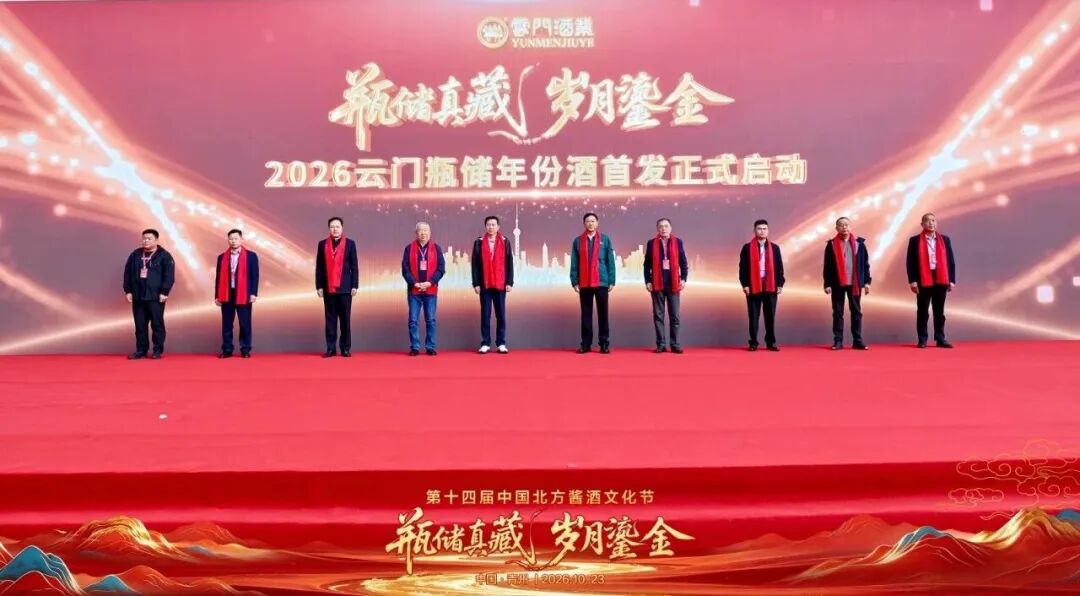
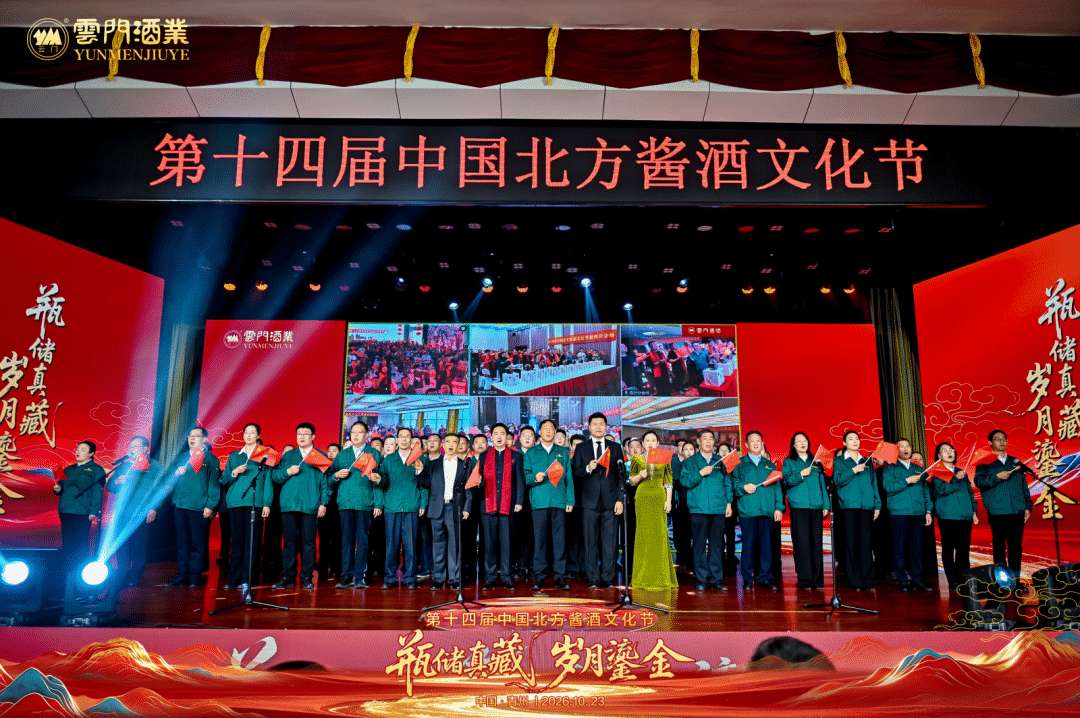
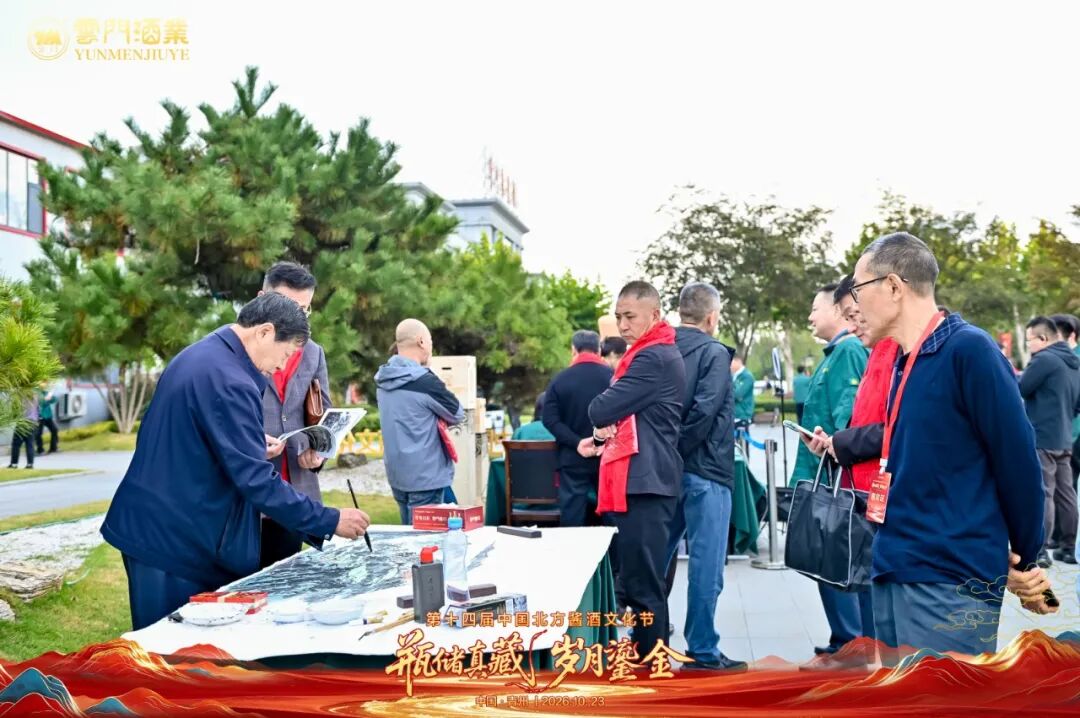
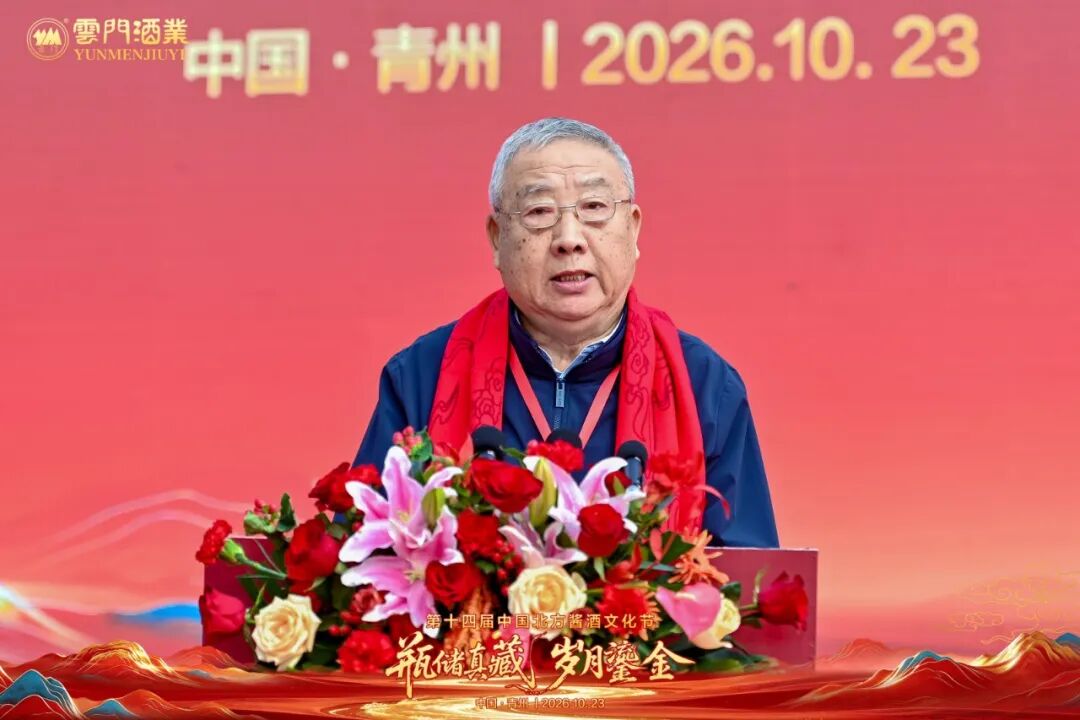
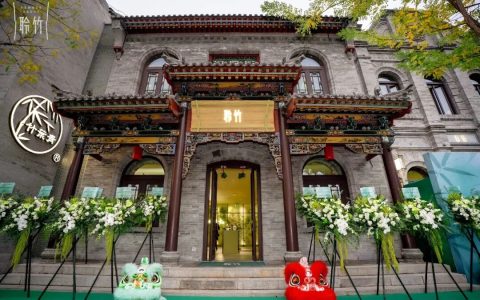
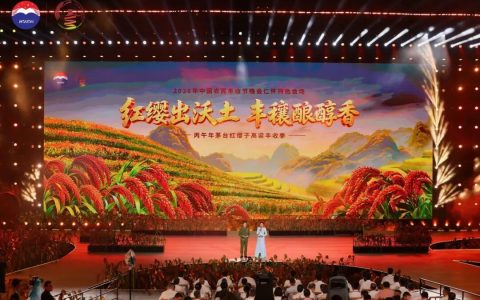
From October 22 to 23, the 14th China Northern Sauce-Aroma Baijiu Culture Festival and the 78th Anniversary Celebration of Yunmen Distillery were held in Qingzhou.
At the launch ceremony on October 23, three things were arranged to be completed on the same day: the Qingzhou Notary Office read out the notarial certificate on site, confirming that from October 2025 to October 2026 Yunmen added 26,000 cases of bottle-stored liquor, bringing total storage to 256,000 cases; the nationwide launch of “2026 Yunmen Bottle-Stored Vintage Liquor”; and the simultaneous launch of normalised dynamic sales of bottle-stored liquor.
Viewed together, these three things carry more information than the 256,000 cases alone.
Notarisation confirms the inventory, the launch introduces the product, and normalised sales open the outlet — on this day, Yunmen’s bottle-storage project completed the switch from “inflow only” to “parallel inflow and outflow.”
In the view of WineTimes.cn, the significance of this switch point is not that Yunmen has stored tens of thousands more cases of finished liquor than others, but that it is beginning to answer a question it could previously avoid: will consumers recognise the time sealed inside the bottle?
The Bottle-Storage Ledger: A Different Accounting Method from Industry Norms
For most liquor companies, finished liquor enters circulation directly after bottling. Flavour changes inside the bottle are treated merely as natural changes during circulation and are not included in planned quality investment.
Yunmen extends liquor aging from jar-stored base liquor to finished liquor that has already been bottled: in 2003 it began early exploration of cave storage for ceramic-bottled liquor; in 2015 it formally institutionalised this model; in 2021 it fully launched a large-scale bottle-storage project; and at the end of 2025, Zone 3 of the bottle-storage ceramic jar warehouse was officially put into use, adding 680,000 cases of finished-liquor storage capacity and 6,000 kilolitres of ceramic jar storage capacity.
The company currently has 50,000 kilolitres of base liquor storage capacity. Bottle storage is an additional finished-product aging capability built on top of base liquor reserves.
The core breakthrough of this model lies not in the scale of storage, but in the relocation of the aging stage.
The time value of traditional sauce-aroma baijiu is largely沉淀 in the base-liquor jar-storage stage. For bottled liquor purchased by consumers, subsequent changes can only be explained unilaterally by the company.
Bottle storage places aging directly at the finished-product stage. The flavour transformation occurring inside the bottle is the very bottle the consumer receives — no longer merely an intermediate link on the production side.
Experimental conclusions from the 4th issue of Liquor-Making Science & Technology in 2021 support this: under the same storage period, sauce-aroma baijiu stored in ceramic bottles shows faster acid-ester conversion and aldehyde condensation than in glass bottles, with better aging effects. Bottle storage brings quality upgrading of the liquor body, not merely making the liquor older by storing it.
The year-by-year notarised data outlines a steady, even scale: as of October 2024, the Qingzhou Notary Office verified 206,626 cases and 3 bottles of bottle-stored liquor; in 2025 the total was updated to 230,000 cases; and in 2026 another 26,000 cases were added, bringing the total to 256,000 cases.
The increment has not shown explosive spikes but has advanced steadily year by year. What this record seeks to prove is not the storage increment of any single year, but that the entire bottle-storage plan has consistently maintained a stable rhythm.
A Place on the Standard-Drafting List
The nationwide launch of “2026 Yunmen Bottle-Stored Vintage Liquor” is the biggest commercial highlight of this event.
But WineTimes.cn is more interested in another fact: the China Alcoholic Drinks Association’s Bottle-Stored Vintage Liquor group standard (T/CBJ 1108-2025), officially implemented on July 20, 2025, explicitly defines bottle-stored vintage liquor as finished liquor that has been bottled into its final sales bottle, has completed no fewer than five years of standardised bottle storage after bottling, and remains well preserved.
Yunmen Distillery is listed as a drafting unit, and Chairman Ji Yingmin is also among the main drafters.
The value of this list is not merely “participating in standard-setting,” but that Yunmen has gained the right to define “bottle-stored vintage liquor.”
The five-year storage threshold directly distinguishes bottle-stored vintage liquor from ordinary aged liquor and cellar-stored liquor. The hard constraint looks only at the actual storage duration after bottling, not the vague weighted-average calculation of base liquor vintages. When a new category concept is not yet fully understood by the public, participating in rule-making and passively obeying rules represent completely different industrial positions. The former defines the boundaries of the category concept; the latter only needs to ensure its own products comply.
In the view of WineTimes.cn, the launch solves “who is first to market and sell,” while drafting solves “what bottle-stored vintage liquor actually is.” Being on the drafting list means Yunmen is no longer merely an executor after the standard takes effect, but has participated from the source in building the category’s discourse system.
For northern sauce-aroma baijiu, more than 70% of enterprises have currently fallen into production suspension. As capacity continues to clear, the China Alcoholic Drinks Association’s 2026 China Baijiu Market Mid-Year Report shows that only 9.1% of enterprises expect sauce-aroma enthusiasm to continue leading other aroma types. The industry has officially entered a new stage of quality reshuffling and value sedimentation.
The two sets of data point to the same trend: the focus of sauce-aroma competition has shifted from competing on production capacity scale to whether quality can be effectively verified.
Over the past decade, sauce-aroma quality has mostly relied on abstract labels such as production region, craft, and vintage, leaving consumers with only the choice of whether to trust them. Bottle storage offers a new path: the aging process occurs inside the finished bottle the consumer ultimately buys, and changes in the liquor body can be verified by opening and tasting.
Yunmen’s transformation of bottle storage into a system that is notarisable, standardisable, and fully traceable essentially gives northern sauce-aroma baijiu a workable quality narrative language. When industry competition shifts from “how big is your capacity” to “can you explain your quality clearly,” whoever first builds a verifiable quality system will obtain the ticket to the next round of competition.
From “Storing” to “Selling”: The True Realisation of Time Assets
The most critical signal from the launch event is not the 256,000 cases, but the “simultaneous launch of normalised dynamic sales of bottle-stored liquor.”
Moving from merely storing liquor to selling it to the market is an essential leap: doing bottle storage on the production side tests a company’s financial strength and warehouse management capability; doing bottle storage on the sales side tests whether consumers are willing to continuously pay a premium for the extra years of aging inside the bottle.
The 2026 JD Supermarket Aged Baijiu Consumption Trend Report, jointly released by JD Supermarket and the China Alcoholic Drinks Association, reveals an important consumer turning point: when choosing aged baijiu, consumers who value “mellow and full-bodied liquor” account for 68%, surpassing “collection and investment” at 64% for the first time and ranking first; aged baijiu consumption scenarios have also gradually expanded from business banquets and high-end collections to self-pleasing scenarios such as family dinners, gatherings with friends, and personal drinking. The consumer base is continuously broadening from niche collectors to a massive general drinking population.
Yunmen’s simultaneous launch of a new 43-degree low-alcohol sauce-aroma product precisely completes the product matrix for smooth, palatable, everyday drinking scenarios.
But WineTimes.cn also points out a variable requiring continuous observation: notarisation can safeguard vintage authenticity, and industry standards can regulate production processes, but the market will ultimately measure whether this time premium is truly worth it. Whether bottle-stored vintage liquor can maintain its premium over the long term depends on whether consumers can clearly distinguish the taste differences between bottle storage and jar storage, and between different storage years, and translate taste recognition into stable repurchases.
Industry research shows that a large amount of aged baijiu remains in circulation links such as collection and gifting, long stuck in a “collect but never drink” state. If this closed loop cannot be broken, product prices will remain highly dependent on investment enthusiasm.
For Yunmen, 256,000 cases represent the confidence accumulated over many years. As consumers open and drink these bottles, this time asset will transform into a sustainable long-term business. The true realisation of time assets will greatly propel the leap in Yunmen’s brand and market value.
What Fourteen Editions of the Culture Festival Have Sedimented: A Trump Card Daring to “Hand in the Paper”
Pulling the view back from 256,000 cases, what is truly impressive about Yunmen’s event is an action that has continued for fourteen years.
Hosting three consecutive China Characteristic Sauce-Aroma Baijiu Theme Summits, four China Northern Sauce-Aroma Baijiu Production Technology Exchange Conferences, and fourteen China Northern Sauce-Aroma Baijiu Culture Festivals — fourteen years of continuous deep cultivation have gradually grown a corporate celebration into a super cultural IP for northern sauce-aroma baijiu.
In an industry keen on chasing trends, persisting with the same thing for fourteen years is itself uncommon; even rarer is that what these fourteen years have sedimented is not a set of repeated rituals, but an increasingly clear and increasingly verifiable “time balance sheet.”
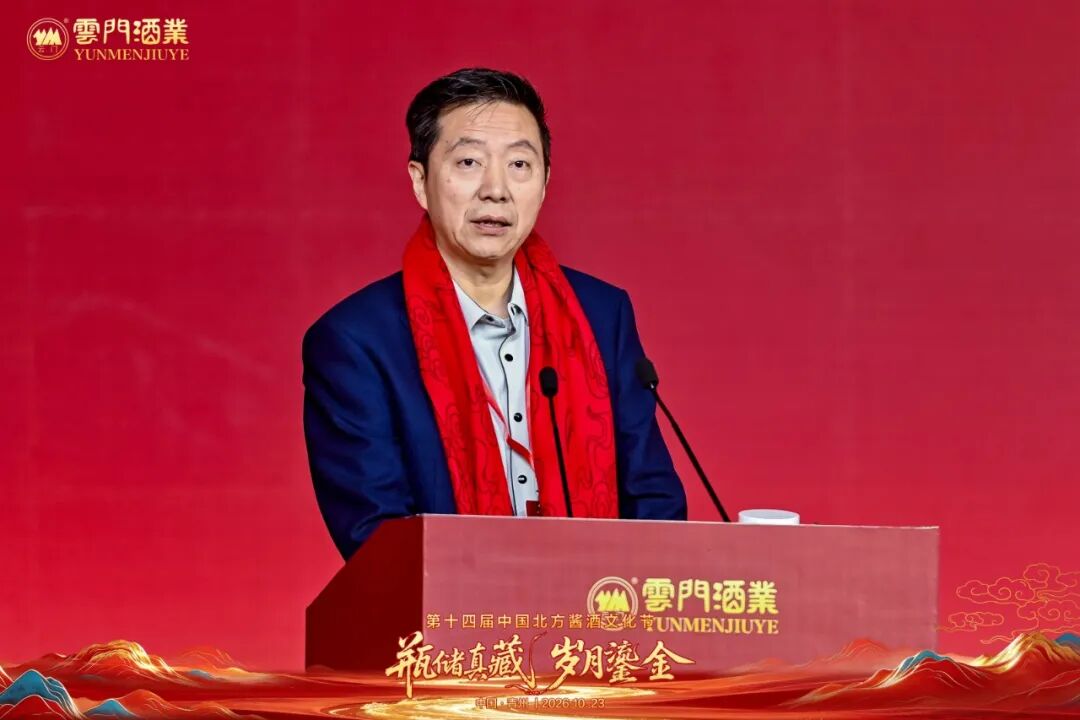
He Yong, Secretary-General of the China Alcoholic Drinks Association, judged in his speech that the liquor industry has entered a new stage where “victory no longer comes from expanding footprint, but from settling down.” Competition is shifting from capacity and scale to time, terroir, and experience.
Ji Yingmin said bottle storage is “a contract of integrity written in the scale of time,” while Li Yongqing said it is a model of “moving from price competition to quality competition.”
The three statements point to the same fact: through more than two decades of bottle-storage accumulation and fourteen editions of continuous investment in the culture festival, Yunmen has turned “time” from a marketing rhetoric into a corporate asset that can be notarised, standardised, and tested by the market.
In the second half of the sauce-aroma industry’s return to quality fundamentals, this is a rare strategic resolve. WineTimes.cn hopes that Yunmen will continue to push this ledger from the company’s “asset side” to the consumer’s “experience side” — so that the time sealed in 256,000 bottles is not only verified by the notary office, but also tested by every bottle consumers continue to open.