立秋。赤水河畔的红缨子高粱穗浪翻涌。8月7日,2026年中国农民丰收节晚会仁怀特色会场·丙午年茅台红缨子高粱丰收在仁怀市鲁班街道隆堡社区举行。
对普通观众而言,这是一场热闹的丰收庆典。
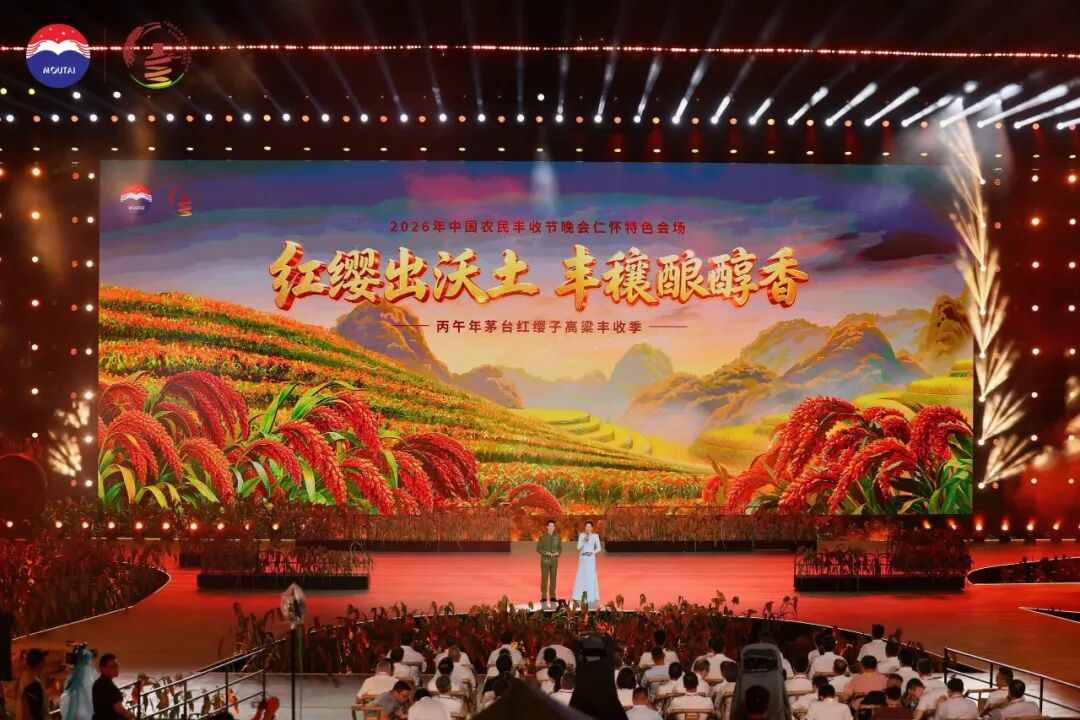
但对酱酒产业而言,这场仪式背后藏着一个更值得追问的命题:为什么酱酒头部企业要反复强调“顺时节而为”?从立秋归仓到重阳下沙,这套时序逻辑到底意味着什么?

酱酒的“日历”是天时
在酒业时报看来,茅台红缨子高粱丰收季最值得解读的,不是仪式本身有多隆重,而是仪式背后的时间逻辑。
整场仪式以二十四响鼓乐对应全年二十四节气时序,并非单纯的舞台设计。
酱酒酿造严格遵循“端午制曲、重阳下沙”的节气节律,季节性生产特征极为鲜明。端午升温高湿的环境,适宜微生物大规模繁育,是制作高温大曲的最佳窗口期;重阳前后气候温润稳定,更适配首轮下沙投料与酒醅发酵。从润粮、蒸粮、堆积、入窖到全年七轮次取酒,酱酒每一道工序都严格顺应天时、随节气推进。
酱酒一年一轮的生产周期,本质是一套依照自然节气编排的专属“农事日历”。
这套入选国家级非物质文化遗产的酿造逻辑,历经上百年行业验证、传承至今。相关学术研究表明,端午时节酿造的高温大曲风味更佳、菌群更优,重阳下沙酿造的基酒品质更突出。这并非传统经验主义,而是微生物学视角下适配赤水河谷风土的天时选择。
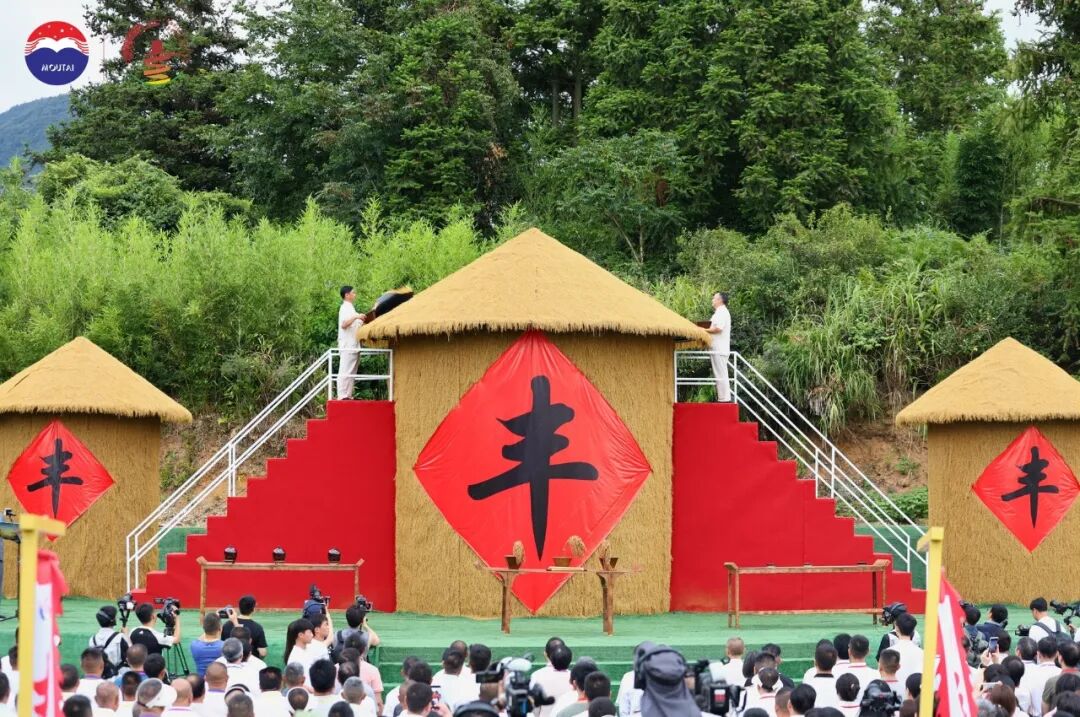
归仓仪式落地立秋节点,正是高粱成熟、颗粒归仓的关键窗口期。
时隔三个月的重阳时节,本年度收储的新粮将正式进入茅台生产车间,开启新一轮酿造周期。从立秋归仓储粮、重阳下沙启酿,再到次年完整取酒,赤水河畔的酱酒产业运行着一套远比标准化工业系统更为精密的自然时序节律。
这是工业化生产与传统农耕最奇妙的耦合。
绝大多数消费品行业追求“去季节化”,力求全年稳产、摆脱原料与气候波动影响;酱酒产业则主动拥抱节气变化、顺应自然规律,将气候的不确定性转化为独一无二的品质壁垒。顺时节而为,无关文艺情怀,是酱酒不可替代的工艺刚需。

一粒红缨子背后的酱酒“品质主权”史
仁怀高粱种植系统获评农业文化遗产与本次归仓仪式同期落地,并非偶然。
2026年1月12日,农业农村部公示第八批中国重要农业文化遗产候选项目名单,贵州仁怀高粱种植系统成功入选。8月7日丰收季活动期间,这一成果同步集中对外推介。一粒酿酒原料对应的种植体系跻身国家级农业文化遗产储备名录,在整个白酒行业都极为少见。
为什么是红缨子?
答案藏在其独有的品种特质与长期产业积淀中。
红缨子高粱粒小皮厚、支链淀粉含量高、单宁比例适中,能够完美支撑酱酒“九次蒸煮、八次发酵、七次取酒”的超长复杂工艺。截至目前,红缨子系列高粱已在全国十多个省(区、市)累计推广种植3000万亩以上,创造农业总产值超750亿元,带动农户850万人次增收超100亿元。
更关键的是茅台在原料端的长期战略性投入。

据公开报道,茅台已累计投入超18亿元用于有机高粱基地建设和全周期农户帮扶,年均投入超2亿元,为农户免费提供种子、有机肥等核心生产物资。2025年当年,茅台高粱采购及全链条扶持总投入超20亿元。三组口径不同的数据,共同印证一个核心逻辑:茅台始终将上游原料基地视作企业发展的战略资源长期深耕。
酱酒产业最深的护城河不在酿造车间,而在田间地头。
当绝大多数酒企还在为原料价格波动、品质参差焦虑时,茅台用二十余年深耕,将红缨子高粱从一粒普通种子,打磨成行业无法复制的品质壁垒。
自2001年布局有机高粱基地以来,茅台有机认证面积达100万亩,常年稳定种植60余万亩,覆盖72个乡镇、482个村,惠及11万余户农户。高粱收购保护价稳步上涨,持续稳固农户收益。
这背后,是一套覆盖种质研发、技术培训、物资保障、保价收购、数字化溯源的全周期产业协同体系。

粮农站上C位,但“谁来种地”是产区的真问题
归仓仪式上有一个极具温度的产业细节值得深挖:16位基层种植户获评“匠心梁农”,深耕高粱种植数十年的薛开华荣获“红缨之星”称号。丰收晚会现场,这些扎根田间的普通劳动者站上舞台中央,收获专属荣光。
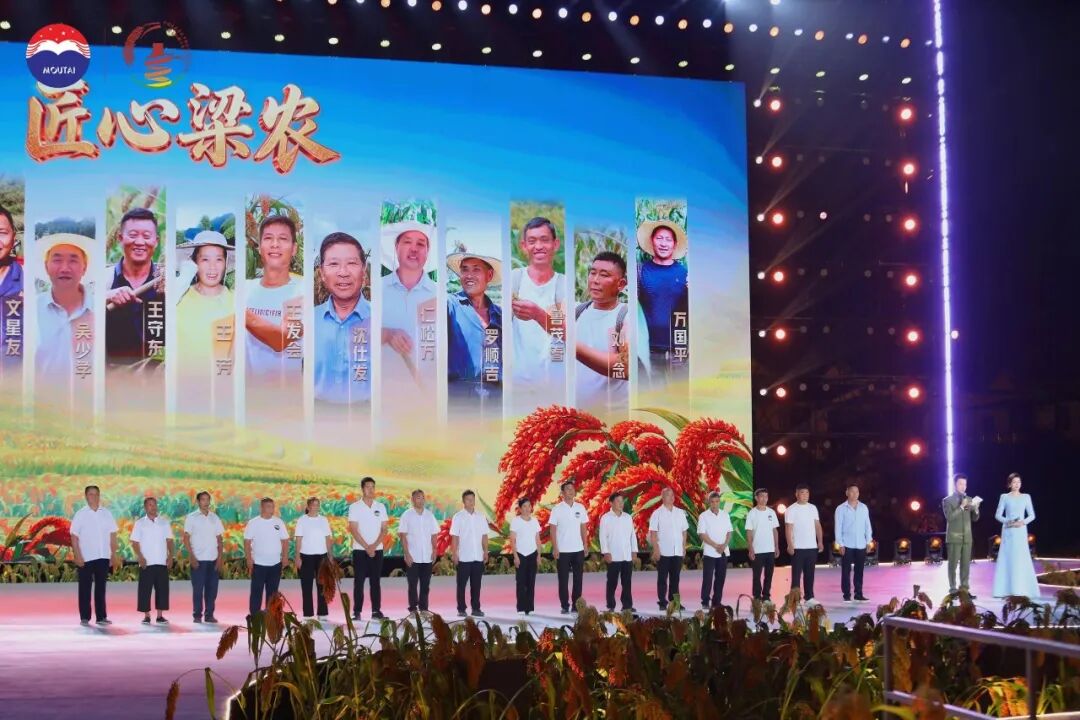
将粮农推至聚光灯下,是最动人的品牌人文叙事。但温情礼赞之外,整个赤水河谷酱酒产区,始终面临着一个现实考题:未来谁来坚守高粱种植、稳住产业原料根基?
这是产区共性发展焦虑。劳动力老龄化、种植收益博弈、土地流转成本攀升、有机种植高标准约束,任意一项变量失衡,都可能动摇酱酒产业的原料底盘。
茅台给出的解法,是搭建一套长效闭环的“利益共同体”机制。
茅台将有机高粱基地定义为酿造“第一车间”,推行“四统一”标准化种植模式,持续培育新型种植人才。
据《贵州日报》公开信息,茅台年均开展“新农人”培训超1.2万人次。依托28个现代化收储中心,将农户交粮半径压缩至15公里以内,极大降低种植与售粮成本。2025年全链条投入落地后,有效带动农户户均增收约1.5万元。
正如茅台集团党委书记、董事长陈华所言,茅台真正实现了“让小高粱长成大产业、撑起大民生”的初心承诺。
在酒业时报看来,这套机制的本质是用制度化的利益分配,解决“种粮不赚钱”的结构性矛盾。当农户种高粱的收益预期稳定且可预期时,“谁来种地”的行业焦虑,便有了确定的产业答案。
酱酒产业的“粮安工程”,本质上是一场从种子到酒杯的“品质主权”保卫战。

归仓仪式最具产业价值的突破,在于其身份属性的持续迭代升级。
2024年,茅台首创“红缨子高粱丰收季”特色文化活动IP;2025年,活动升级为中国农民丰收节晚会仁怀特色会场;2026年,归仓仪式作为核心环节深度融入国家级丰收节平台。
三年时间,一场企业专属农事活动,顺利跃升为赤水河谷产区的公共文化符号。这场迭代升级的底层产业逻辑十分清晰:酱酒行业竞争,早已跳出品牌、产能的单点比拼,正式进入产区文化竞争新阶段。
文化认同的构建,需要可感知、可落地的实体载体。

在酒业时报看来,归仓仪式的深层价值体现在三个维度:
其一,它把“顺时节而为”的抽象工艺原则,转化为二十四响鼓乐、立秋归仓、重阳下沙的可视化时间脉络,让大众直观读懂酱酒顺势而为的底层生产逻辑;
其二,它将“匠心梁农”“红缨之星”推向台前,让产区文化不再是抽象概念,而是一个个坚守土地、深耕种植的真实人物;
其三,它以红缨子种质为核心线索,串联起种质培育、田间种植、归仓庆典、酿造生产、品牌传播的完整链条,让一瓶酱酒背后的产业生态、农耕价值、匠心底蕴可感知、可传播。
这是产区文化竞争时代最稀缺的能力:不是酿造一瓶好酒,而是讲好一瓶酒背后的整套生态故事。
归仓仪式礼成,仓盖缓缓闭合。但赤水河畔的时序叙事才刚刚翻过一页——三个月后,重阳下沙的鼓点将再次响起。
(本文综合公开行业资讯整理,信息/数据来源:贵州广播电视台、新浪财经、酒业家、农业农村部官网、北京商报、贵州日报等)
The Beginning of Autumn. The red tassel sorghum fields along the Chishui River swayed in waves of ripening grain. On August 7, the 2026 China Farmers’ Harvest Festival Gala – Renhuai Special Venue · Bingwu Year Moutai Hongyingzi Sorghum Harvest was held in Longbao Community, Luban Subdistrict, Renhuai City.
For the average audience, this was a lively harvest celebration.
But for the sauce-aroma baijiu industry, behind this ceremony lies a question worth deeper examination: why do leading sauce-aroma distilleries repeatedly emphasise “acting in accordance with the seasons”? From the Autumn Harvest to the Chongyang Xiasha (Double Ninth Festival grain-loading), what exactly does this seasonal logic signify?
Sauce-Aroma Baijiu’s “Calendar” Is the Rhythm of Nature
In the view of JiuYe Times, the most significant aspect of the Moutai Hongyingzi Sorghum Harvest Season is not the grandeur of the ceremony itself, but the temporal logic behind it.
The entire ceremony featured twenty-four drumbeats corresponding to the twenty-four solar terms of the year – this was not merely a stage design choice.
Sauce-aroma baijiu brewing strictly follows the seasonal rhythm of “starter-making during the Dragon Boat Festival, grain-loading during the Double Ninth Festival,” with highly distinct seasonal production characteristics. The rising temperatures and humidity of the Dragon Boat Festival period provide an optimal environment for large-scale microbial propagation, making it the ideal window for producing high-temperature Daqu starter. Around the Double Ninth Festival, the climate becomes temperate and stable, better suited for the initial grain-loading and fermentation. From grain moistening, steaming, stacking, and pit fermentation to the seven rounds of liquor extraction throughout the year, every step of the sauce-aroma process strictly follows the natural rhythm of the seasons.
The one-year production cycle of sauce-aroma baijiu is essentially a dedicated “agricultural calendar” choreographed according to the natural solar terms.
This brewing logic, which has been inscribed as a national-level intangible cultural heritage, has been validated and passed down through generations of industry practice over more than a century. Relevant academic research indicates that high-temperature Daqu made during the Dragon Boat Festival period exhibits superior flavour profiles and microbial communities, while base liquor produced from grain loaded during the Double Ninth Festival demonstrates superior quality. This is not mere traditional empiricism – it is a seasonal choice, from a microbiological perspective, that is optimally adapted to the terroir of the Chishui River valley.
The harvest ceremony, held at the Beginning of Autumn, marks the critical window when the sorghum has ripened and is ready for storage.
Three months later, at the Double Ninth Festival, the newly harvested grain from this year’s crop will officially enter Moutai’s production facilities, commencing a new brewing cycle. From harvest and storage at the Beginning of Autumn to grain-loading at the Double Ninth Festival, and through to the complete extraction of liquor the following year, the sauce-aroma baijiu industry along the Chishui River operates on a set of natural seasonal rhythms far more intricate than any standardised industrial system.
This is the most fascinating coupling of industrialised production and traditional farming.
Most consumer goods industries pursue “de-seasonalisation,” striving for year-round stable production and freedom from the influence of raw materials and climate fluctuations. The sauce-aroma baijiu industry, by contrast, actively embraces seasonal changes and natural laws, transforming climatic variability into an unassailable quality barrier. Acting in accordance with the seasons is not a matter of romantic sentiment – it is an irreplaceable technical imperative of sauce-aroma craftsmanship.
The History of Sauce-Aroma Baijiu’s “Quality Sovereignty” Behind a Single Grain of Hongyingzi Sorghum
The recognition of the Renhuai Sorghum Cultivation System as an agricultural heritage site, coinciding with this year’s harvest ceremony, is no coincidence.
On January 12, 2026, the Ministry of Agriculture and Rural Affairs announced the list of candidate projects for the eighth batch of China’s Important Agricultural Heritage Systems, with the Guizhou Renhuai Sorghum Cultivation System successfully selected. During the harvest season activities on August 7, this achievement was simultaneously promoted to the public. It is exceptionally rare in the entire baijiu industry for a raw material cultivation system to be elevated to the national agricultural heritage reserve list.
Why Hongyingzi?
The answer lies in its unique varietal characteristics and long-term industrial accumulation.
Hongyingzi sorghum has small, thick-skinned grains, high amylopectin content, and moderate tannin levels, making it perfectly suited to support the extraordinarily complex sauce-aroma brewing process of “nine steamings, eight fermentations, and seven rounds of extraction.” To date, the Hongyingzi sorghum series has been promoted and cultivated across more than ten provinces, covering over 30 million mu (2 million hectares) cumulatively, generating agricultural output exceeding RMB 75 billion, and driving more than 8.5 million farming households to increase their incomes by over RMB 10 billion.
Even more critical is Moutai’s long-term strategic investment in raw materials.
According to public reports, Moutai has invested over RMB 1.8 billion cumulatively in organic sorghum base construction and full-cycle farmer support, with annual investment exceeding RMB 200 million, providing farmers with seeds, organic fertiliser, and other core production materials free of charge. In 2025 alone, Moutai’s total investment in sorghum procurement and full-chain support exceeded RMB 2 billion. These three sets of figures, measured differently, all point to the same core logic: Moutai has consistently treated upstream raw material bases as a strategic resource for long-term cultivation.
The deepest moat of the sauce-aroma baijiu industry is not in the brewing workshop – it is in the fields.
While most distilleries remain anxious about raw material price fluctuations and quality inconsistencies, Moutai has spent over two decades refining Hongyingzi sorghum from an ordinary seed into an industry-unassailable quality barrier.
Since first establishing its organic sorghum base in 2001, Moutai’s organic certification area has reached 1 million mu (66,700 hectares), with year-round stable cultivation of over 600,000 mu (40,000 hectares), covering 72 townships, 482 villages, and benefiting more than 110,000 farming households. The protected purchase price for sorghum has steadily risen, consistently securing farmer incomes.
Behind this lies a full-cycle industry collaboration system encompassing varietal research and development, technical training, material support, price-protected procurement, and digital traceability.
Farmers Take Centre Stage, But “Who Will Farm” Remains a Real Question for the Producing Region
One particularly telling industry detail from the harvest ceremony deserves deeper exploration: 16 grassroots growers were honoured as “Craftsmanship Sorghum Farmers,” with Xue Kaihua, who has devoted decades to sorghum cultivation, receiving the “Hongying Star” award. At the harvest gala, these ordinary labourers rooted in the fields stood at the centre of the stage, receiving their moment of well-deserved recognition.
Putting farmers in the spotlight is the most compelling form of brand humanism. But beyond this warm tribute, the entire Chishui River valley sauce-aroma producing region faces a persistent and practical challenge: who will continue to cultivate sorghum and secure the industry’s raw material foundation in the years ahead?
This is a shared development anxiety across the region. The ageing of the agricultural workforce, the tug-of-war over planting profitability, rising land transfer costs, and the stringent requirements of organic cultivation standards – any single variable out of balance could destabilise the raw material foundation of the sauce-aroma industry.
Moutai’s solution is to build a long-term closed-loop “community of shared interests.”
Moutai defines its organic sorghum base as the “first workshop” of brewing, implementing a “four unifications” standardised cultivation model and continuously cultivating new-generation planting talent.
According to public information from Guizhou Daily, Moutai provides an average of over 12,000 “new farmer” training sessions annually. Through 28 modernised collection and storage centres, the distance for farmers to deliver their grain has been reduced to within 15 kilometres, significantly lowering cultivation and sales costs. Following the full-chain investment implementation in 2025, the average household income of participating farming households increased by approximately RMB 15,000.
As Chen Hua, Party Secretary and Chairman of Moutai Group, stated, Moutai has truly fulfilled its original commitment to “growing small sorghum into a major industry and supporting people’s livelihoods.”
In the view of JiuYe Times, the essence of this mechanism is to resolve the structural contradiction of “farming doesn’t pay” through institutionalised profit distribution. When farmers’ income expectations from sorghum cultivation are stable and predictable, the industry anxiety of “who will farm” finds a definitive industrial answer.
The “grain security project” of the sauce-aroma baijiu industry is, in essence, a campaign to defend “quality sovereignty” from seed to glass.
The Cultural Identity Behind the Harvest Ceremony
The most valuable breakthrough of the harvest ceremony lies in the continuous evolution and upgrading of its identity.
In 2024, Moutai pioneered the “Hongyingzi Sorghum Harvest Season” as a signature cultural event IP. In 2025, the event was upgraded to the Renhuai Special Venue of the China Farmers’ Harvest Festival Gala. In 2026, the harvest ceremony was deeply integrated as a core component into the national-level Harvest Festival platform.
In just three years, a company-specific agricultural event has successfully evolved into a public cultural symbol of the Chishui River valley producing region. The underlying logic of this upgrade is clear: competition in the sauce-aroma baijiu industry has long transcended the siloed battlegrounds of branding and production capacity, and has officially entered a new phase of producing-region cultural competition.
The construction of cultural identity requires tangible, perceptible, and implementable physical carriers.
In the view of JiuYe Times, the deeper value of the harvest ceremony manifests across three dimensions:
First, it translates the abstract craftsmanship principle of “acting in accordance with the seasons” into a visual timeline of twenty-four drumbeats, Autumn Harvest storage, and Double Ninth Festival grain-loading – enabling the public to intuitively understand the underlying logic of sauce-aroma production.
Second, it brings the “Craftsmanship Sorghum Farmers” and “Hongying Stars” to the forefront, transforming producing-region culture from an abstract concept into real individuals who have dedicated themselves to the land and to cultivation.
Third, using the Hongyingzi germplasm as the central thread, it connects the complete chain of varietal development, field cultivation, harvest celebration, brewing production, and brand communication – making the industry ecosystem, agricultural value, and craftsmanship heritage behind a bottle of sauce-aroma baijiu tangible and communicable.
This is the most scarce capability in the era of producing-region cultural competition: not just brewing a great bottle of liquor, but telling the complete ecosystem story behind that bottle.
The harvest ceremony concluded, and the granary doors slowly closed. But the seasonal narrative along the Chishui River has only just turned the page – in three months, the drumbeats of the Double Ninth Festival grain-loading will sound once more.
(This article is compiled from publicly available industry information. Sources/Data: Guizhou Radio and Television Station, Sina Finance, Jiuye Jia, Ministry of Agriculture and Rural Affairs official website, Beijing Business Today, Guizhou Daily, etc.)
参考资料:
- 贵州广播电视台,《丙午年茅台红缨子高粱丰收季归仓仪式礼成》,https://gzstv.com/a/80b74378d58b45dcbe95722435f833fc
- 新浪财经,《丰收的力量,因为高粱》,https://finance.sina.cn/2026-08-07/detail-inimnzsi3125815.d.html
- 酒业家,《丙午年茅台红缨子高粱丰收季活动举行,16人获“匠心梁农”、1人获“红缨之星”》,https://jiuyejia.com/news/162885
- 新浪财经,《红缨出沃土,丰穰酿醇香|〈丙午年(2026)茅台红缨子高粱丰收季晚会〉如约而至!》,https://finance.sina.cn/2026-08-07/detail-inimnzsm4724563.d.html
- 贵州广播电视台,《贵州2项入选!第八批中国重要农业文化遗产候选项目名单公示》,https://gzstv.com/a/b2fa043b1f124d02a7bab7f73c5a2b84
- 北京商报,《2024年酱酒实现销售收入2400亿》,https://app.bbtnews.com.cn
- 贵州日报,《茅台构建全周期帮扶体系,年投入超2亿元为高粱农户提供物资》,https://cj.sina.com.cn
原创文章版权归本网所有;转载文章归原作者所有。发布者:酒业时报,转载请注明出处:https://www.thewinetimes.com/gongsi/11855