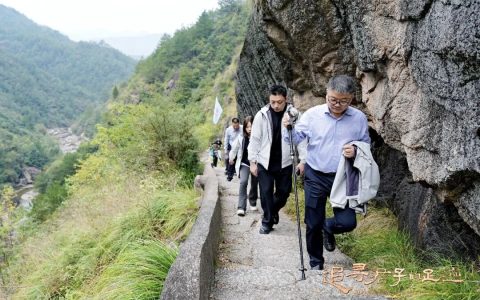
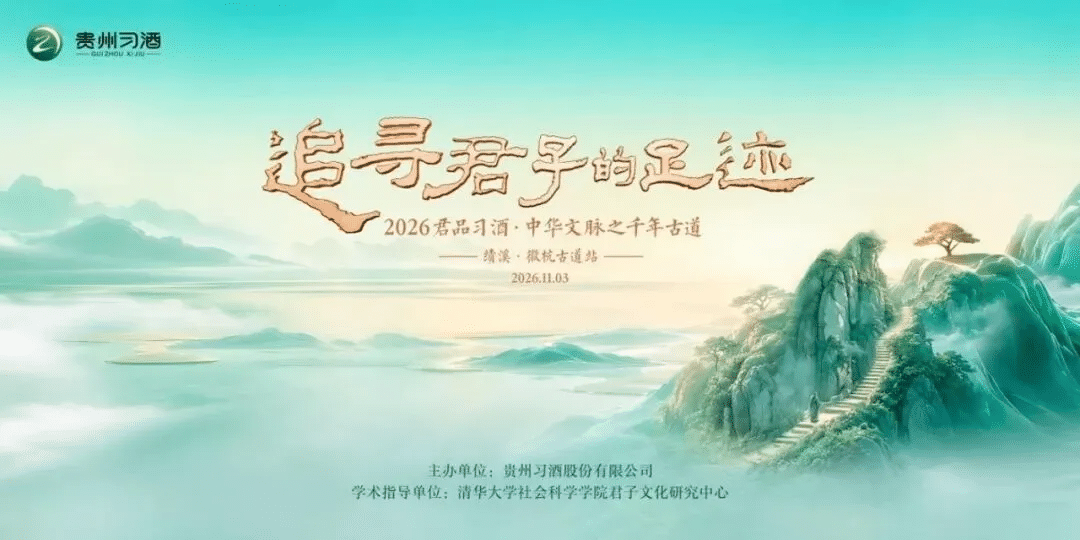
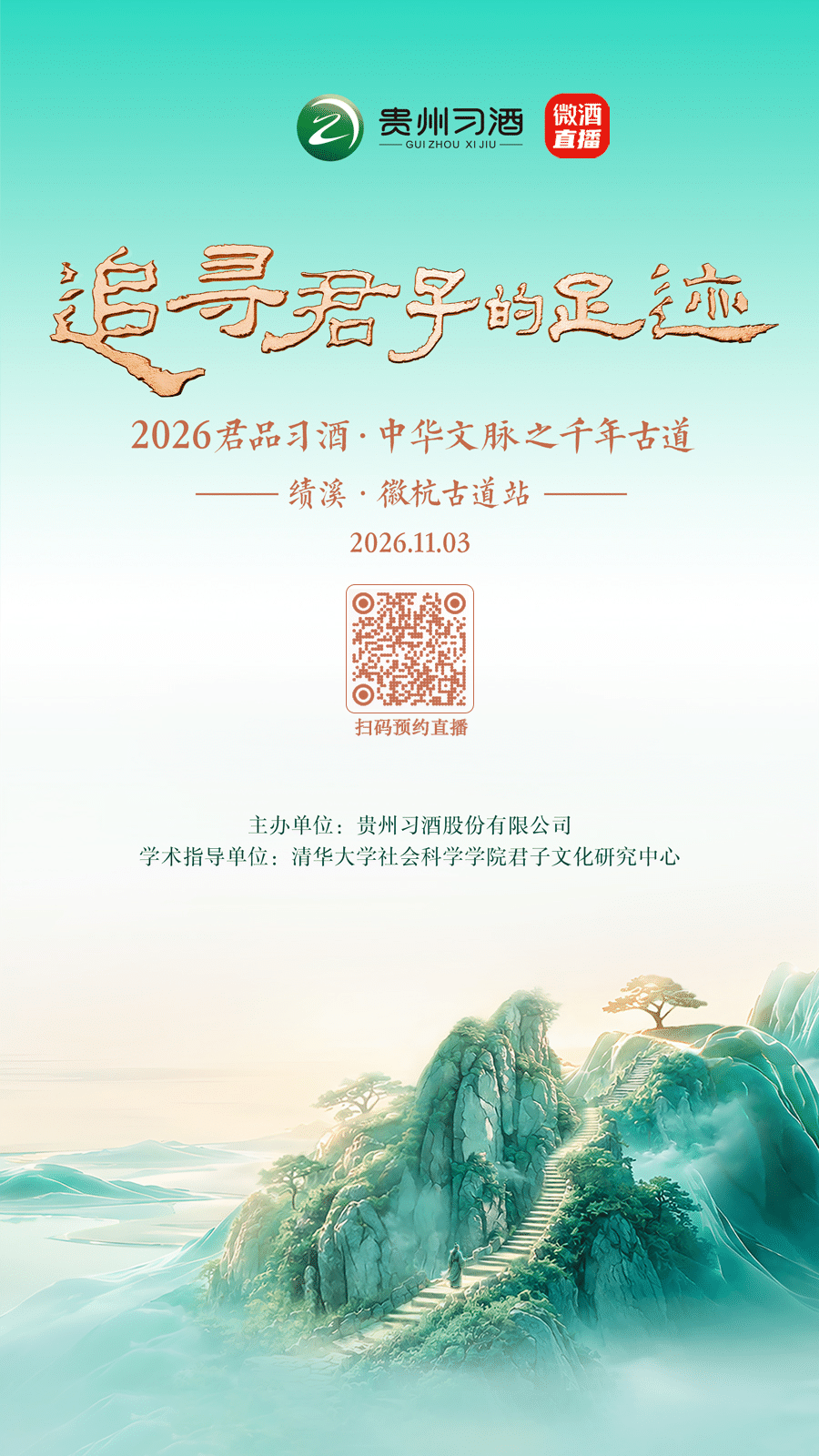
11月3日,“追寻君子的足迹——2026君品习酒・中华文脉之千年古道”第二站落地安徽绩溪,登临徽杭古道。首站剑门蜀道讲的是开拓天险、弘毅担当,第二站则转向另一组关键词:诚信、坚韧、贾而好儒。从凿山开路到以信立商,习酒的文化叙事完成了一次从“勇”到“信”的切换。
但如果只把这看作一次常规的文化IP落地,就错过了它真正有意思的地方。
在酒业时报看来,徽杭古道与习酒的这一次对话,真正的价值不在于复述徽商“诚信为本”的道德故事,而在于它触碰了当下消费品牌一个长期命题:当行业进入平稳调整周期,文化价值与长期信用,正在成为品牌穿越周期的底层支撑。
一条古道的“经济学”
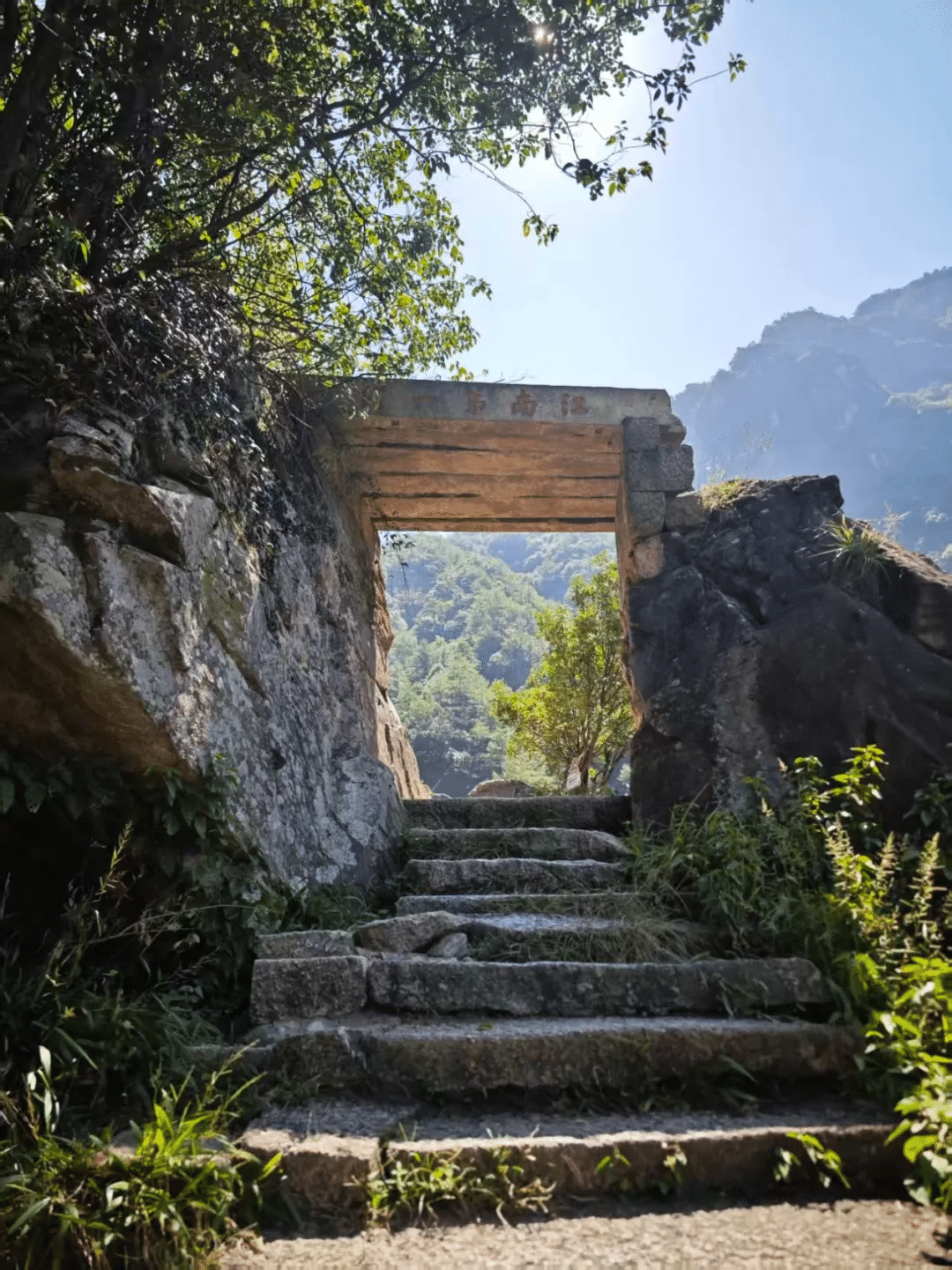
徽杭古道西起绩溪伏岭,东至浙江临安,全程约25公里,是徽商往返徽州与杭州的黄金通道。民谣里唱“前世不修,生在徽州;十三四岁,往外一丢”,道尽了徽州人背井离乡、向外求索的生存底色。
多数叙述到此为止:徽商吃苦耐劳,以“徽骆驼”精神行走天下。但酒业时报更关心一个颇具启发性的问题:在没有现代合同法、没有征信体系、没有规模化品牌广告的明清商场上,一群异乡人凭什么跨越地域阻隔,建立稳定、长久的商业联结?
答案藏在徽商留下的文书里。
上世纪80年代以来,数十万件徽州文书被发掘整理,商业契约文书占据相当大比重。这套被后人看见的商事传统,恰恰揭示了徽商信用体系的内核:诚信从来不是一句道德口号,而是宗族共识、契约精神与长期重复博弈共同搭建的秩序安排。
有研究指出,儒商的诚信伦理能够有效降低交易成本,构建稳定可持续的商业关系。胡雪岩在胡庆余堂悬挂“戒欺”匾额,铭文写就“药业关系性命,尤为万不可欺”,本质就是以长久的自我约束,向顾客传递稳定、可兑现的价值承诺。
这套根植于中华商业文脉的底层逻辑,放到今天的消费市场,依旧有着鲜活的参考意义。
消费周期之下
消费市场的周期波动是常态,品牌竞争的逻辑,也随之持续迭代。行业共识里,白酒赛道已经从渠道拓展驱动,逐步走向消费者价值驱动,品牌竞争的深层,是长期心智与价值共识的共建。

过去很长一段时间里,市场增长更多依托渠道网络的铺展、流通效率的提升。而当消费回归理性,消费者在选择产品时,不再只关注产品本身,也开始看重品牌背后稳定的价值取向、一贯的行事准则。渠道可以拓宽流通的边界,而文化与信用,能够搭建品牌和消费者之间长久的情感纽带。
对习酒而言,持续深耕君品文化,正是这样一场面向长期的布局。文化IP并非短期流量工具,而是属于品牌的慢变量资产:在行业蓄力沉淀的阶段,持续夯实价值根基,以文脉共鸣,陪伴品牌平稳穿越周期。
为什么是徽杭古道,接续剑门蜀道的行走
习酒“追寻君子的足迹”文化行走早已启动。
自2023年启动以来,这一IP先后走过“致敬先贤”“中国书院”“时代精神”三大主题。2026年活动聚焦千年古道,首站剑门蜀道主打开拓天险、弘毅担当,这正是习酒从赤水河畔深山走向全国的精神写照:七十余年前扎根大山,一代代人奋力开拓,从深山之中凿出发展前路。
“凿山开路”的叙事,代表向外开拓的魄力;而徽杭古道,提供了另一重厚重的精神资源。徽商并非依靠天险开辟市场,而是凭借贾而好儒、义利兼顾的信条,在陌生市场搭建起长久稳固的商业信用。绩溪作为古道起点,走出了胡雪岩、胡开文,造就了“无徽不成镇”的商业传奇。
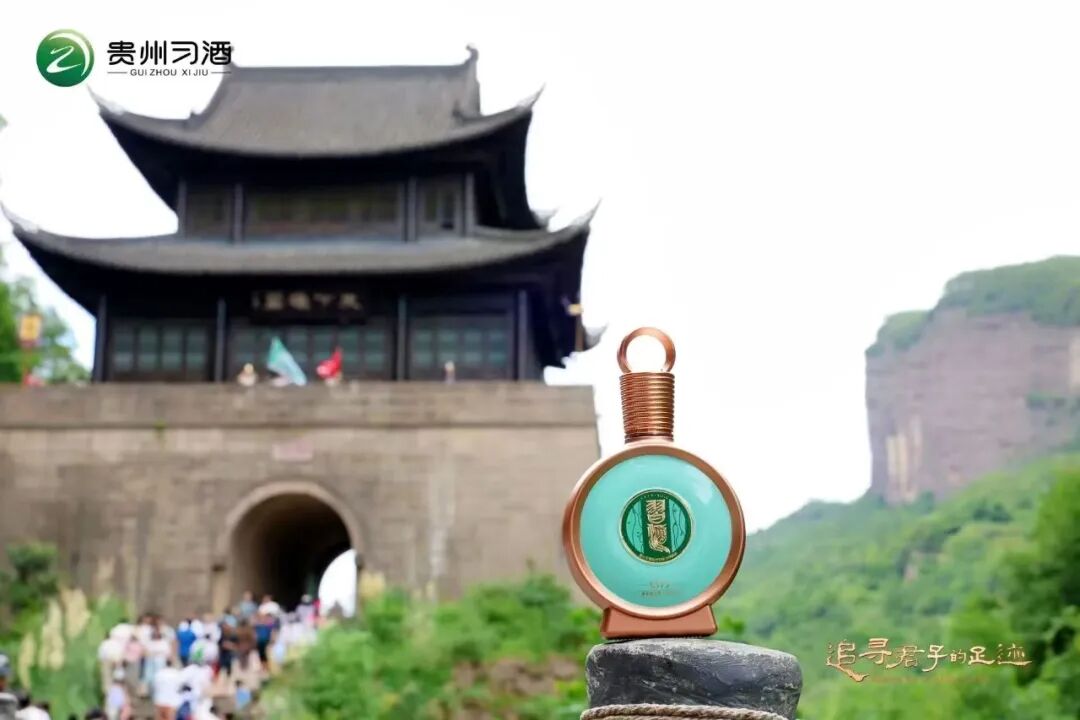
如果说剑门蜀道回答的是品牌何以向外开拓,徽杭古道探寻的,则是品牌走出去之后,依靠何种价值长久扎根人心。前者关乎开拓的韧性,后者关乎生长的根基。
这也能够解释,为何习酒在2026年首次把“追寻君子的足迹”与“君品谈”两大IP深度融合,落地“君品行・君品谈・君品荟”三大板块。实地行走完成身体层面的沉浸式文脉体验,座谈对话完成思想层面的价值对齐,线下荟聚完成伙伴关系的沉淀。
三项动作叠加,目标不是追求单次活动的传播峰值,而是搭建一条可持续传递君品理念、沉淀价值共鸣的长效触点。
君品文化的可置信承诺
习酒君品文化的核心表述是“崇道、务本、敬商、爱人”,行动准则为“知敬畏、懂感恩、行谦让、怀怜悯”。这套价值体系底蕴深厚,而文化真正的生命力,在于落地实践。经销商、合作伙伴与消费者认同一个品牌,源于持续看见品牌把价值主张落到日常经营、伙伴共建与用户服务之中。
徽商的经营经验可以作为很好的参照。
胡庆余堂的“戒欺”牌匾没有挂在临街门面,而是悬在内堂,面向店内掌柜与伙计,约束着“采办务真、修制务精”的日常经营。真正有力量的价值承诺,从来不是单向对外宣讲出来的,而是对内恪守、持续践行,再被外界实实在在看见。

在酒业时报看来,习酒绩溪站最值得关注的落地细节,不在于古道徒步的行程长短,而在于“君品荟”能否搭建厂商、终端、核心消费者之间开放坦诚的对话场景:如何和合作伙伴同向聚力、共建良性生态;如何把资源精准投向消费端,带给消费者更好的体验;如何把单次的文化行走,转化为常态化、可感知的文化服务触点。
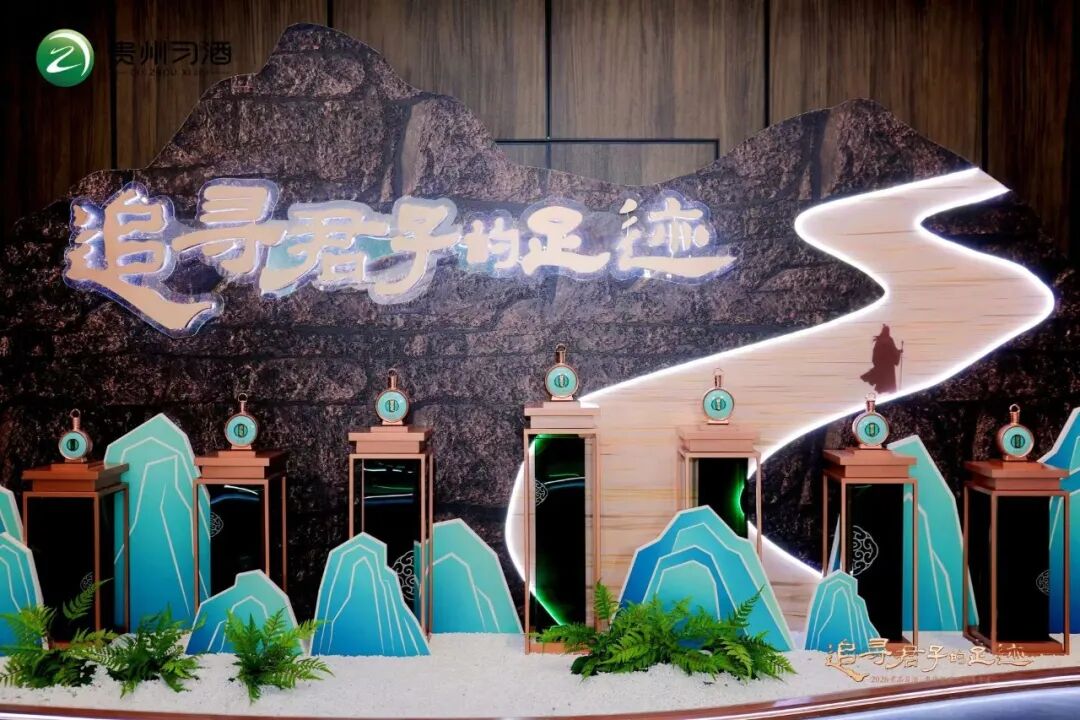
文化IP比拼的下一阶段,不再是谁的故事更宏大,而是谁的价值主张更稳定、更可兑现。
从这个角度来看,徽杭古道这一站的意义,绝不只是习酒在君子文化寻访路上新增一处文化地标。
它更像一次面向行业的价值表达:品牌穿越周期的底气,从来不来自一时的热度,而来自一脉相承、久久为功的文化坚守。渠道驱动的时代,品牌依靠流通网络实现触达;价值驱动的时代,品牌需要依靠稳定的文化内核,持续和消费者、同路伙伴建立深度共鸣。
习酒选择在千年商道之上探寻信义文脉,本身就是一则清晰的信号。在酒业时报看来,守住一条以君子文化为内核、持续兑现价值承诺的路,远比追逐短期流量更为厚重。而这条长期主义的道路,恰恰契合君品二字的本意。
徽商靠“戒欺”两个字走了五百年。你觉得今天一个白酒品牌要让消费者“放心买单”,最该“戒”的是什么?评论区见。
#习酒追寻君子的足迹 #徽杭古道 #君品文化 #白酒深度调整 #信任资产 #酒业时报深度
(本文综合公开行业资讯整理,信息/数据来源:安徽党媒云、光明网、人民网、21世纪经济报道、西部证券研报、贵州习酒官网、维普资讯《科学评价“儒商”及其“诚信”》、新浪财经等。)
On November 3, the second stop of “Tracing the Footsteps of the Junzi – 2026 Junpin Xijiu · Millennia-Old Ancient Trails of Chinese Cultural Heritage” arrived in Jixi, Anhui, climbing the Huihang Ancient Trail. The first stop, the Jianmen Shu Road, spoke of opening up natural barriers and shouldering responsibility with fortitude; the second stop turns to another set of keywords: integrity, resilience, and “doing business with a scholar’s disposition.” From carving roads through mountains to establishing commerce on trust, Xijiu’s cultural narrative has completed a shift from “courage” to “trust.”
But to view this merely as a routine implementation of a cultural IP would be to miss what is truly interesting about it.
In the view of JiuYe Times, the true value of this dialogue between the Huihang Ancient Trail and Xijiu does not lie in retelling the moral tale of Huizhou merchants’ “integrity as the foundation,” but in the fact that it touches upon a long-standing proposition for consumer brands today: as the industry enters a period of steady adjustment, cultural value and long-term credibility are becoming the underlying support for brands to transcend cycles.
PART 01
The “Economics” of an Ancient Trail
What Huizhou Merchants Really Sold Was More Than Salt and Tea
The Huihang Ancient Trail runs from Fuling in Jixi in the west to Lin’an in Zhejiang in the east, spanning approximately 25 kilometres. It was the golden passage for Huizhou merchants travelling between Huizhou and Hangzhou. A folk ballad sings: “If you did not cultivate virtue in a past life, you are born in Huizhou; at thirteen or fourteen, you are tossed out into the world” — a line that captures the essence of Huizhou people leaving their homeland to seek their fortunes.
Most narratives stop here: Huizhou merchants were hardworking and endured hardship, travelling the world with the spirit of the “Huizhou camel.” But JiuYe Times is more interested in a rather thought-provoking question: in the Ming and Qing commercial world — without modern contract law, without a credit reporting system, and without large-scale brand advertising — on what basis did a group of outsiders overcome geographical barriers to build stable, enduring commercial connections?
The answer lies in the documents the Huizhou merchants left behind.
Since the 1980s, hundreds of thousands of Huizhou documents have been unearthed and catalogued, with commercial contract documents accounting for a considerable proportion. This commercial tradition, now visible to later generations, precisely reveals the core of the Huizhou merchants’ credit system: integrity was never merely a moral slogan, but an order arrangement jointly built by clan consensus, contractual spirit, and long-term repeated games.
Research has pointed out that the integrity ethics of Confucian merchants can effectively reduce transaction costs and build stable, sustainable commercial relationships. Hu Xueyan hung a plaque reading “Abstain from Deceit” at the Huqingyutang pharmacy, with the inscription: “The pharmaceutical trade concerns human life; above all, it must never deceive.” This was essentially a long-term self-restraint that conveyed to customers a stable, deliverable value commitment.
This underlying logic, rooted in China’s commercial heritage, still has vivid reference value for today’s consumer market.
PART 02
Beneath Consumption Cycles
Long-Term Brand Value Stems from Stable, Perceivable Value Consensus
Cyclical fluctuations in the consumer market are the norm, and the logic of brand competition continues to iterate accordingly. There is an industry consensus that the baijiu track has gradually shifted from channel-expansion-driven to consumer-value-driven, and that beneath brand competition lies the co-construction of long-term mindshare and value consensus.
For a long period in the past, market growth relied more on the expansion of channel networks and improvements in circulation efficiency. But as consumption returns to rationality, consumers no longer focus solely on the product itself when choosing; they also begin to value the stable value orientation and consistent code of conduct behind a brand. Channels can broaden the boundaries of circulation, while culture and credibility can build enduring emotional bonds between brands and consumers.
For Xijiu, the continuous deep cultivation of Junpin culture is precisely such a long-term-oriented layout. A cultural IP is not a short-term traffic tool, but a slow-variable asset belonging to the brand: during the industry’s accumulation and sedimentation phase, it continuously consolidates the value foundation, using cultural resonance to accompany the brand smoothly through cycles.
PART 03
Why the Huihang Ancient Trail, Continuing the Journey from the Jianmen Shu Road
Xijiu’s “Tracing the Footsteps of the Junzi” cultural journey began long ago.
Since its launch in 2023, this IP has successively covered three major themes: “Saluting the Sages,” “Chinese Academies,” and “The Spirit of the Times.” The 2026 campaign focuses on millennia-old ancient trails. The first stop, the Jianmen Shu Road, emphasised opening up natural barriers and shouldering responsibility with fortitude — precisely a spiritual portrayal of Xijiu’s journey from the deep mountains by the Chishui River to the whole country: rooted in the mountains more than seventy years ago, generations have striven to carve a path of development out of the deep mountains.
The narrative of “carving roads through mountains” represents the boldness of outward expansion; the Huihang Ancient Trail, by contrast, provides another weighty spiritual resource. Huizhou merchants did not rely on natural barriers to open markets, but on the creed of “doing business with a scholar’s disposition and balancing righteousness with profit” to build enduring and solid commercial credit in unfamiliar markets. Jixi, as the starting point of the ancient trail, produced Hu Xueyan and Hu Kaiwen, creating the commercial legend that “no town could thrive without Huizhou merchants.”
If the Jianmen Shu Road answered how a brand expands outward, the Huihang Ancient Trail explores what values a brand relies on to take lasting root in people’s hearts after going out into the world. The former concerns the resilience of expansion; the latter concerns the foundation of growth.
This also explains why Xijiu, in 2026, for the first time deeply integrated the two major IPs of “Tracing the Footsteps of the Junzi” and “Junpin Talk,” implementing three major segments: “Junpin Journey · Junpin Talk · Junpin Gathering.” The on-site walk completes an immersive cultural experience at the physical level; the discussion and dialogue complete value alignment at the intellectual level; and the offline gathering completes the sedimentation of partnerships.
The combination of these three actions is not aimed at pursuing the communication peak of a single event, but at building a long-term touchpoint that can sustainably convey the Junpin philosophy and sediment value resonance.
PART 04
The Credible Commitment of Junpin Culture
From Conceptual Text to Perceivable Practice
The core expression of Xijiu’s Junpin culture is “Revere the Way, Fulfil the Fundamentals, Respect Business, Love People,” with action principles of “Revere, Be Grateful, Practise Humility, Hold Compassion.” This value system has deep foundations, but the true vitality of culture lies in implementation. Distributors, partners, and consumers identify with a brand because they continually see the brand translating its value propositions into daily operations, partner co-construction, and user services.
The business experience of Huizhou merchants serves as an excellent reference.
The “Abstain from Deceit” plaque at Huqingyutang was not hung on the street-facing shopfront, but suspended in the inner hall, facing the shop’s managers and staff, constraining the daily operations of “sourcing authentically and crafting with precision.” A truly powerful value commitment is never preached one-way to the outside world; it is upheld internally, consistently practised, and then genuinely seen by the outside world.
In the view of JiuYe Times, the most noteworthy implementation detail of Xijiu’s Jixi stop is not the length of the ancient trail hike, but whether the “Junpin Gathering” can build an open and candid dialogue scenario among manufacturers, terminals, and core consumers: how to align forces with partners and jointly build a healthy ecosystem; how to precisely direct resources to the consumer end and bring consumers better experiences; and how to transform a single cultural walk into normalised, perceivable cultural service touchpoints.
In the next stage of cultural IP competition, it will no longer be about whose story is grander, but about whose value proposition is more stable and more deliverable.
From this perspective, the significance of the Huihang Ancient Trail stop is by no means merely that Xijiu has added another cultural landmark to its Junzi culture exploration route.
It is more like a value expression directed at the industry: a brand’s confidence to transcend cycles never comes from momentary heat, but from an unbroken cultural commitment sustained over the long term. In the channel-driven era, brands relied on distribution networks to achieve reach; in the value-driven era, brands need to rely on a stable cultural core to continuously build deep resonance with consumers and fellow travellers.
Xijiu’s choice to explore the cultural lineage of trust and righteousness on a millennia-old commercial trail is itself a clear signal. In the view of JiuYe Times, holding fast to a path with Junzi culture at its core and continuously delivering on value commitments is far more substantial than chasing short-term traffic. And this path of long-termism precisely accords with the true meaning of the two characters “Junpin.”
Huizhou merchants travelled five hundred years on the two words “Abstain from Deceit.” What do you think a baijiu brand today should most “abstain from” to make consumers “buy with confidence”? See you in the comments.
#XijiuTracingtheFootstepsoftheJunzi #HuihangAncientTrail #JunpinCulture #BaijiuDeepAdjustment #TrustAssets #JiuYeTimesInDepth
(This article is compiled from publicly available industry information. Sources/Data: Anhui Party Media Cloud, Guangming Online, People’s Daily Online, 21st Century Business Herald, Western Securities research reports, Guizhou Xijiu official website, VIP Information’s “Scientific Evaluation of ‘Confucian Merchants’ and Their ‘Integrity’,” Sina Finance, etc.)
原创文章版权归本网所有;转载文章归原作者所有。发布者:酒业时报,转载请注明出处:https://www.thewinetimes.com/gongsi/13503