曾有人说,年份酒是一个猜谜游戏。
酒厂说这瓶酒“年份”够久,没人知道里面到底有多少滴老酒。标10年的,可能只兑了10%。标30年的,全靠想象力。
但有人不想猜了。
7月22日,金种子在阜阳把谜底印在了瓶子上。当天,金种子酒以一场主题为“以真致远柔而不凡”的发布会,正式推出年份柔和真5年、真7年、真9年三款新品。三款产品分别定价80元、120元、200元,精准锚定80-200元价格区间。
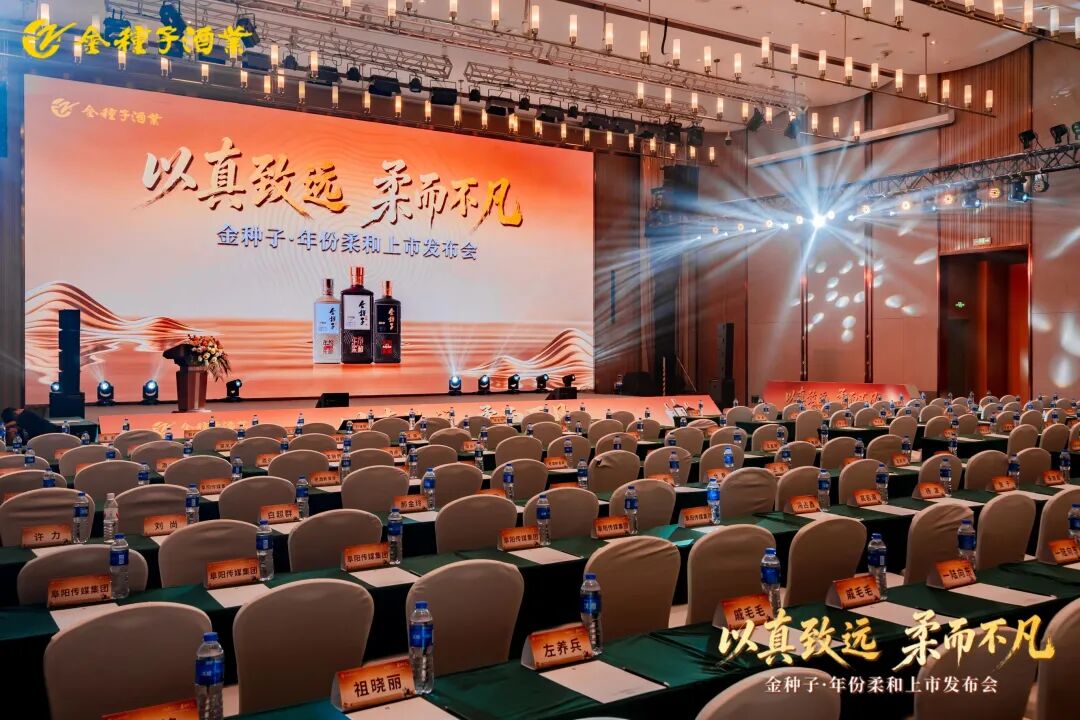
这不是一次常规的新品上新。在白酒行业深度调整进入第三年的节点上,金种子做出了一次极具魄力的战略加码——在前期馥合香高端化布局的基础上,如今再以“真年份+百元价格带”的组合,在大众消费市场开辟出第二条增长曲线。

一个不得不回答的问题:年份酒凭什么让消费者相信?
先抛一个问题:你买的“年份酒”,真的是那个年份吗?
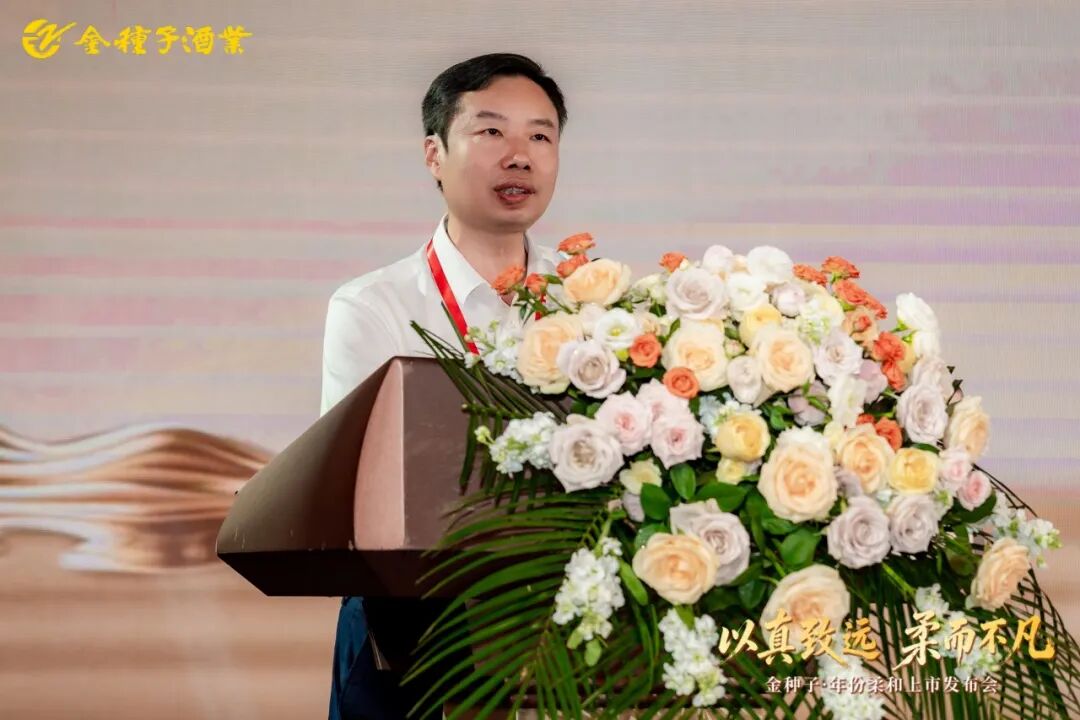
这不是冒犯。中国食品工业协会副会长邵栋梁在本次新品发布会上直言,白酒年份酒行业长期存在“年份虚标”的行业乱象。用几滴老酒勾调大批新酒,就能按老酒的年份来标——这种“数字游戏”在年份酒市场早已是公开的秘密。
消费者不傻。中国陈年白酒市场交易规模已突破1300亿元,但另一面是,超六成消费者对年份酒的真实性存疑。1300亿的市场,建在一个“信任赤字”的基础上——这就是年份酒行业最大的悖论。
金种子选择用最“笨”的办法回应这个悖论:把配方印在瓶子上。
年份柔和系列将主体基酒的年份及比例直接标注于瓶身正面。以核心单品真7年为例:甄选85%-90%的7年基酒,搭配4%-6%的8年基酒与不少于4%的10年老酒。建立完整台账,全流程可溯源。
这不是营销话术,是“验货标准”。
在酒业时报看来,金种子打出的不是一张“年份牌”,而是一张“信任牌”。当大多数品牌还在用模糊的年份概念讲故事时,金种子选择把配方摊在桌面上——这种透明度本身就是这个行业最稀缺的竞争力。
有意思的是,行业的“紧箍咒”也在收紧。2026年1月,《白酒年份酒团体标准》修订,将“标注年份取加权平均酒龄的整数”改为“标注年份应不大于加权平均酒龄的整数”——核心就是从源头“挤水分”。金种子在这个节点将年份配比透明化,不是跟风,是卡位。

百元赛道:白酒寒冬里唯一还在“冒热气”的地方
为什么是百元价格带?这不是拍脑袋的决定。
看一组数据:100元至300元价格带在白酒市场中的占比,从2020年的28%提升至2025年的37%,预计到2028年将达到42%。在安徽市场,300元至500元价格带的竞争压力持续增加,而100元至200元才是大众消费的核心地带。
多家券商一季报研报显示,2026年第一季度,金徽、老白干等区域酒企百元以下产品营收同比增长均超20%,300元以上中高端产品普遍营收承压。
这不是周期性的波动,是结构性的位移。
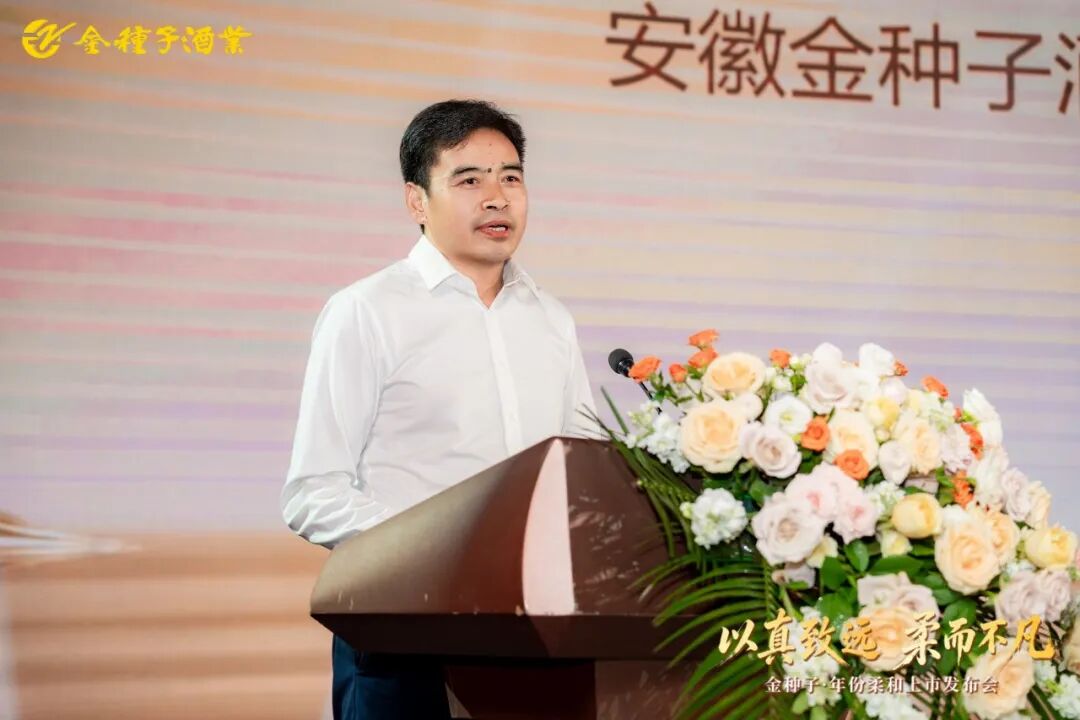
金种子酒董事长、总经理谢金明在发布会上直言,百元价位是行业唯一保持两位数增长的赛道,消费者不再盲目为品牌溢价买单,更看重酒体品质和饮用体验。
徽酒的竞争格局也在印证这个判断。2025年,迎驾贡酒凭借生态洞藏系列在100-400元价格带的精准卡位,营收达到60.19亿元。古井贡酒则阶段性聚焦古5、古8等100-200元大众消费价位。徽酒头部玩家的火力,不约而同地集中到了百元地带。
金种子此时以年份柔和入局百元赛道,正是顺势而为、正面参战。

三款产品的“组合拳”:谁进攻,谁防守,谁站台
金种子对三款产品的角色分工相当清晰:
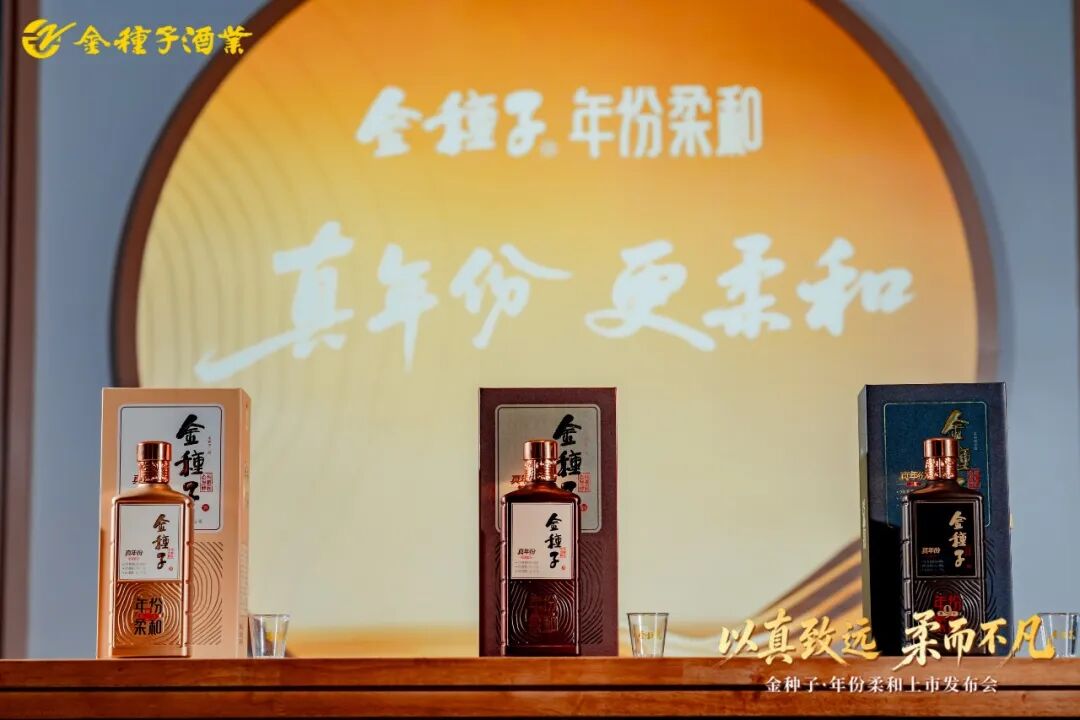
真5年(80元)——卡位大众自饮场景,定位规模化走量产品。家庭聚餐、日常小酌、邻里欢聚,烟火气十足。这是“守”的那一面,稳住基本盘。
真7年(120元)——作为支点产品,承载口感培育和市场突破的核心任务。朋友小聚、日常宴请、佳节送礼,场景百搭。这是“攻”的那一面,承上启下。
真9年(200元)——建立价值锚点,拉升整个产品线的品质天花板。商务宴请、长辈送礼、重要宴席。这是“势”的那一面,做高不做量。
三款产品梯度布局、层层进阶,从日常烟火到正式宴席全面覆盖。这种“金字塔型”的产品结构,既避免了单一产品过度承压的风险,又为消费者提供了清晰的选择路径。
包装设计上也有一个细节值得留意:新品瓶盖纹饰灵感源自阜阳国宝龙虎尊饕餮纹,复刻3000年淮颍青铜文明的庄重古韵。配色层次分明,5年清爽百搭、7年浅咖温润、9年深咖沉稳。把本土文化符号植入产品基因——这不是简单的美学考量,更是对“大阜阳”基地市场的情感深耕。

渠道的“减法”:不压货,为什么反而更难?
如果说产品和价格是金种子的“前台策略”,那么渠道改革就是它的“后台工程”。
金种子为年份柔和推出了超级合伙人模式,核心原则只有九个字:“不压货、强兜底、重动销”。前3年将经销商数量控制在30家以内,3年后随市场扩容逐步增加,首批经销商享有额外激励政策。
在白酒行业“压货—窜货—价格倒挂”的恶性循环已成常态的今天,这种克制显得格外另类。大多数酒企追求的是经销商数量越多越好、铺货越快越好,结果往往是渠道库存高企、价盘失控。金种子选择用“减法”换“质量”——少而精的经销商队伍,更紧密的利益捆绑,更严格的管控,这恰恰是长期主义渠道思维的体现。
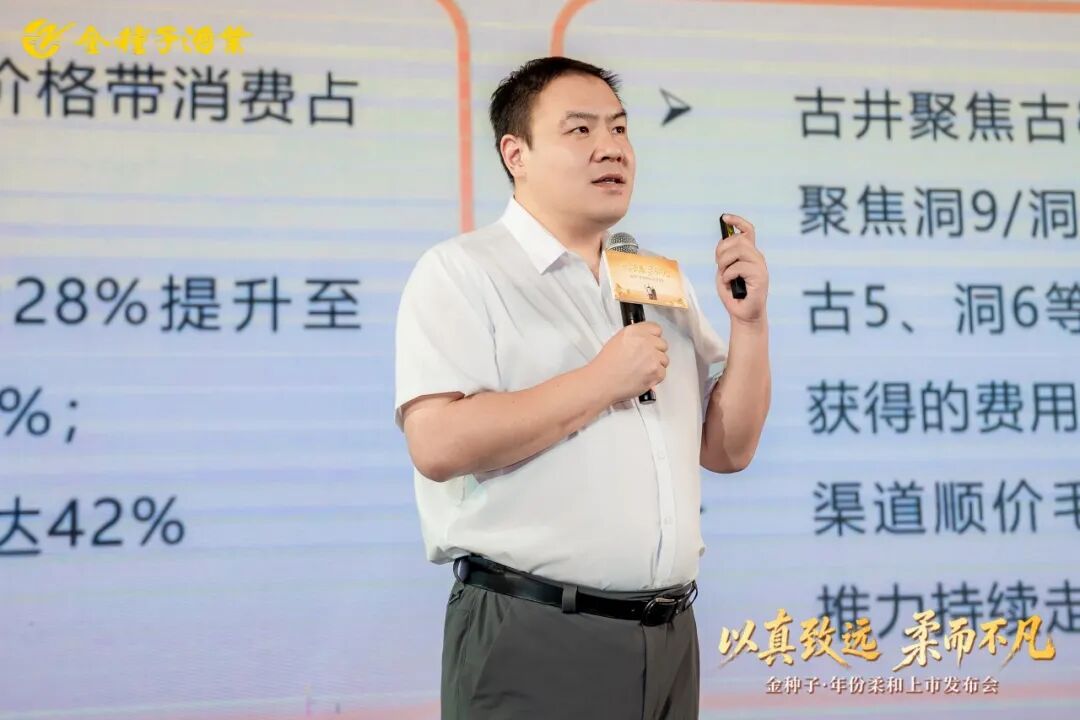
金种子酒业营销中心副总经理王斌对此的表述更为直接:“年份柔和系列主要锚定大众主流消费的百元价格带,打破品牌溢价,通过构建性价比优势来对冲品牌阶段性的弱势。”

从馥合香到年份柔和:两条腿走路的战略纵深
理解金种子这次战略布局,需要放在一个更长的时间维度里审视。
过去几年,金种子在馥合香系列上进行了大量前置性投入,在品类创新和品质升级上积累了扎实的技术储备和品牌势能。馥合香系列的探索,为金种子在高端价格带建立了品质认知和品牌触点。
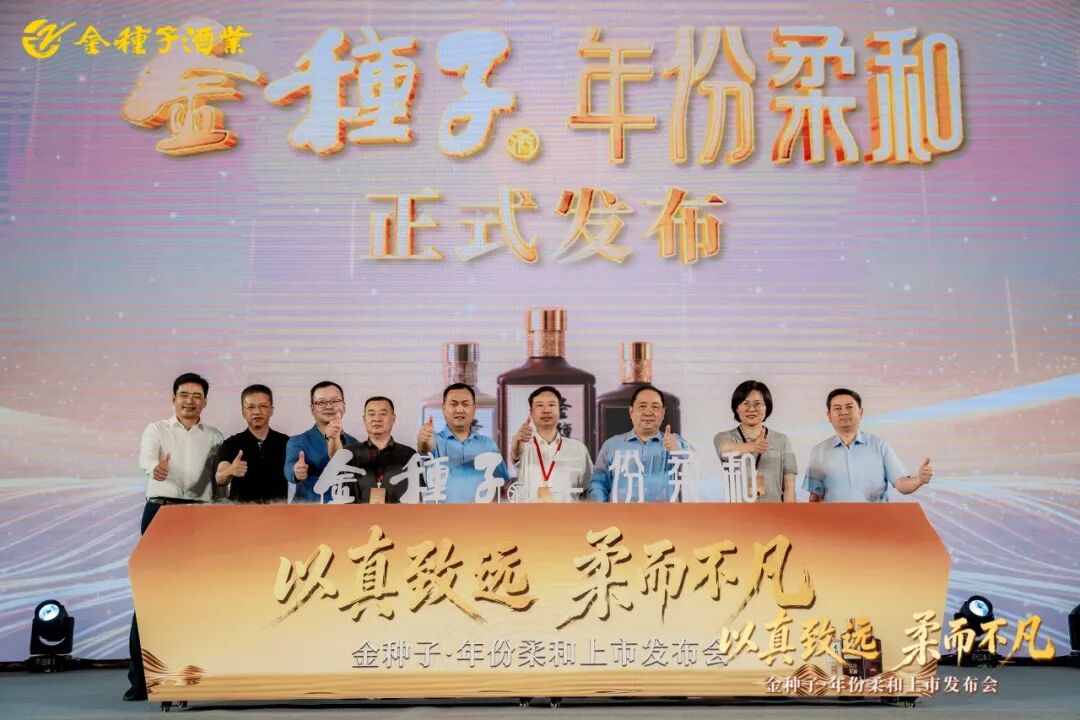
如今,年份柔和系列的推出,不是对馥合香路线的替代,而是对金种子产品矩阵的战略性补强——馥合香在次高端价格带建立品牌高度,年份柔和在大众消费价格带实现规模放量,二者形成“一高一基”的双轮驱动格局。
金种子酒董事长、总经理谢金明在发布会上表示,年份柔和将聚焦“大阜阳”基地市场,用“真年份”建立品质信任状,用“更柔和”巩固品类护城河,逐步实现从区域向全国的辐射。
如果说馥合香是金种子在品牌高度的“向上突破”,那么年份柔和就是在市场厚度的“向下扎根”。一高一基、一突破一扎根,金种子正在构建一个更具抗风险能力的产品矩阵——馥合香做品牌高度,年份柔和做市场深度,二者协同形成合力。

深耕“大阜阳”:基地市场的堡垒战
这场战役的主战场,就在“大阜阳”。
阜阳是金种子的大本营,也是徽酒竞争最激烈的区域之一。选择从基地市场开始深耕,先做深做透再做广,这是务实的战略选择。
“大阜阳”市场拥有深厚的消费基础和品牌认知积淀,金种子在这里有着其他品牌无法比拟的地缘优势和情感连接。年份柔和系列的推出,正是依托这一根据地市场,以“真年份”建立品质信任状,以“更柔和”巩固品类护城河,逐步实现从区域向更广阔市场的辐射。
先扎根,再生长。这是金种子的节奏。
2005年,金种子首推柔和型白酒,柔和系列年销量曾超过1亿瓶。21年后,金种子用“真年份”重新激活柔和这个曾经的金字招牌。
在酒业时报看来,年份柔和的推出,标志着金种子正式形成了“馥合香做高度+年份柔和做深度”的双品系战略格局。馥合香在前几年的品类创新中积累了品质口碑和品牌势能,如今年份柔和以“真年份+百元价格带”的组合精准切入大众市场,为金种子增加了一个极具潜力的增长极。两条产品线协同作战,一高一基相互支撑,这恰恰是金种子在行业调整期最扎实的底盘。
白酒行业的调整远未结束。但对于金种子而言,馥合香与年份柔和的双品系布局已然成型——一个做品牌高度,一个做市场深度,金种子正在用两条腿走出一条更稳的路。
For years, vintage baijiu has been a guessing game. Distillers claim a bottle is “aged” for years, but nobody knows how many drops of old liquor are actually inside. A label saying “10 years” might contain only 10% aged base. A “30-year” label is pure imagination.
But someone decided to stop the guessing.
On July 22, Jinzhongzi printed the answer right on the bottle in Fuyang. At a launch event themed “True to Authenticity, Soft Yet Extraordinary,” the distillery officially introduced three new products: Vintage Rouhe True 5, True 7, and True 9. Priced at RMB 80, RMB 120, and RMB 200 respectively, they anchor the RMB 80–200 price band.
This is not a routine product launch. Three years into the baijiu industry’s deep adjustment, Jinzhongzi has made a bold strategic move – building on its earlier Fuhexiang (multi-flavour) premiumisation push, it is now carving out a second growth curve in the mass-market segment with the combination of “true vintage + RMB 100 price band.”
A Question That Must Be Answered: Why Should Consumers Believe in Vintage Baijiu?
Let’s start with a question: is the “vintage” you’re buying really from that year?
This is not an offence. Shao Dongliang, Vice President of the China National Food Industry Association, spoke plainly at the launch: the vintage baijiu industry has long suffered from “mislabeling.” A few drops of aged liquor blended with large quantities of new liquor, and the whole batch is labelled with the vintage of those few drops – this “numbers game” is an open secret in the vintage market.
Consumers are not fooled. China’s aged baijiu market has surpassed RMB 130 billion in transaction volume, but the other side of the coin is that over 60% of consumers doubt the authenticity of vintage claims. A market built on a foundation of “trust deficit” – that is the greatest paradox in the vintage baijiu industry.
Jinzhongzi chose the “hardest” way to resolve this paradox: printing the formula on the bottle.
The Vintage Rouhe series lists the vintage and proportion of the base spirits directly on the front label. Take True 7 as an example: 85%–90% 7-year base, blended with 4%–6% 8-year base and no less than 4% 10-year aged liquor. Complete records are maintained, with full traceability throughout the process. This is not marketing speak – it is a verification standard.
In the view of JiuYe Times, Jinzhongzi is not playing the “vintage card” – it is playing the “trust card.” While most brands are still telling stories with vague vintage concepts, Jinzhongzi has laid its formula on the table – and that transparency is itself the most scarce competitive advantage in this industry.
Interestingly, the industry’s regulations are also tightening. In January 2026, the Baijiu Vintage Group Standard was revised, changing the rule from “the labelled vintage shall be the integer of the weighted average age” to “the labelled vintage shall not exceed the integer of the weighted average age” – a move to “squeeze the water” at the source. Jinzhongzi’s transparency on vintage composition at this critical juncture is not following the trend – it is strategic positioning.
The RMB 100 Price Band: The Only Place Still “Simmering” in the Baijiu Winter
Why the RMB 100 price band? This is not a snap decision.
Look at the numbers: the RMB 100–300 price band’s share of the baijiu market has risen from 28% in 2020 to 37% in 2025, and is projected to reach 42% by 2028. In Anhui market, competition in the RMB 300–500 band is intensifying, while the RMB 100–200 range remains the core of mass consumption.
Multiple brokerages’ Q1 reports show that in the first quarter of 2026, regional distillers like Jinhui and Laobaigan saw over 20% year-on-year revenue growth in sub-RMB 100 products, while mid-to-high-end products above RMB 300 generally faced revenue pressure. This is not cyclical fluctuation – it is structural shift.
Xie Jinming, Chairman and General Manager of Jinzhongzi, stated plainly at the launch: the RMB 100 price band is the only segment maintaining double-digit growth in the industry. Consumers are no longer blindly paying for brand premiums – they value liquor quality and drinking experience more.
The competitive dynamics of Anhui liquor confirm this judgement. In 2025, Yingjia Gongjiu reached RMB 6.019 billion in revenue through precise positioning in the RMB 100–400 band with its Ecological Cellar series. Gujing Gongjiu is focusing on the RMB 100–200 mass consumption tier with Gu 5 and Gu 8. The top players in Anhui liquor are all converging on the RMB 100 price band. Jinzhongzi’s entry with Vintage Rouhe is not just following the momentum – it is joining the battle head-on.
The “Combination Punch” of Three Products: Who Attacks, Who Defends, Who Leads
Jinzhongzi has clearly defined the roles of each product:
True 5 (RMB 80) – anchors everyday self-drinking scenarios. Family dinners, casual drinks, neighbourhood gatherings – scenes filled with local flavour. This is the “defensive” flank, stabilising the core base.
True 7 (RMB 120) – the fulcrum product, carrying the dual mission of palate cultivation and market breakthrough. Friend gatherings, everyday banquets, festive gifting – versatile for all occasions. This is the “offensive” flank, bridging the gap.
True 9 (RMB 200) – establishes the value anchor, raising the quality ceiling for the entire product line. Business banquets, gifts for elders, important occasions. This is the “prestige” flank, building high rather than selling volume.
The three products form a tiered pyramid, covering everything from everyday moments to formal banquets. This “pyramid” product structure not only prevents over-reliance on a single product but also provides consumers with a clear choice pathway.
One packaging detail is worth noting: the bottle cap design draws inspiration from the Fuyang national treasure – the tiger-and-dragon zun’s taotie pattern, recreating the solemn antiquity of 3,000 years of Huaiying bronze civilisation. The colours are distinct: True 5 is crisp and versatile, True 7 is warm light brown, and True 9 is deep, steady brown. Embedding local cultural symbols into the product DNA – this is not just aesthetic consideration, but an emotional cultivation of the “Greater Fuyang” home market.
Channel “Subtraction”: Why Is No Inventory Loading Actually Harder?
If product and pricing are Jinzhongzi’s “front-end strategy,” then channel reform is its “back-end engineering.”
Jinzhongzi has launched a Super Partner model for Vintage Rouhe – with just nine core principles: “No inventory loading, strong downside protection, focus on sell-through.” In the first three years, the number of distributors is capped at 30, gradually expanding with market growth after that. The first batch of distributors enjoy additional incentive policies.
At a time when the vicious cycle of “inventory loading – cross-region sales – price inversion” has become the industry norm, this restraint stands out. Most distilleries chase the largest possible number of distributors and the fastest possible distribution coverage, often leading to bloated channel inventory and collapsed pricing control. Jinzhongzi chose “subtraction” for “quality” – a smaller, more elite distributor network with tighter profit alignment and stricter control. This is precisely the embodiment of long-termist channel thinking.
Wang Bin, Deputy General Manager of Jinzhongzi’s Marketing Centre, put it more bluntly: “Vintage Rouhe series anchors the RMB 100 price band of mainstream mass consumption, breaking through brand premiums and offsetting the brand’s current weakness through value-for-money advantages.”
From Fuhexiang to Vintage Rouhe: The Strategic Depth of a Two-Pronged Approach
To understand Jinzhongzi’s current strategic move, it must be viewed over a longer time horizon.
Over the past few years, Jinzhongzi made substantial upfront investments in its Fuhexiang series, accumulating solid technical expertise and brand momentum in category innovation and quality upgrading. The Fuhexiang exploration established quality recognition and brand touchpoints for Jinzhongzi in the premium tier.
Now, the introduction of Vintage Rouhe is not a replacement of the Fuhexiang path, but a strategic reinforcement of Jinzhongzi’s product matrix – Fuhexiang builds brand prestige in the mid-premium tier, while Vintage Rouhe achieves scale and volume in the mass-consumption tier. Together, they form a dual-wheel “one premium, one base” structure.
Xie Jinming stated at the launch that Vintage Rouhe will focus on the “Greater Fuyang” home market, building quality trust through “true vintage” and reinforcing the category moat through “softer” drinking experience, gradually radiating from regional to national reach.
If Fuhexiang represents Jinzhongzi’s “upward breakthrough” in brand prestige, Vintage Rouhe represents “downward rooting” in market depth. One premium, one base; one breakthrough, one rooting – Jinzhongzi is constructing a more resilient product matrix.
Deep Cultivation of “Greater Fuyang”: The Fortress Battle of the Home Market
The main battlefield is “Greater Fuyang.”
Fuyang is Jinzhongzi’s home base and one of the most fiercely contested regions in Anhui liquor. Choosing to start from the home market – going deep and thorough before expanding outward – is a pragmatic strategic decision.
The “Greater Fuyang” market has deep consumption roots and strong brand recognition, where Jinzhongzi possesses unbeatable geographic advantages and emotional connections. The launch of Vintage Rouhe leverages this home base to build quality trust through “true vintage” and reinforce the category moat through “softer” drinking experience, gradually radiating outward. Root first, then grow. That is Jinzhongzi’s rhythm.
In 2005, Jinzhongzi pioneered Rouhe (soft) baijiu, with the Rouhe series selling over 100 million bottles annually at its peak. Twenty-one years later, Jinzhongzi has resurrected this signature label with “true vintage.”
In the view of JiuYe Times, the launch of Vintage Rouhe marks the formal establishment of Jinzhongzi’s dual-category strategic structure: Fuhexiang for prestige + Vintage Rouhe for depth. Fuhexiang has accumulated quality reputation and brand momentum through years of category innovation. Now, Vintage Rouhe, with its “true vintage + RMB 100 price band” combination, precisely targets the mass market, adding a high-potential growth engine for Jinzhongzi.
The two product lines work in synergy – one for brand prestige, one for market depth, supporting each other. This is precisely Jinzhongzi’s most solid foundation during the industry adjustment.
The baijiu industry’s adjustment is far from over. But for Jinzhongzi, the dual-category structure of Fuhexiang and Vintage Rouhe is already taking shape – one building brand height, the other building market depth. Jinzhongzi is walking a more steady path on two legs.
原创文章版权归本网所有;转载文章归原作者所有。发布者:酒业时报,转载请注明出处:https://www.thewinetimes.com/gongsi/11634