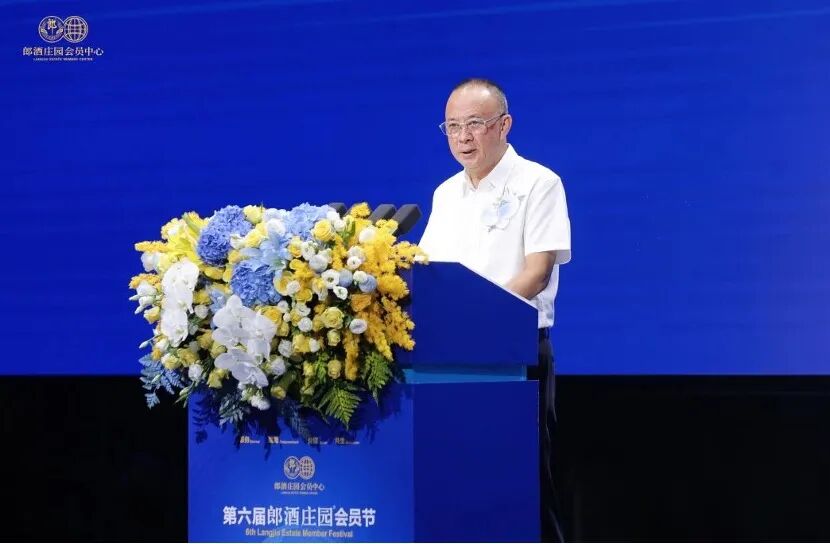
8月19日,赤水河左岸,第六届郎酒庄园会员节如期而至。
这场以“品质与韧性,生生不息”为主题的年度盛会,最引人瞩目的,是郎酒集团董事长汪俊林现场发布的一套全新会员价值服务体系。这套体系以极致化品质价值、差异化庄园价值、稀缺性体验价值、庄园级服务价值四大价值为核心,被业界视为郎酒会员服务的一次系统性升维。
在酒业时报看来,这场发布会传递的最核心信号是:白酒行业的竞争,正在从“渠道争夺战”全面转入“用户价值战”。而郎酒给出的解题思路,是把一座耗时十八年、耗资超两百亿元打造的白酒庄园,变成会员价值最深层的底座。
白酒的“下半场”:从卖酒到经营人
白酒行业正在经历一场深刻的价值链重构。
过去几十年,行业的核心逻辑是“渠道为王”——谁能铺更多的经销商、抢占更多终端、投放更多广告,谁就能拿到市场优势。但这套发展逻辑正在逐步失效。有行业观察者指出,白酒行业想要摆脱长期依赖的B端驱动模式,就要通过C端变革重构价值链,转向C端运营,已经成为全行业的共识。
郎酒在C端用户运营这条路上,布局早于绝大多数同行。
2018年,青花荟会员俱乐部成立,郎酒正式开启会员体系探索;2019年,郎酒庄园对外开放;2021年,郎酒庄园会员中心落地,首届会员节顺利举办。此后六年时间里,会员权益持续迭代升级。
到2026年8月,郎酒数字化会员服务平台“郎酒PLUS”上线6年,会员数量已突破5700万。5700万会员体量,意味着郎酒完成了数千万级真实消费用户的数字化沉淀,是白酒行业头部的私域用户资产储备。
但数字只是表象。真正值得关注的是,郎酒怎样把这些冰冷数字,转化成品牌与用户之间有温度的关系。
“四大价值”背后:一座庄园如何变成会员的“家”
汪俊林此次发布的“四大价值”,并非凭空提出。它是郎酒九年会员探索、六年会员节持续迭代之后,沉淀出的系统性总结。
极致化品质价值被放在四大价值的首位。郎酒已在赤水河左岸布局6大生态酿酒区,形成7.2万吨优质酱香年产能、30万吨优质酱酒贮量。更关键的是企业坚守“存十卖一”的产销原则——每生产十吨酒,只对外销售一吨,其余全部入库存储老熟。汪俊林在会员节现场作出承诺:“会员在庄园买到的酒,一定是’质价比’最好的酒。”
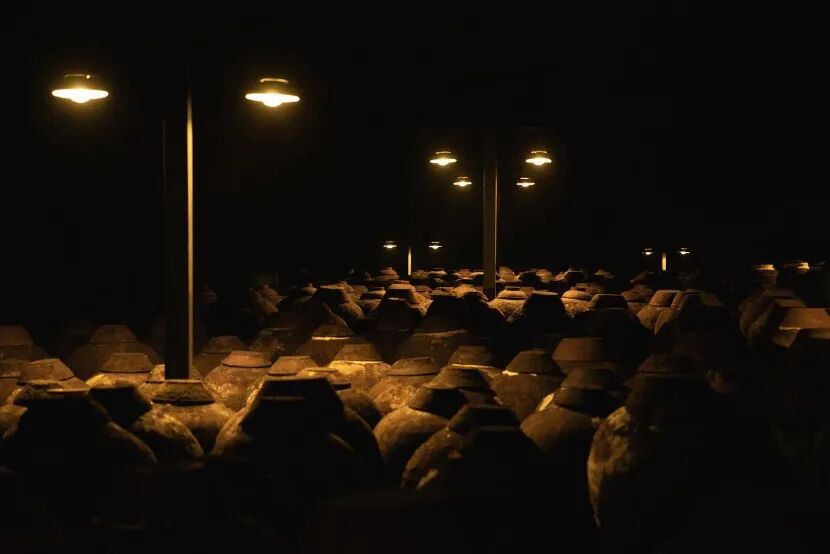
差异化庄园价值,则是郎酒最难被同行复制的竞争壁垒。历时近20年、耗资超200亿元,横跨10平方公里的郎酒庄园,已经成为会员的精神栖息地。酒樽塔、敬天台、洞仙别院等一批标志性文化体验地标正在加紧建设,将在2027—2028年陆续投入使用。庄园不再只是一座酿酒工厂,而是一处可居住、可体验、可社交的“会员之家”。
稀缺性体验价值,赋予会员体系浓厚的奢侈品属性。郎酒每年仅有8%10%的优质酒体,历经“长、养”十载以上,才有资格送入天宝洞、地宝洞、仁和洞储藏。本次会员节,地宝洞酒(20年)、天宝洞酒(25年)、仁和洞酒(30年)三款洞藏老酒,正式向会员开放专属购买通道。“有钱不一定买得到”,成为郎酒为会员设置的专属门槛。
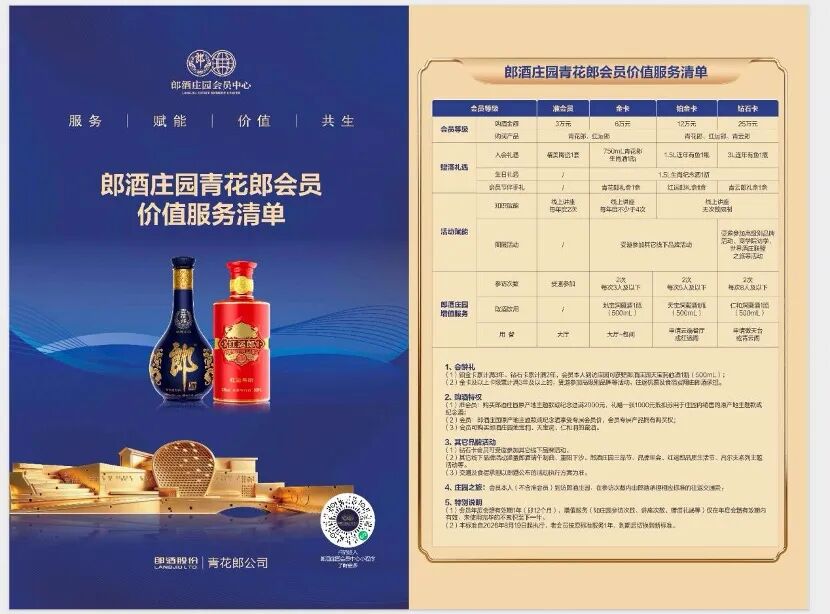
庄园级服务价值,则落地在诸多细节调整当中。青花郎入会机制从积分制调整为金额制;红花郎・15会员体系完成扩容;知识赋能、圈层活动、尊享赠酒、会龄专属礼、购酒特权等,一整套服务权益清单得到大幅丰富。
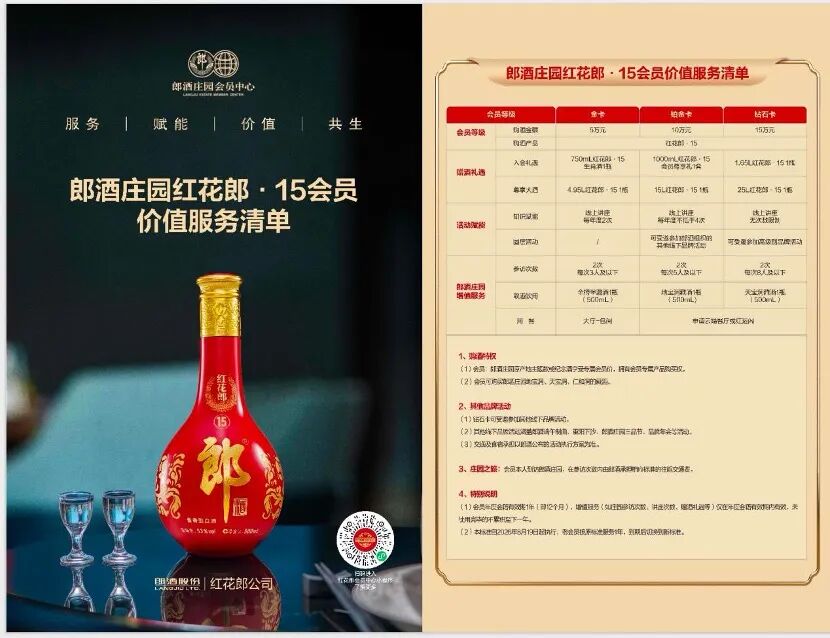
在酒业时报看来,“四大价值”的深层逻辑,是郎酒把四十余年名酒积淀与十八年庄园建设成果,系统性地转化为会员可感知、可享有、可传承的专属价值。这不是简单的会员权益叠加,而是一套完整的价值交付体系。
对标奢侈品牌:郎酒在学什么?
汪俊林在演讲中明确提到,郎酒会员服务体系的完善,参考了国际奢侈品牌成熟的会员运营与服务逻辑。
这并非一句对外宣传的口号。
国际奢侈品牌的核心竞争力,不止来源于产品稀缺属性,同样来自对会员关系的长期深耕。以爱马仕为例,它的会员制度本质是筛选核心用户,依靠配货机制设置准入门槛,依靠定制化服务留住高价值VIP。会员可以自主挑选皮革材质、缝线颜色,刻印个人专属标识。底层逻辑十分清晰:让核心客户拿到非会员完全无法触碰的专属权益。
郎酒正在白酒赛道复刻这套逻辑。洞藏老酒仅限会员购买、庄园深度体验仅限会员参与、世界酒庄联盟之旅面向会员开放——这些“仅会员可见”的权益,正是奢侈品牌会员体系的核心精髓。
但郎酒的模式相比奢侈品牌,又往前踏出一步。
爱马仕会员权益依托的是品牌产品力与工艺壁垒;郎酒的会员权益,除洞藏老酒这类稀缺产品之外,背后还有一座实打实占地10平方公里的物理庄园。这座庄园不只是生产设施,更是承载体验、社交、居住功能的实体空间载体。奢侈品牌售卖的是“物以稀为贵”,郎酒实现的是“地以稀为贵”叠加“物以稀为贵”的双重稀缺。
一个值得关注的信号:郎酒×拉菲,两个“左岸”的相遇
会员节当天,还有一个细节值得行业玩味:郎酒与世界顶级名庄拉菲的联盟正式启动。
这已经是郎酒“世界酒庄联盟”的第三步关键落子:2024年与保乐力加达成战略合作,2025年牵手澳洲奔富。本次和拉菲达成合作,也是拉菲首次和中国白酒品牌推出联名产品。双方共同推出全球限量1000盒的青花郎×利诗古堡贵腐甜白葡萄酒,以及同样限量1000盒的红运郎×拉菲罗斯柴尔德珍宝红葡萄酒。
在酒业时报看来,这一合作的象征意义大于商业意义。郎酒正在用“酒庄”这套全球通用的语言,完成和世界酒业的对话。当郎酒庄园与拉菲古堡、罗曼尼康帝等世界名庄共同登上《世界酒庄影响力指数》“领先级酒庄”榜单,中国白酒第一次拥有了能够和世界名酒平等对话的庄园话语权。
而“世界酒庄联盟之旅”被纳入会员专属权益,意味着郎酒会员既可以沉浸式感受赤水河左岸的庄园风貌,也能够走进波尔多左岸的拉菲古堡。这种跨越酒种、跨越文化的深度体验,在白酒行业几乎前所未有。
行业的启示:当“庄园”成为一种商业模式
郎酒这套会员体系,抛出一个值得整个白酒行业深思的命题:当产能过剩、渠道饱和成为行业常态,白酒品牌还能依靠什么搭建竞争壁垒?
郎酒给出的答案是:把时间变成资产,把空间变成体验,把关系变成价值。
十八年时间、两百亿资金,这是郎酒投入庄园建设的成本。这笔投入在财务报表上属于沉没成本,落到会员价值体系当中,就转化为难以复制的竞争壁垒。同行想要复刻同等规格的庄园,同样要付出对等的时间与资金成本,这正是“差异化庄园价值”的底气。
有业内人士评价,郎酒庄园会员节,已经把品质表达、庄园体验、知识分享融为一体,郎酒庄园会员正在演变为一种身份认同。当一瓶酒的价值不再单纯由酒体本身决定,而是由在哪里喝、和谁喝、怎么喝共同定义,白酒的竞争逻辑就已经彻底改写。
白酒市场正从“渠道为王”全面迈入“用户时代”。郎酒率先尝试和头部用户建立深度信任、互相赋能的价值共生关系。这不单单是郎酒一家企业的探索,更是整个白酒行业在“十五五”开局之年,都值得认真思考的课题。
在酒业时报看来,郎酒这套会员体系的真正价值,不在于它对标了哪些国际品牌,而在于它创造了什么——它探索出一套将重资产转化为用户价值的全新商业模式。当多数酒企还在纠结价格带、比拼渠道能力的时候,郎酒已经凭借一座庄园,重新定义了“会员”二字的含金量。
On August 19, on the left bank of the Chishui River, the 6th Langjiu Estate Member Festival arrived as scheduled. The annual event, themed “Quality and Resilience – Endless Vitality,” featured a headline-grabbing announcement by Langjiu Group Chairman Wang Junlin: a brand-new member value service system. Built around four core pillars – ultimate quality value, differentiated estate value, scarcity-based experience value, and estate-level service value – the system is regarded by industry observers as a systematic upgrade of Langjiu’s member services.
In the view of JiuYe Times, the core signal from this announcement is that competition in the baijiu industry is shifting decisively from “channel battles” to “user value wars.” Langjiu’s solution is to transform a baijiu estate that took eighteen years and over RMB 20 billion to build into the deepest foundation of member value.
The “Second Half” of Baijiu: From Selling Liquor to Cultivating People
The baijiu industry is undergoing a profound value chain restructuring. Over the past decades, the industry’s core logic was “channel is king” – whoever could recruit more distributors, secure more terminals, and invest more in advertising would gain market advantage. But this logic is gradually becoming obsolete.
As some industry observers have noted, for the baijiu industry to break free from its long-standing B-end-driven model, it must restructure the value chain through C-end transformation. The shift toward C-end operations has become an industry-wide consensus.
Langjiu has been on this path of C-end user engagement much earlier than most peers. In 2018, the Qinghualang Member Club was established, marking the beginning of Langjiu’s member system exploration; in 2019, Langjiu Estate opened to the public; in 2021, the Langjiu Estate Member Centre was launched, and the first Member Festival was successfully held. Over the following six years, member benefits have been continuously iteratively upgraded. By August 2026, the Langjiu PLUS digital member service platform, in operation for six years, had surpassed 57 million members.
A membership base of 57 million means Langjiu has achieved digital retention of tens of millions of genuine consumers – making it one of the industry’s leading private-domain user asset reserves. But the numbers are only the surface. What truly matters is how Langjiu transforms these cold figures into warm relationships between the brand and its users.
Behind the “Four Pillars of Value”: How an Estate Becomes a “Home” for Members
The “Four Pillars of Value” released by Wang Junlin were not conjured out of thin air. They represent a systematic synthesis distilled from nine years of member exploration and six years of continuous Member Festival iteration.
Ultimate quality value is placed first among the four pillars. Langjiu has established six eco-brewing zones on the left bank of the Chishui River, with an annual premium sauce-aroma production capacity of 72,000 tonnes and 300,000 tonnes of premium sauce-aroma base liquor reserves. More critically, the company adheres to a “store ten, sell one” production and sales principle – for every ten tonnes produced, only one tonne is sold externally, with the rest entering storage for aging. Wang Junlin made a commitment at the festival: “The liquor members buy at the estate will always offer the best ‘value for money.'”
Differentiated estate value is Langjiu’s hardest-to-replicate competitive barrier. Built over nearly 20 years with an investment exceeding RMB 20 billion, spanning 10 square kilometres, Langjiu Estate has become a spiritual sanctuary for its members. Landmark cultural experience sites including the Jiuzun Tower, Jingtai Terrace, and Dongxian Bieyuan are under accelerated construction and will be progressively completed by 2027–2028. The estate is no longer just a brewing facility – it has become a “members’ home” where one can live, experience, and socialise.
Scarcity-based experience value gives the membership system a distinctly luxury character. Only 8% to 10% of Langjiu’s annual premium liquor, after more than a decade of “growth and maturation,” qualifies for storage in the Tianbao Cave, Dibao Cave, and Renhe Cave. At this year’s Member Festival, three cave-aged liquors – Dibao Cave (20-year), Tianbao Cave (25-year), and Renhe Cave (30-year) – officially opened exclusive purchase channels to members. “Money alone cannot buy it” has become Langjiu’s exclusive threshold for its members.
Estate-level service value is realised through numerous detailed adjustments. The Qinghualang membership mechanism has been adjusted from a points-based system to a spending-based system; the Honghualang · 15 membership system has been expanded; and a comprehensive suite of service benefits – including knowledge empowerment, circle-based activities, exclusive gift liquors, membership-tenure-specific gifts, and purchasing privileges – has been significantly enriched.
In the view of JiuYe Times, the deep logic of the “Four Pillars of Value” is Langjiu’s systematic transformation of more than four decades of premium liquor heritage and eighteen years of estate development into tangible, accessible, and inheritable exclusive value for its members. This is not a simple stacking of member benefits – it is a complete value delivery system.
Benchmarking Against Luxury Brands: What Is Langjiu Learning?
Wang Junlin explicitly mentioned in his speech that the refinement of Langjiu’s member service system drew reference from the mature member operations and service logic of international luxury brands. This is not just a marketing slogan.
The core competitiveness of international luxury brands derives not only from product scarcity but equally from long-term relationship cultivation with members. Hermès, for example, operates a membership system that essentially filters core users – setting entry thresholds through allocation mechanisms and retaining high-value VIPs through customised services. Members can independently select leather materials, thread colours, and engrave personal identifiers. The underlying logic is clear: give core clients exclusive benefits that non-members can never access.
Langjiu is replicating this logic in the baijiu sector. Cave-aged liquors are exclusively available to members, estate immersion experiences are exclusive to members, and the World Estate Alliance Tour is open to members – these “members-only” privileges are the essence of luxury brand membership systems.
But Langjiu’s model takes a step further than luxury brands. Hermès’s member benefits rely on product strength and craftsmanship barriers; Langjiu’s member benefits, in addition to scarce products like cave-aged liquors, are backed by a tangible 10-square-kilometre physical estate. The estate is not just a production facility – it is a physical space that hosts experiences, social interactions, and accommodation. Luxury brands sell “rarity of things”; Langjiu delivers a dual scarcity of “rarity of place” layered with “rarity of things.”
A Signal Worth Watching: Langjiu × Lafite – When Two “Left Banks” Meet
On the day of the Member Festival, there was another detail worth the industry’s attention: the official launch of the Langjiu and Lafite alliance. This marks the third key step in Langjiu’s “World Estate Alliance”: a strategic partnership with Pernod Ricard in 2024, a tie-up with Penfolds in 2025, and now a collaboration with Lafite – also the first time Lafite has launched a co-branded product with a Chinese baijiu brand.
The two parties jointly launched a globally limited edition of 1,000 boxes of Qinghualang × Château Rieussec Noble Rot Sweet White Wine, and another 1,000 boxes of Hongyunlang × Lafite Rothschild Prieuré Rouge. In the view of JiuYe Times, the symbolic significance of this collaboration far outweighs its commercial value. Langjiu is using the globally understood language of “estates” to engage in dialogue with the world’s wine industry. When Langjiu Estate, alongside Château Lafite Rothschild, Domaine de la Romanée-Conti, and other world-renowned estates, made it onto the “Leading Tier” of the World Estate Influence Index, Chinese baijiu gained, for the first time, a voice in the global conversation on equal footing with the world’s finest wines.
The inclusion of the “World Estate Alliance Tour” as an exclusive member benefit means that Langjiu members can not only experience the estate on the left bank of the Chishui River but also walk through the cellars of Château Lafite on Bordeaux’s left bank. This kind of cross-category, cross-cultural immersive experience is almost unprecedented in the baijiu industry.
Industry Implications: When the “Estate” Becomes a Business Model
Langjiu’s membership system raises a question worthy of deep reflection across the baijiu industry: when overcapacity and channel saturation become the industry norm, what else can baijiu brands rely on to build competitive barriers?
Langjiu’s answer is: turn time into an asset, space into an experience, and relationships into value. Eighteen years and RMB 20 billion – this is the cost of Langjiu’s estate investment. On the balance sheet, these are sunk costs; but embedded in the member value system, they translate into an unassailable competitive moat. Any competitor attempting to replicate a similar estate would have to pay an equivalent cost in time and capital – and that is precisely the confidence behind “differentiated estate value.”
As one industry insider commented, the Langjiu Estate Member Festival has integrated quality expression, estate experience, and knowledge sharing into a cohesive whole, with membership in the Langjiu Estate increasingly becoming a marker of identity. When the value of a bottle of liquor is no longer determined solely by the liquid itself, but co-defined by where it is consumed, with whom, and how, the competitive logic of baijiu has been fundamentally rewritten.
The baijiu market is moving from the “channel is king” era into the “user-centric era.” Langjiu is taking the lead in building deep trust and mutually empowering value symbiosis with its top-tier users. This is not merely an experiment for a single company – it is a subject that the entire baijiu industry should seriously consider in the first year of the “15th Five-Year Plan.”
In the view of JiuYe Times, the true value of Langjiu’s membership system lies not in which international brands it benchmarks against, but in what it has created – a new business model that transforms heavy assets into user value. While most distilleries are still debating price bands and channel capabilities, Langjiu has already redefined the substance of “membership” through a single estate.
(This article is compiled from publicly available industry information. Sources/Data: Red Star News, China Wine News, Sichuan Online, Upstream News, Dazhong Securities, Tencent News, Baijiahao, Eastmoney, The Times, National Business Daily, etc.)
原创文章版权归本网所有;转载文章归原作者所有。发布者:酒业时报,转载请注明出处:https://www.thewinetimes.com/gongsi/12018