
8月14日晚间,贵州茅台对外披露2026年半年度报告。上半年,公司实现营业总收入922.78亿元,同比增长1.3%;茅台酒实现营业收入777.24亿元,同比增长2.82%。
在白酒行业整体仍处于深度调整期的背景下,这份财报中最值得关注的并非增速本身,而是三组几乎被忽略的“反差”数据——它们共同指向一个事实:茅台正在主动重构增长逻辑,以短期增速换挡,换取长期发展稳态。

合同负债VS经营现金流:从“蓄水池”到“直饮水”
半年报显示,截至上半年末,茅台合同负债为31.78亿元,较上年末的80.07亿元下降60.31%。与此同时,经营活动产生的现金流量净额达706.91亿元,同比增长438.84%。
合同负债少了48亿,经营现金流多了575亿。这两个数字反向变动,放在一起看,彻底颠覆了市场的固有认知。
市场上多数浅层解读,将合同负债下降简单归因于“经销商打款意愿下降”,但茅台在财报中明确定调:该项数据变动主要系公司推进市场化改革,销售模式迭代升级,预收货款政策同步优化调整。
在酒业时报看来,这并非“蓄水池干涸”,而是茅台把蓄水池拆了,直接接了自来水管。
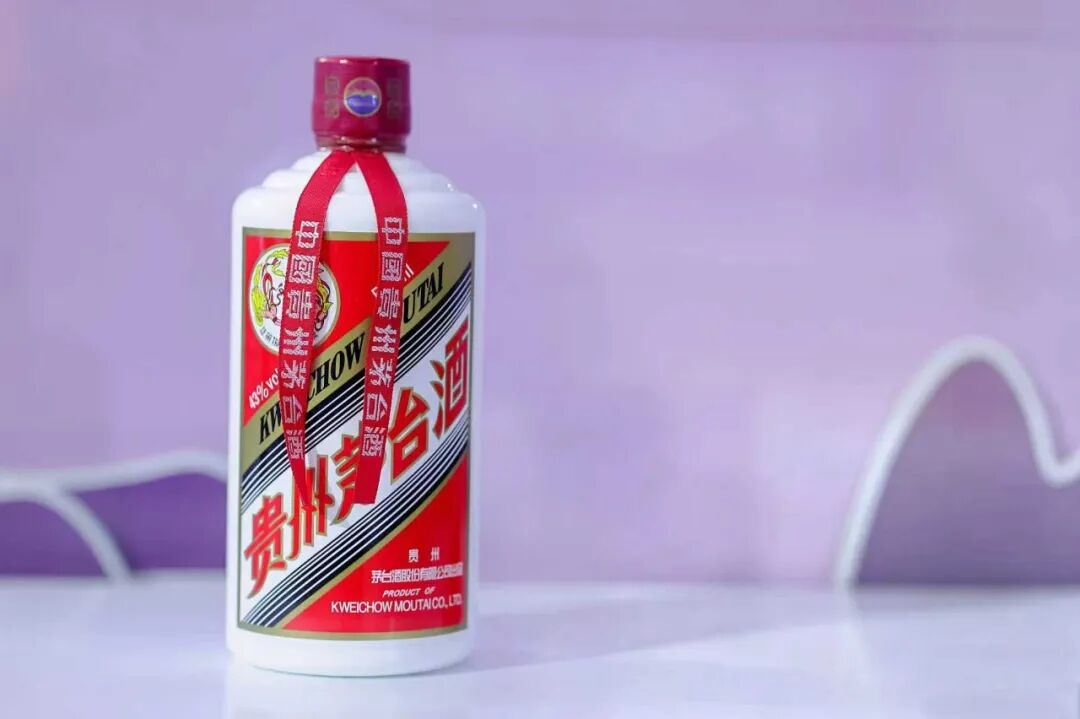
过去白酒行业的通用逻辑,是依靠经销商提前打款蓄水,资金先计入合同负债,企业可灵活择时确认收入、平滑业绩波动。如今茅台彻底颠覆这套传统玩法,依托i茅台直面C端消费者,实现下单即付款、付款即发货,彻底告别了对经销商预存资金的依赖。
数据足以印证变革成效:上半年i茅台实现酒类不含税收入402.64亿元,同比增长274.18%,占公司营业总收入比重高达43.63%。半年前这一占比仅为11%,如今已然逼近半壁江山。

当下茅台的收入确认逻辑,不再绑定经销商的提前打款,而是依托每一笔终端真实消费实现即时到账、即时确权。这不是渠道的萎缩,而是渠道质量的根本性跃迁,从传统经销蓄水模式,切换为C端直供的活水模式。

全行业“赊销冲量”年代坚守“先款后货”
半年报里藏着一个被全网忽略的硬核细节——茅台应收账款仅57.09万元。
对于一家半年营收超900亿的头部酒企来说,57万的应收账款基本可以等同于零,仅占总营收的0.0006%,相当于一个人月入两万,只借给别人一毛二。
纵观2026年上半年的白酒市场,行业整体处于“出清筑底”的艰难阶段,大量中小酒企为保住市场份额、冲刺业绩,纷纷放宽信用政策,靠赊销铺货拉动营收,行业内卷态势加剧。
而茅台逆势而行,不仅应收账款无限趋近于零,应收票据也从44.57亿元大幅降至24.76亿元,降幅达44%,主动收紧票据结算空间,全面坚守现款现货、先款后货的交易底线。
在全行业都在拼命“扛业绩、冲规模”的时候,茅台的资产负债表干净得一尘不染。下游渠道商毫无议价空间,只能主动先付钱、足额拿货,这份绝对话语权,正是茅台品牌护城河最直白、最硬核的财务佐证。

从“成长神话”转向“现金牛价值股”
截至6月末,茅台账面现金余额高达1848.11亿元,较年初增长46.18%,这笔充沛现金储备,相当于公司半年总营收的两倍。与此同时,报告期内茅台累计回购218.86万股并完成注销,精简总股本结构,本次回购均价1370.70元/股,累计动用自有资金约30亿元。
在酒业时报看来,茅台正在完成一场彻底的估值范式切换。
过去资本市场追捧茅台,给予超高估值,核心是认准了它永不落幕的“成长神话”。如今行业进入调整期,茅台主动增速换挡,传统高成长逻辑逐步弱化,但这绝非增长乏力,而是发展模式的迭代升级。
硬币的另一面极具看点:茅台现金储备持续走高,同时持续拿出真金白银开展股份回购注销。对标国际顶级消费品巨头的发展路径,企业步入稳健发展阶段后,都会依靠持续分红加股份回购,稳步抬升每股收益,夯实企业估值底座。
茅台不是“增长故事讲不下去了”,而是正在从“高成长股”平稳过渡到“高确定性现金牛”,市场需要重估其估值体系,而非简单粗暴看空杀估值。
资本的判断往往比舆论更诚实。梳理2026年3月以来主流券商对茅台的评级,一个清晰的共识浮现出来:机构不仅没有因增速换挡而离场,反而在持续加注。
华创证券研报明确指出,茅台以破釜沉舟之势推行全面市场化改革,一季度双稳增高质开局,打响了周期破局的转折之战
中金公司研报指出,茅台有望迎来需求周期、经营调整及量价表现的三重改善共振,茅台酒的跨周期增长弹性表现领先,其销量渗透空间及价格向上弹性好于多数消费品龙头品牌,未来潜在放量空间仍不可小觑。
在行业整体承压的背景下,主流券商对茅台的态度高度一致——不是撤离,是重仓。这背后是对茅台品牌壁垒、改革成效和长期确定性的集体共识。
当下白酒行业正经历周期性调整与结构性变革的双重洗礼。面对行业寒冬,多数酒企被动承压硬扛,唯有茅台主动求变、精准换挡:换渠道模式、换收入结构、换估值逻辑。
拆掉传统渠道的蓄水池、接通C端直供的自来水管,彻底隔绝行业赊销乱象,囤积海量现金、持续回购增厚股东收益。一家龙头企业,敢于主动拆掉自己沿用多年的传统安全垫,恰恰印证了它穿越周期、立足长远的绝对底气。
On the evening of August 14, Kweichow Moutai released its semi-annual report for 2026. In the first half of the year, the company achieved total operating revenue of RMB 92.278 billion, up 1.3% year-on-year; Moutai liquor revenue reached RMB 77.724 billion, up 2.82% year-on-year. Against the backdrop of the baijiu industry still being in a deep adjustment phase, the most noteworthy aspect of this earnings report is not the growth figures themselves, but three sets of almost overlooked “contrast” data points – which together point to a single fact: Moutai is proactively restructuring its growth logic, trading short-term growth velocity for long-term development stability.
Contract Liabilities vs. Operating Cash Flow: From “Reservoir” to “Tap Water”
The semi-annual report shows that as of the end of the first half, Moutai’s contract liabilities stood at RMB 3.178 billion, down 60.31% from RMB 8.007 billion at the end of the previous year. At the same time, net cash flow from operating activities reached RMB 70.691 billion, up 438.84% year-on-year.
Contract liabilities down RMB 4.8 billion, operating cash flow up RMB 57.5 billion. These two figures moving in opposite directions, when viewed together, completely upend the market’s entrenched perceptions.
Most superficial market interpretations attribute the decline in contract liabilities simply to “weakening distributor payment willingness.” But Moutai made it clear in its earnings report: this change is primarily due to the company’s advancement of market-oriented reforms, iterative upgrades to its sales model, and corresponding optimisation and adjustment of its advance payment policies.
In the view of JiuYe Times, this is not a “drying up of the reservoir” – it is Moutai demolishing the reservoir and connecting directly to the tap water main. The traditional industry practice was to rely on distributors’ advance payments to build up a reservoir of funds, with money first recorded as contract liabilities, allowing the company flexibility in timing revenue recognition and smoothing performance fluctuations. Moutai has now completely overturned this traditional playbook, leveraging iMoutai to directly reach C-end consumers, enabling payment upon order placement and delivery upon payment – fully eliminating its reliance on distributors’ pre-deposited funds.
The data amply confirms the effectiveness of this transformation: in the first half, iMoutai generated RMB 40.264 billion in liquor revenue excluding tax, up 274.18% year-on-year, accounting for 43.63% of the company’s total operating revenue. Six months ago, this figure was only 11%; now it is approaching half.
Moutai’s current revenue recognition logic is no longer tied to distributors’ advance payments, but instead relies on real-time settlement and real-time revenue confirmation through every genuine end-consumer transaction. This is not channel shrinkage – it is a fundamental quality upgrade of the channel, shifting from the traditional distribution reservoir model to a C-end direct-supply flowing-water model.
Amid an Industry-Wide “Credit Sales for Volume” Era, Moutai Insists on “Cash Before Delivery”
The semi-annual report contains a hard-core detail that has been overlooked across the entire internet – Moutai’s accounts receivable stand at just RMB 570,900. For a leading liquor company with over RMB 90 billion in half-year revenue, RMB 570,000 in accounts receivable is essentially zero, accounting for only 0.0006% of total revenue – equivalent to a person earning RMB 20,000 a month lending out only RMB 0.12.
Looking across the baijiu market in the first half of 2026, the industry as a whole is in a difficult phase of “clearing and bottoming out.” A large number of small and medium-sized distilleries, desperate to maintain market share and hit performance targets, have been relaxing credit policies and driving revenue through credit-based sales, intensifying internal competition. Moutai has bucked the trend: not only are its accounts receivable approaching zero, but its notes receivable have also fallen sharply from RMB 4.457 billion to RMB 2.476 billion, a 44% decline – actively tightening the space for bill settlement and firmly maintaining a cash-for-goods, cash-before-delivery transaction standard.
At a time when the entire industry is desperately “carrying performance and chasing scale,” Moutai’s balance sheet is spotlessly clean. Downstream channel partners have no room for negotiation – they must proactively pay first and take full delivery. This absolute bargaining power is the most straightforward and hard-core financial evidence of Moutai’s brand moat.
From “Growth Story” to “Cash Cow Value Stock”
As of the end of June, Moutai’s cash balance stood at RMB 184.811 billion, up 46.18% from the beginning of the year – an ample cash reserve equivalent to twice the company’s total half-year revenue. During the reporting period, Moutai repurchased and cancelled a cumulative 2.1886 million shares, streamlining its total share capital structure, with an average repurchase price of RMB 1,370.70 per share, using approximately RMB 3 billion in自有 funds.
In the view of JiuYe Times, Moutai is undergoing a complete valuation paradigm shift. In the past, the capital market pursued Moutai and assigned it ultra-high valuations primarily because of its enduring “growth story.” Now that the industry has entered an adjustment phase, Moutai is proactively shifting its growth pace, and the traditional high-growth narrative is gradually weakening. But this is not a sign of weakening growth – it is an iterative upgrade of the development model.
The other side of the coin is equally compelling: Moutai’s cash reserves continue to grow, while it consistently deploys real cash for share buybacks and cancellations. Benchmarking against the development paths of leading global consumer goods companies, once enterprises enter a stage of stable development, they rely on sustained dividends and share repurchases to steadily increase earnings per share and solidify their valuation foundations.
Moutai is not “running out of growth stories” – it is smoothly transitioning from a “high-growth stock” to a “high-certainty cash cow.” The market needs to reassess its valuation framework, rather than simply and brutally bearish on its valuation.
Capital’s judgement is often more honest than public opinion. Reviewing mainstream brokerages’ ratings on Moutai since March 2026, a clear consensus emerges: institutions have not been exiting due to the growth pace shift – on the contrary, they have been increasing their positions.
Huachuang Securities’ research report explicitly states that Moutai is pushing ahead with comprehensive market-oriented reforms with a do-or-die determination, achieving a high-quality start to the quarter with both stable growth and stable prices, marking the turning-point battle in breaking the cycle.
CICC’s research report notes that Moutai is expected to benefit from the triple resonance of a demand cycle recovery, operational adjustments, and volume-price performance improvements. Moutai’s cross-cycle growth elasticity leads the market, and its sales penetration potential and price upside flexibility are better than most leading consumer brands, with future volume expansion potential still considerable.
Against the backdrop of overall industry pressure, mainstream brokerages’ stance on Moutai is highly consistent – not exiting, but increasing positions. Behind this is a collective consensus on Moutai’s brand moat, reform effectiveness, and long-term certainty.
The baijiu industry is currently undergoing the dual洗礼 of cyclical adjustment and structural transformation. Faced with the industry winter, most distilleries are passively bearing the pressure. Only Moutai is proactively evolving and precisely shifting gears – changing channel models, changing revenue structures, changing valuation logic. It has dismantled the traditional channel reservoir, connected the tap water main of C-end direct supply, completely isolated itself from the industry’s credit-sale chaos, accumulated massive cash reserves, and continuously repurchased shares to enhance shareholder returns.
A leading enterprise that dares to proactively dismantle the traditional safety net it has relied on for years precisely demonstrates its absolute confidence in transcending cycles and thinking for the long term.
原创文章版权归本网所有;转载文章归原作者所有。发布者:酒业时报,转载请注明出处:https://www.thewinetimes.com/gongsi/11929