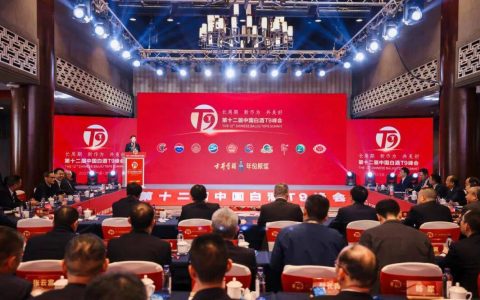
On July 6, Langjiu held its semi-annual distributor video conference in a hybrid online-plus-offline format. Wang Junlin, chairman of Langjiu Group, attended the meeting, while Wang Bowei, general manager of Langjiu Co., delivered a keynote speech titled “Strong, Robust, Squeeze Growth³ – Push Forward One More Kilometre.” More than 7,000 participants from the national sales team and distributor partners joined the conference.
The timing of this 7,000-person assembly is worth a closer look.
Around the time of the meeting, the baijiu industry was undergoing a stress test of its own.
The 2026 Mid-Year Baijiu Market Research Report jointly released by the China Alcoholic Drinks Association and KPMG China shows that the industry is experiencing a classic “triple whammy” of declining volume, price, and profit. Over 86% of surveyed companies reported shrinking profit margins, while 68.5% expect the downturn to continue in the second half of the year. The 20 A-share listed baijiu companies posted combined first-quarter revenue of RMB 132.633 billion, down 0.7% year-on-year, with net profit attributable to parent companies at RMB 52.019 billion, a 1.75% decline. Meanwhile, 74.8% of surveyed enterprises reported revenue contraction, and 61.9% of retail outlets have reduced their operations.
At a time when most liquor companies are opting to “pull back and defend,” Langjiu is calling for “squeeze growth” – and that in itself is a signal.
The Underlying Logic of “Squeeze Growth”: Not Grabbing a Bigger Slice, But Redefining the Grid
The term “squeeze growth” is hardly new in business parlance. In management theory, it typically refers to share-grabbing in a stagnant market – where the total pie is not growing or even shrinking, yet leading players manage to expand counter-cyclically through efficiency gains and structural adjustments.
Langjiu has transplanted this logic into the baijiu sector.
In February this year, Langjiu completed a sweeping organisational restructuring, splitting its marketing system into five separate entities. The former Gulin Langjiu Sales Co. and its divisional and regional structures were dissolved, replaced by five independent sales companies covering Qinghualang, Honghualang, Longmalang, e-commerce and KA, and international business – operating under a coordinated model of “5 sales companies + 10 sales regions.” Against the industry backdrop of widespread headcount reduction and structural downsizing, this “counter-cyclical expansion” looks somewhat unconventional.
But upon closer examination, the essence of stock-market competition is competition in refined operations. The broad-brush regional system worked well enough in an era of growth, but in a stagnant market it only dilutes resources. Breaking the organisation into smaller units is essentially about ensuring that every yuan and every person is deployed more precisely at the front line.
The business-unit system, which had operated for over a decade, fulfilled its mission during Langjiu’s expansion phase from RMB 10 billion to RMB 20 billion in scale. However, as the industry enters a period of stock-market competition and deep adjustment, with increasingly diverse consumer demands, the former “army group” style of centralised management can no longer meet the new requirements for precision and agility. This transition from “business units to corporate entities” is unprecedented in the baijiu industry.
Looking across the industry, the channel strategies of leading baijiu companies during this adjustment period have collectively pivoted toward “subtraction.” According to a review by National Business Daily, the six major listed baijiu companies added a net 1,501 distributors in 2024, bringing the total to 26,252. But by 2025, the total had fallen to 25,691 – a net decrease of 561 in just one year. The industry has almost simultaneously flipped the strategic switch, moving from “shelf-filling for volume” to “bottle-opening as the metric.”
Langjiu’s approach is somewhat different – it is not simply increasing or decreasing distributor numbers, but rather revitalising its existing channel network through organisational restructuring. By breaking up the structure and delegating authority to the front line, it is effectively shifting resources and decision-making power from headquarters to regional levels, enabling each market unit to operate with precision based on local conditions.
In the view of JiuYe Times, the core logic of Langjiu’s “squeeze growth” is not about grabbing a few extra points of market share from the total pie. Instead, through the dual restructuring of its organisation and product portfolio, it is redefining its own competitive coordinates within the stock market. When the industry shifts from “making the cake bigger” to “dividing the cake,” the skill of the knife matters more than sheer strength.
The “³” Upgrade: From Individual Will to Institutional Capability
In the first half of 2026, Langjiu undertook two initiatives on the brand front that are relatively uncommon in the industry.
First, the nationwide Quality Ceremony roadshow.
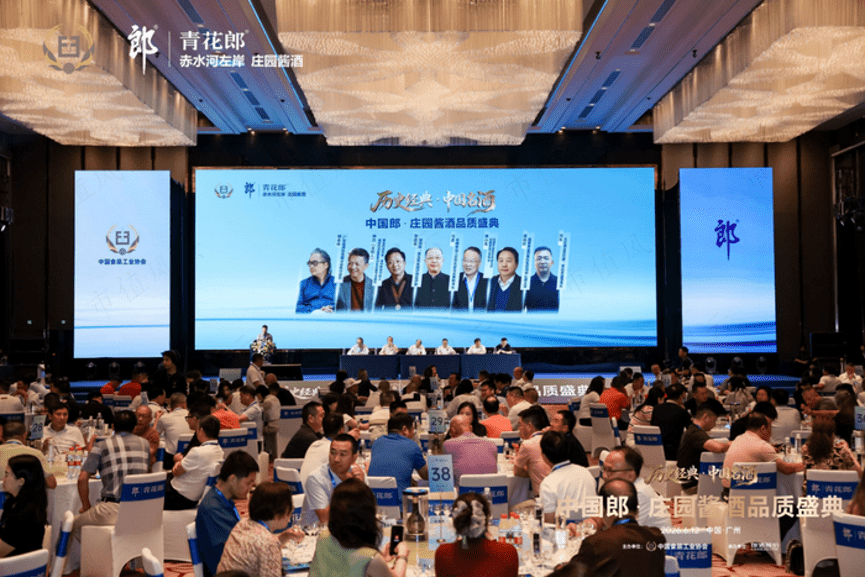
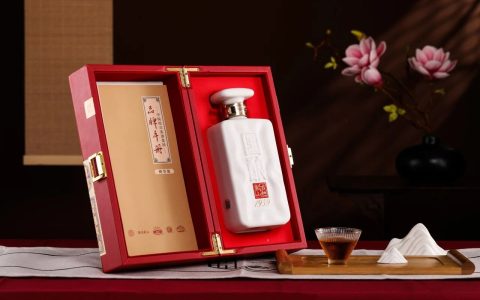
From its debut in Neijiang, Sichuan in March, to the Guangzhou leg on June 12 that kicked off the national tour, the Quality Ceremony travelled to nine cities: Guangzhou, Dongguan, Nanyang, Foshan, Shenzhen, Nanchong, Tianjin, Suzhou, and Jinan. In each city, Langjiu invited members of the “National Tasting Panel” from the 4th and 5th National Liquor Appraisal Conferences – authoritative experts who had participated in the “China Famous Liquor” selections of 1984 and 1989 – to lead on-site tastings of Langjiu vintage products from 1984 and 1989 alongside 2025 vintages of Qinghualang and Hongyunlang.
What makes this approach distinctive is that it transforms “quality” from an abstract brand slogan into a tangible, verifiable experience. In the past, quality communication by baijiu companies largely relied on advertising – consumers heard that “this liquor is good,” but never knew “why it is good.” Langjiu brings tasting experts directly to consumers, inviting them to pour, taste, and have the experience explained in person. This creates a unified quality narrative that connects consumers, distributors, and collectors scattered across the country within a single cognitive framework.
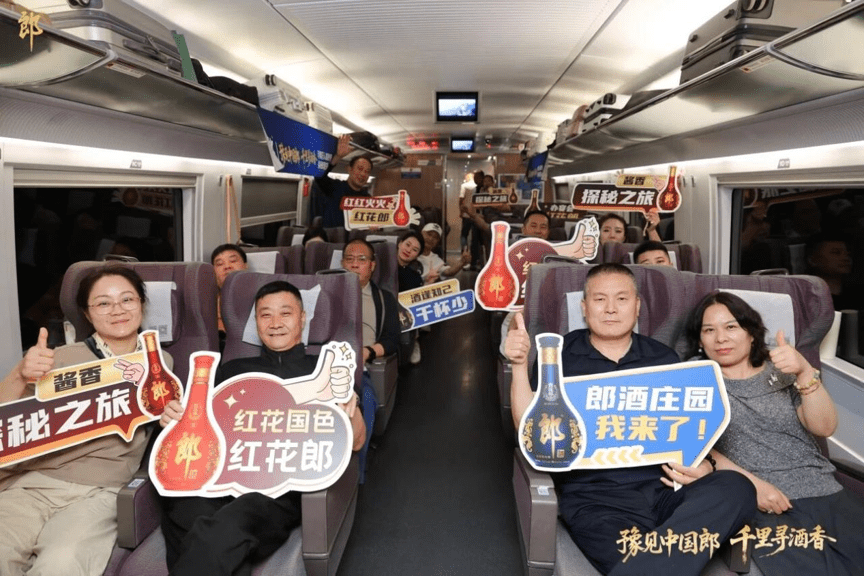
Second, the “Henan High-Speed Rail Special Tour to Langjiu Estate” launched on May 27.
The first special train departed from Zhengzhou East Station, carrying more than 500 Langjiu members on a three-day, two-night deep-dive estate experience – the first corporate-customised train arranged by China Railway Zhengzhou Group. The itinerary included visits to brewing workshops, exploration of the Tianbaodong and Dibodong caves, and tastings of different vintage base wines at the Jinzun Fort. Every detail, from a custom 12306 splash screen to dedicated boarding channels, was designed to maintain a ceremonial experience throughout.
What makes this noteworthy is that at a time when the industry is broadly cutting market expenses, Langjiu is investing in experiential engagement. This is not simple brand advertising; it is turning consumers into deep participants in the brand. Shifting consumers from “drinking a label” to “drinking with emotional connection” is costly, but in the age of stock-market competition, high-barrier competitive moats often come from what others cannot do – or dare not do.
300,000 Tonnes of Aged Base Wine: An Underrated Moat
All these moves, of course, rest on one prerequisite – Langjiu has the substance to back them up.
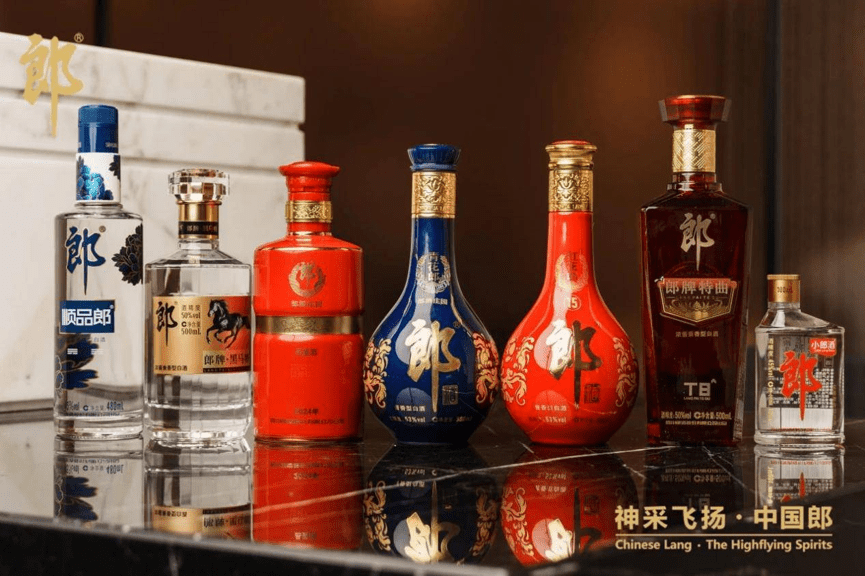
At the 2025 Chongyang Xiasha ceremony, Mei Gang, executive deputy general manager of Langjiu Co., disclosed that as of the 2025 Double Ninth Festival, Langjiu’s sauce-aroma base wine inventory had reached 300,000 tonnes. The company’s annual sales release of sauce-aroma Langjiu in 2026 would be capped at 30,000 tonnes. With an annual production capacity exceeding 70,000 tonnes and a stockpile of 300,000 tonnes, Langjiu strictly adheres to a “store ten, sell one” policy.
What does 300,000 tonnes of sauce-aroma base wine reserves actually mean? It means that time has become a variable in Langjiu’s quality equation – not merely a cost factor.
In the sauce-aroma baijiu sector, aged liquor reserves directly determine the upper limit of product quality. Most distilleries need time to gradually accumulate aged stocks, but Langjiu can use its existing 300,000-tonne inventory as a quality amplifier. This is a form of “time leverage” – while others brew a batch in one year, Langjiu can blend it with 10-year-old aged liquor. This physical moat cannot be replicated by marketing rhetoric.
The value of Langjiu Estate, meanwhile, plays out more on the brand dimension.
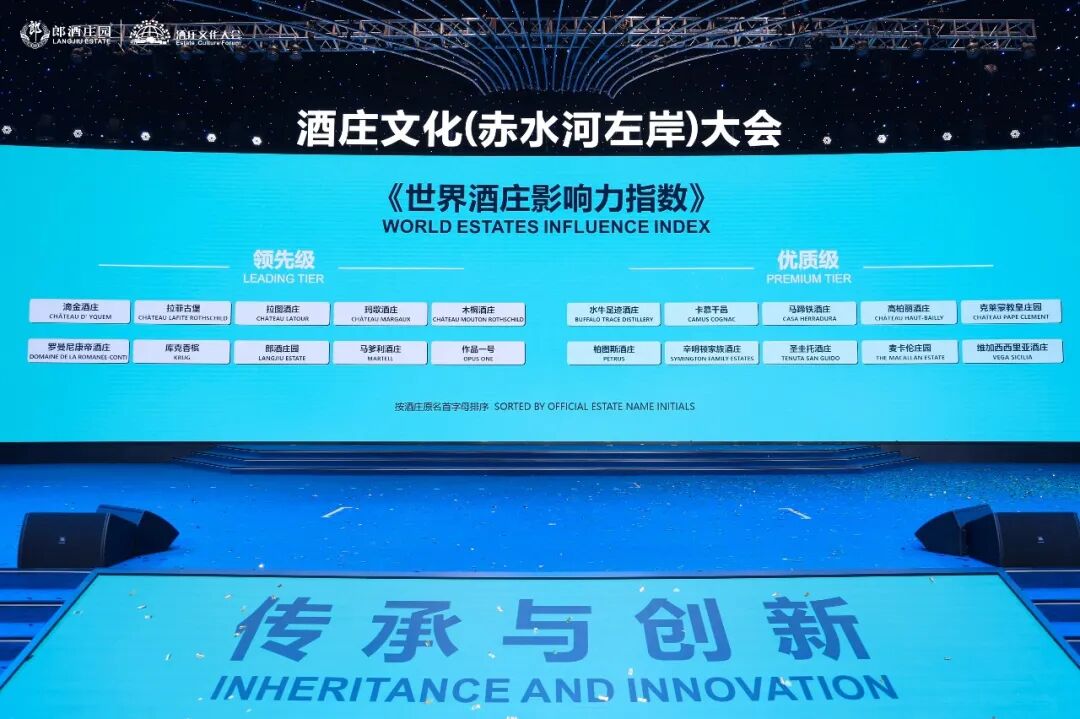
On June 20, the inaugural World Wine Estate Culture Conference was held at Langjiu Estate. The World Wine Estate Influence Index, officially released by Xinhua Index Research Institute, evaluated 94 estates across 23 countries and 10 major alcoholic beverage categories using five dimensions – rootedness, driving force, vitality, reach, and sustainability – with 30 quantified indicators.
Langjiu Estate was ranked alongside 10 international estates including Château Lafite Rothschild, Domaine de la Romanée-Conti, and Maison Martell in the “Leading” tier – making it the only Chinese baijiu estate on the list. Wang Bowei, speaking at the conference under the theme “Where like minds meet, distance is no obstacle,” extended a global invitation for joint brand collaborations with world-class wine estates.
From “product export” to “standard-setting” – Langjiu Estate’s role is evolving. In the past, Chinese baijiu had limited international influence, mostly playing a passive role in global evaluations. The World Wine Estate Influence Index is the first framework to propose a “cross-category, multi-dimensional” evaluation system. Langjiu Estate’s inclusion in the Leading tier means that Chinese baijiu, for the first time, has secured a place at the table of rule-makers in the global estate evaluation system.
In the view of JiuYe Times, this is precisely the underlying foundation that makes Langjiu’s “squeeze growth” viable. When the industry is mired in price wars and cut-throat competition, only companies with irreplaceable physical and cultural assets are qualified to talk about “squeezing” – not being squeezed, but actively squeezing others.
The Industry Bottoming-Out Choice
In its 2026 second-half investment outlook, China Securities pointed out that the baijiu industry is showing a clear trend of “shifting toward the C-end.” If the industry is indeed bottoming out, as brokers suggest, then companies that have completed their C-end system build-out are likely to gain a first-mover advantage in the next cycle.
Langjiu’s key moves in the first half of 2026 – splitting the organisation to empower front-line teams, taking the Quality Ceremony directly to consumers, and using high-speed rail tours to deeply engage customers – all point in the same direction: shifting resources from “casting a wide net” to “drilling deep wells,” and from “managing channels” to “managing users.”
The 7,000-person mid-year conference was merely a milestone. Wang Bowei laid out four dimensions at the meeting – “strategy, organisation, product, and tactics” – and how these are implemented in the second half will be the real test. The next stage of “³” will be measured not by the volume of slogans, but by the ability to translate them into terminal sales.
In the second half of the industry adjustment, the competition is not just about who can endure longer, but who is still making strategic moves while enduring. Langjiu has chosen an expensive path – organisational restructuring costs money, the Quality Ceremony tour costs money, and the high-speed rail special train costs money – but every expenditure has a clear purpose: making quality perceivable, the brand tangible, and the taste experience memorable.
Whether this path will pay off – the market in the second half of 2026 will provide the answer.