7月30日,甘肃武威。一场名为“走进莫高共话未来”的战略升级暨行业合作交流研讨会,在莫高国际酒庄悄然举行。行业协会领导、智业专家、优秀酒商、主流行业媒体悉数到场。

在国产葡萄酒行业连续十年下滑的凛冬里,这场会议没有悲情,反而透出一股罕见的笃定。
酒业时报认为,当整个行业都在思考“如何活下去”的时候,莫高选择回答另一个问题:凭什么穿越周期?
十年下滑,国产葡萄酒的“至暗时刻”有多暗?
先看一组数字。
国家统计局数据显示,2025年国产葡萄酒规模以上企业产量仅9.7万千升,同比下降17.1%。国产与进口葡萄酒合计日均开瓶量,从2024年的104万瓶降至84万瓶——一天少喝20万瓶。
把时间拉长,更触目惊心:国产葡萄酒总产量已连续十年下滑,2017年尚有百万千升规模,到2025年仅剩9.7万千升,只剩当年十分之一。
进口端同样寒意逼人。2025年全年葡萄酒进口量约2.07亿升,同比下降26.85%;海关总署细分数据显示,2025年2L及以下瓶装葡萄酒进口量13.3万千升,同比下滑19.6%。
上市公司层面,除张裕外,其余10家葡萄酒上市企业2025年合计营收10.32亿元,同比下降19.8%,合计亏损2.99亿元;目前行业内已有3家葡萄酒上市企业被实施ST风险警示,暂无相关企业退市。
有行业报告指出,国产葡萄酒销售额从2016年463亿元下降至2024年91亿元,跌幅高达80.35%。
在酒业时报看来,这不是周期性波动,而是整个产业逻辑的坍塌。旧的增长方式——政务礼品驱动、渠道压货驱动、进口替代叙事——全部失效。
莫高的“家底”:四十年积淀还能不能打?
然而,就是在这样的行业背景下,莫高选择了战略升级。
莫高并非毫无根基的“新玩家”。1981年,莫高被国家轻工业部确定为全国十家葡萄酒定点生产企业之一。1983年启动葡萄基地建设,1985年第一瓶莫高葡萄酒诞生。作为甘肃农垦控股的上市公司,莫高既是国家农业产业化重点龙头企业,也是甘肃省葡萄酒龙头企业。
四十余年的深耕,莫高在武威建成莫高庄园、莫高生态酒堡,在兰州建成集参观、品鉴、旅游为一体的莫高国际酒庄,在北京、深圳、西安等城市建设了城市酒堡。从产区到都市、从酿造到文化的全场景体验版图,这种布局在国产葡萄酒企业中并不多见。
最具辨识度的是黑皮诺。作为中国黑皮诺品类的开创者,莫高黑皮诺葡萄酒获授“中国第一个黑皮诺葡萄酒品牌”“连续25年黑皮诺葡萄酒行业第一国货品牌”等称号。2025年华樽杯品牌价值评议中,莫高葡萄酒品牌价值达241.12亿元,独立品牌莫高黑皮诺达219.32亿元,连续八年跻身全球十大葡萄酒品牌。
但硬币的另一面同样刺眼。根据财报,2025年莫高股份营收2.04亿元,同比下降38%;净利润-1.07亿元,连续第五年亏损。葡萄酒业务营收收缩至0.269亿元,业务占比仅13.22%。因触发财务类退市指标,莫高股份再度“披星戴帽”,变更为*ST莫高。
酒业时报认为,这正是莫高此次战略升级最值得关注的地方——它不是在顺境中“锦上添花”,而是在困境中“绝地反击”。存量资产的厚度与经营困局的深度,构成了这场升级最真实的张力。
破局三策:莫高到底在升级什么?
从研讨会释放的信息来看,莫高的战略升级至少包含三个层面。
第一,厂商关系从“博弈”到“共生”
这是最具突破性的变化。莫高推出多套厂商合作创新机制。
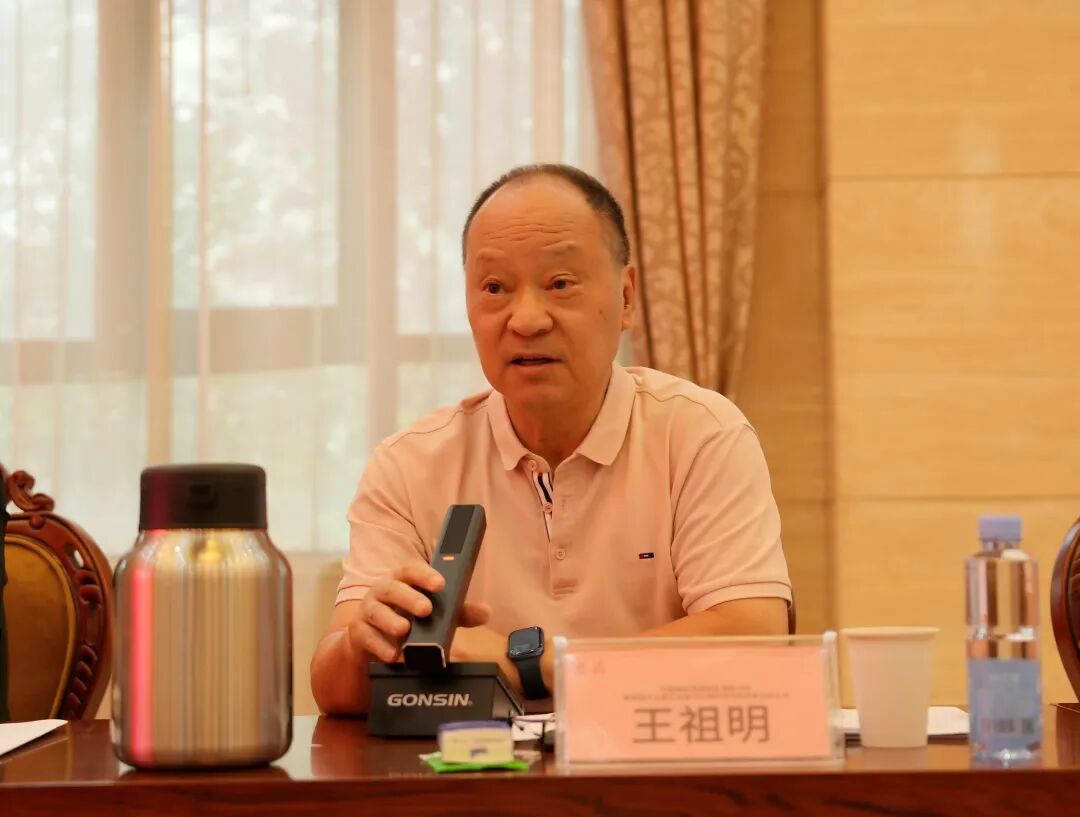
中国酒类流通协会副秘书长王祖明在研讨会上评价,莫高本次战略升级举措具备行业标杆价值。从“买卖关系”到“合伙关系”,从“利益博弈”到“价值共生”——这种模式革新,本质上是对葡萄酒行业传统渠道逻辑的一次重构。
为什么要改?因为旧模式走不通了。有行业报告显示,近六成酒商近三年利润持续下滑,仅28.3%的酒商愿意新增合作品牌或单品。渠道信心崩塌之下,继续压货无异于饮鸩止渴。莫高选择将厂商关系从“交易”升级为“合作”,既是主动破局,也是顺势而为。
第二,产品从“干红独大”到“多元矩阵”
长期以来,国产葡萄酒高度依赖干红单一品类。但消费结构正在发生深层变迁——白葡萄酒、起泡酒等品类逆势增长,年轻消费群体对低度、轻盈、悦己的消费需求日益凸显。
莫高的应对是“品类创新+工艺迭代”双轮驱动。在巩固黑皮诺核心优势的同时,推出冰融酒、低泡酒、果味酒等创新产品。公司与和君咨询等专业机构深度合作,重新梳理产品体系,推出黑皮诺PN系列等全新产品矩阵。在业绩说明会上,莫高管理层透露已开发出小白玫瑰低泡葡萄酒、桃红低泡葡萄酒等小瓶装产品,以及即饮型葡萄酒。

中国酒业协会副秘书长刘振国在研讨会上指出,葡萄酒行业必须转向轻量化酒体、亲民定价、大众化饮用场景的产品研发路线。莫高的产品战略,与这一行业判断高度吻合。同时刘振国总结了莫高五大不可复制优势:国企上市平台信誉、河西走廊武威风土产区、甘肃本土根据地市场、黑皮诺品类龙头地位、务实的核心管理团队。
第三,品牌从“产区叙事”到“文化赋能”
莫高的品牌底色是河西走廊的千年风土。“葡萄美酒夜光杯”的诗意,祁连雪水的润泽,丝路文化的浸润。但在新消费时代,仅有产区故事远远不够。
莫高正在将中国文化及敦煌文化嵌入产品设计,“莫高印象”等产品已推向市场。在酒业时报看来,国产葡萄酒最大的竞争对手从来不是进口酒,而是白酒和啤酒——是中国人餐桌上的饮酒习惯。莫高试图用中国文化重新定义葡萄酒的消费场景,这条路如果走通,将打开远比“替代进口”更大的市场空间。
行业底部的“战略进攻”
银河证券研报认为,2026年葡萄酒行业将处于筑底过程,前瞻布局长期变革的酒企有望在下一轮上行周期实现超额收益。
行业分析报告也指出,当前中国葡萄酒行业处于“底部结构性修复、存量细分增长”的特殊过渡阶段,增长集中在国产精品酒庄酒、适配中式餐饮的中端佐餐酒、低度气泡葡萄酒三大细分赛道。
莫高选择的恰恰是这三大赛道的交汇点——以黑皮诺为核心的中高端精品酒,以低泡酒、果味酒为突破的轻饮品类,以中国文化为纽带的中式佐餐场景。
横向对比来看,行业龙头张裕2025年归母净利润仅7129万元,同比暴跌76.64%,创上市25年来最低。张裕董事长周洪江直言“2025年的工作是不合格的”。张裕的应对之策是推出长尾猫白葡萄酒、烧烤葡萄酒等创新产品,将约800名销售人员从渠道管理转向终端服务。

莫高与张裕,一家是西部产区龙头,一家是行业绝对老大,却在这个冬天不约而同地走向了同一个方向:放弃旧逻辑,拥抱新消费。
在酒业时报看来,这或许正是国产葡萄酒价值重塑的真正起点——不是等风来,而是自己造风。
7月30日的莫高国际酒庄,没有豪言壮语,没有宏大叙事。有的是行业协会的理性研判、智业专家的精准把脉、合作商的务实对话。
四十年河西走廊的风土积淀,连续五年的经营亏损,十年行业下行的周期底部——这三重背景叠加之下,莫高的战略升级更像是一场“不得不打”的战役。
但恰恰是这种“不得不”,让这场升级褪去了所有表演成分,露出了最真实的底色。国产葡萄酒的价值重塑之路,注定漫长。但至少,有人在走。
On July 30, in Wuwei, Gansu, a strategic upgrade and industry cooperation exchange seminar titled “Into Mogao, Dialoguing the Future” was quietly held at the Mogao International Winery. Industry association leaders, strategy experts, leading wine merchants, and mainstream trade media were all in attendance.
In the depths of a decade-long decline for the domestic wine industry, this conference carried no trace of lament – instead, it exuded a rare sense of conviction.
In the view of JiuYe Times, while the entire industry is pondering “how to survive,” Mogao has chosen to answer a different question: what gives it the right to transcend market cycles?
PART 01 How Dark Is the “Darkest Hour” for Domestic Wine After a Decade of Decline?
Let’s start with the numbers. According to the National Bureau of Statistics, production by domestic wine enterprises above designated size in 2025 was only 97,000 kilolitres, down 17.1% year-on-year. The combined daily bottle-opening volume of domestic and imported wines fell from 1.04 million bottles in 2024 to 840,000 bottles – meaning 200,000 fewer bottles consumed per day.
Extending the timeline reveals an even more startling picture: total domestic wine production has now declined for ten consecutive years. In 2017, production still stood at one million kilolitres; by 2025, it had dwindled to just 97,000 kilolitres – barely one-tenth of that peak.
The import side is equally chilling. Full-year wine imports in 2025 reached approximately 207 million litres, down 26.85% year-on-year. Detailed customs data shows that imports of bottled wine of 2L and below totalled 133,000 kilolitres in 2025, down 19.6% year-on-year.
At the listed-company level, excluding Changyu, the remaining 10 listed wine enterprises generated combined revenue of RMB 1.032 billion in 2025, down 19.8% year-on-year, with aggregate losses of RMB 299 million. Currently, three listed wine companies in the sector have been subject to ST risk warnings, though none have been delisted to date.
Industry reports indicate that domestic wine sales fell from RMB 46.3 billion in 2016 to RMB 9.1 billion in 2024 – a staggering decline of 80.35%.
In the view of JiuYe Times, this is not a cyclical fluctuation – it is the collapse of the entire industry logic. The old growth drivers – government-gift-driven demand, channel-inventory-loading-driven distribution, and the import-substitution narrative – have all failed.
PART 02 Mogao’s “War Chest”: Can Four Decades of Accumulated Strength Still Deliver?
Yet it is precisely against this industry backdrop that Mogao has chosen to pursue strategic upgrading.
Mogao is no “new player” without foundations. In 1981, Mogao was designated by the national Ministry of Light Industry as one of China’s ten designated wine producers. Vineyard construction began in 1983, and the first bottle of Mogao wine was produced in 1985.
As a listed company controlled by Gansu State Farms, Mogao is both a national key leading enterprise in agricultural industrialisation and a leading wine enterprise in Gansu Province. Through more than four decades of deep cultivation, Mogao has established Mogao Estate and Mogao Eco-Winery in Wuwei, the Mogao International Winery in Lanzhou – integrating visits, tastings, and tourism – and urban wineries in Beijing, Shenzhen, Xi’an, and other cities.
This full-spectrum experiential footprint – spanning from production regions to urban centres, from winemaking to culture – is rare among domestic wine enterprises.
Its most distinctive asset is Pinot Noir. As the pioneer of the Pinot Noir category in China, Mogao Pinot Noir has been honoured as “China’s first Pinot Noir wine brand” and “the No. 1 domestic Pinot Noir brand for 25 consecutive years.”
In the 2025 Huazun Cup brand value assessment, the Mogao wine brand was valued at RMB 24.112 billion, with the standalone Mogao Pinot Noir brand reaching RMB 21.932 billion – marking eight consecutive years among the global top ten wine brands.
But the other side of the coin is equally stark. According to its financial reports, Mogao’s 2025 revenue was RMB 204 million, down 38% year-on-year, with a net loss of RMB 107 million – its fifth consecutive year in the red. Wine business revenue shrank to RMB 26.9 million, accounting for just 13.22% of total revenue.
Having triggered financial delisting criteria, Mogao was once again designated as a “*ST” stock, becoming *ST Mogao.
In the view of JiuYe Times, this is precisely what makes Mogao’s strategic upgrade most worth watching – it is not “adding flowers to brocade” in good times, but a “counterattack from desperate ground” in adversity. The weight of its accumulated assets and the depth of its operational difficulties create the most authentic tension behind this upgrade.
PART 03 Three Strategies for Breakthrough: What Exactly Is Mogao Upgrading?
Based on the information released at the seminar, Mogao’s strategic upgrade encompasses at least three dimensions.
First, the manufacturer-distributor relationship shifts from “adversarial” to “symbiotic.”
This is the most groundbreaking change. Mogao has introduced multiple innovative manufacturer-distributor cooperation mechanisms. Wang Zuming, Deputy Secretary-General of the China Liquor Circulation Association, commented at the seminar that Mogao’s strategic upgrade initiatives set a benchmark for the industry.
From “buyer-seller” to “partnership,” from “interest-based rivalry” to “value symbiosis” – this model innovation essentially represents a fundamental restructuring of the traditional channel logic in the wine industry.
Why the change? Because the old model no longer works. Industry reports show that nearly 60% of wine merchants have seen their profits decline over the past three years, with only 28.3% willing to take on new cooperative brands or SKUs. With channel confidence in ruins, continuing to push inventory is nothing short of drinking poison to quench thirst.
Mogao’s choice to upgrade the manufacturer-distributor relationship from “transaction” to “cooperation” is both a proactive breakthrough and a response to the prevailing trends.
Second, the product portfolio shifts from “dry red dominance” to “diversified matrix.”
For a long time, domestic wine has been heavily reliant on a single category: dry red. But the consumption structure is undergoing profound change – white wines, sparkling wines, and other categories are growing against the trend, while younger consumers increasingly demand low-alcohol, light, and self-pleasing drinking experiences.
Mogao’s response is driven by two engines: “category innovation + process iteration.” While consolidating its core strength in Pinot Noir, it has launched innovative products including ice wines, low-sparkling wines, and fruit-flavoured wines. The company has engaged in deep collaboration with professional consultancies such as Hejun, restructuring its product system and launching a new product matrix including the Pinot Noir PN series.
At its performance briefing, Mogao management revealed that it has developed small-bottle products including white muscat low-sparkling wine and rosé low-sparkling wine, as well as ready-to-drink wines.
Liu Zhenguo, Deputy Secretary-General of the China Alcoholic Drinks Association, noted at the seminar that the wine industry must pivot its product development towards lighter-bodied wines, accessible pricing, and mass-market drinking scenarios. Mogao’s product strategy aligns closely with this industry diagnosis.
Liu also summarised Mogao’s five irreplaceable advantages: the credibility of a state-owned listed platform, the terroir of the Wuwei region in the Hexi Corridor, the home-base market of Gansu, its leadership position in the Pinot Noir category, and a pragmatic core management team.
Third, branding shifts from “terroir narrative” to “cultural empowerment.”
Mogao’s brand DNA is rooted in the thousand-year-old terroir of the Hexi Corridor – the poetry of “wine of grapes in a luminous cup,” the nourishment of Qilian snowmelt, and the influence of Silk Road culture.
But in the new consumer era, a terroir story alone is far from sufficient. Mogao is embedding Chinese culture and Dunhuang culture into its product design, with products such as “Mogao Impression” already launched.
In the view of JiuYe Times, the biggest competitor for domestic wine has never been imported wine – it is baijiu and beer, and more fundamentally, the drinking habits on Chinese tables. Mogao is attempting to redefine wine consumption scenarios through Chinese culture. If this path succeeds, it will open up a far larger market than the “import substitution” narrative ever could.
PART 04 “Strategic Offensive” at the Industry Bottom
Galaxy Securities research suggests that the wine industry will go through a bottoming-out process in 2026, and wineries that proactively position themselves for long-term change are well-positioned to capture excess returns in the next upward cycle.
Industry analysis reports also indicate that China’s wine industry is currently in a transitional phase of “structural bottom repair and segmented stock-market growth,” with growth concentrated in three sub-segments: domestic boutique winery wines, mid-range food-pairing wines suited to Chinese cuisine, and low-alcohol sparkling wines.
Mogao has chosen precisely the intersection of these three tracks – mid-to-high-end premium wines centred on Pinot Noir, light-drink categories breaking through with low-sparkling and fruit-flavoured wines, and Chinese dining scenarios linked through Chinese culture.
Looking across the industry, Changyu, the sector leader, posted net profit attributable to shareholders of just RMB 71.29 million in 2025 – a 76.64% freefall year-on-year and the lowest in its 25 years of listing. Changyu Chairman Zhou Hongjiang candidly admitted that “2025’s performance was unsatisfactory.”
Changyu’s response has been to launch innovative products such as Long-Tail Cat White Wine and BBQ Wine, while shifting some 800 sales personnel from channel management to terminal service.
Mogao and Changyu – one a regional leader in the western producing region, the other the undisputed industry giant – have, in this winter, converged on the same direction: abandoning old logic and embracing new consumption.
In the view of JiuYe Times, this may well be the true starting point for the value reinvention of domestic wine – not waiting for the wind to come, but creating the wind themselves.
At the Mogao International Winery on July 30, there were no bold declarations, no grand narratives. There was, instead, the rational assessment of industry associations, the precise diagnoses of strategy experts, and the pragmatic dialogue of cooperative partners.
Four decades of terroir accumulation in the Hexi Corridor, five consecutive years of operating losses, and ten years of industry decline at the bottom of the cycle – against this triple backdrop, Mogao’s strategic upgrade resembles a battle that “must be fought.” Yet it is precisely this necessity that strips the upgrade of all pretence, revealing its most authentic foundation.
The road to value reinvention for domestic wine is destined to be long. But at least, someone is walking it.
原创文章版权归本网所有;转载文章归原作者所有。发布者:酒业时报,转载请注明出处:https://www.thewinetimes.com/gongsi/11776