Baijiu distributors are all anxious about product selection, anxious about trends, anxious about where the next growth point will come from. The answer, in fact, does not lie in the future – it lies in history. Japan’s three decades of economic stagnation provide us with a clear mirror: what did those brands that transcended market cycles do right? Today’s baijiu market is simultaneously playing out the same script.
Author: Chunming
In 2025, the baijiu industry delivered a rather unimpressive report card: declining production and revenue, persistently high average inventory turnover days, and price inversions across many enterprises. Channel inventories are elevated, pricing systems are under pressure, and terminal sell-through remains weak.
Distributors felt the chill earlier than anyone – goods stuck in warehouses, capital unable to move, product selection becoming increasingly difficult.
But if you shift your gaze to another market, you will see a completely different story.
Japan’s Lost Decades Hold the Answer to Product Selection
In 1990, Japan’s bubble economy collapsed. Over the following thirty years, GDP was virtually stagnant, real estate prices halved, and unemployment soared. By conventional logic, the consumer market should have been in despair. Yet precisely during this period, a number of brands and products actually grew stronger.
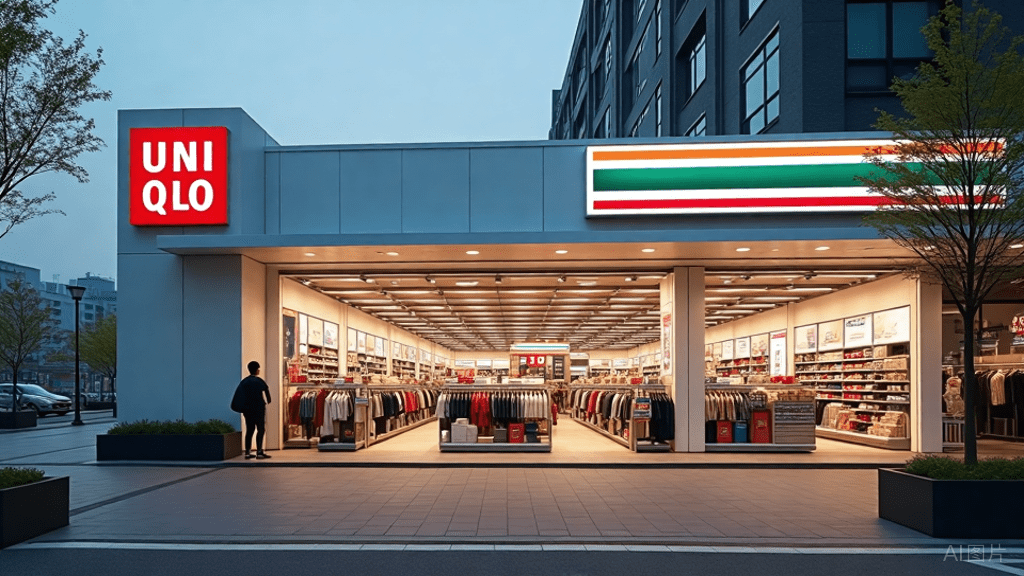
Unsweetened tea grew continuously for thirty years. Per capita consumption of functional yoghurt nearly tripled. Uniqlo transformed from a regional小店 into a global apparel giant. 7-Eleven expanded relentlessly through everyday small pleasures. Daiso – a general store selling 100-yen items – achieved gross margins of over 30%.
With the economy so weak, why did these products sell even better?
An easily misleading judgement is: when consumption declines, cheap goods should sell well. It sounds plausible, but Japan’s three decades of real experience tell us this logic is only half right.
Overall beer consumption declined, but consumers didn’t quit drinking – they simply swapped 280-yen regular beer for 200-yen happoshu (low-malt beer). The category didn’t disappear; it just shifted price points. But in the same period, Meiji launched a functional yoghurt主打 immunity-boosting, priced at nearly double the regular yoghurt. The result? Japan’s per capita yoghurt consumption rose from 4,000 yen to 14,000 yen – nearly a threefold increase.
Cheap and expensive coexisted in the same market.
This is not a cycle – this is a fundamental rewrite of the underlying logic. Today’s Chinese baijiu industry is undergoing the exact same phenomenon.
The Underlying Logic of Consumption Has Fundamentally Shifted
The baijiu industry’s growth over the past two decades was built on a clear track: whatever manufacturers produced and distributors represented, consumers bought. Big enough brand, thick enough margins, good enough policies – this product-selection logic never failed.
But this track is disappearing.
Nielsen research data shows that home drinking and self-consumption scenarios have risen to 62% of total consumption, while business banquet scenarios have sharply declined by 30%. iiMedia Research data confirms the same trend: gatherings with friends (45.69%) and family get-togethers (40.06%) have surpassed business banquets (38.49%) as the mainstream occasions for baijiu consumption. Consumption is shifting from “valuing high intensity and strong flavours” to “prioritising quality and comfort.”
In terms of consumer psychology, this is called “decision anchor migration.”
In the supply-driven era, consumers’ decision anchor was “availability” – buy whatever is on the shelf. In the consumer sovereignty era, the anchor has shifted to “worthiness” – is this worth my money? Daniel Kahneman’s prospect theory states that people do not evaluate absolute quantities when making decisions, but compare against “reference points.” When consumers’ reference point shifts from “what others drink” to “what I need,” the entire purchasing logic is rewritten.
This is not a cyclical adjustment. This is a paradigm shift in which power transfers from producers to consumers.
Japan’s Thirty Years of Consumption: Two Principles Explain Everything
Behind the categories that transcended Japan’s three-decade cycle stood just two consumer psychology principles.
First principle: consumers will always invest in products that are “good for themselves.”
Why did unsweetened tea grow for thirty years? Because health is a timeless human necessity – the more uncertain the economy, the stronger people’s desire to control their own bodies. Ito En wasn’t selling a beverage; it was selling “this is good for your health.” The same goes for Meiji’s functional yoghurt – consumers were not buying a cup of milk, but topping up the psychological account of “drink this every day to stay out of the hospital.”
The essence of such products is “health savings” – spending today’s money to buy tomorrow’s peace of mind. Investment doesn’t stop when the economy worsens; it only intensifies because of heightened uncertainty. This explains why, during periods of overall consumption contraction, health foods, functional beverages, and unsweetened teas all grew across the board.
From a consumer psychology perspective, this can be explained by “preventive consumption motivation.” When people feel uncertain about the future, they instinctively increase investment in “maintaining the status quo” and “protecting themselves.” This is not consumption – this is buying the psychological signal that “I can still control my own life.” Economic downturns actually amplify this motivation.
Second principle: products that make consumers feel “fair to me” will never be abandoned.
Toshifumi Suzuki, founder of Japan’s 7-Eleven, made a subtle observation: the worse the economy, the more people need a small thing to treat themselves well. During Japan’s toughest economic years, 7-Eleven launched a premium rice ball priced at 1.6 times the industry average. Everyone thought selling expensive items at such a time would be a failure – it sold out massively.
The reason is simple: after frugal days and immense workplace pressure, people need an emotional pressure-release valve. A slightly better meal, a small thing that brings joy – a way to give today’s self some satisfaction. This is not luxury consumption – this is the “psychological compensation mechanism” at work.
Japan’s pet consumption, camping equipment, and anime merchandise markets have today reached 3.5 trillion yen in scale – larger than many traditional FMCG categories. Behind them lies the same logic: when you have to save on the “big things,” you need to regain a sense of control and dignity on the “small things.”
These products don’t sell function – they sell the emotional value of “life has treated me unfairly, but I deserve this little bit of goodness.”
Explained through self-determination theory: humans have three basic psychological needs – autonomy, competence, and relatedness. When the macro environment deprives people of a sense of control (damaged autonomy), consumers compensate by purchasing small pleasures that are entirely “their own decision.” A good drink, a good meal – these purchases are 100% within their control, buying the psychological affirmation that “I can still make decisions for myself.”
These two principles together form a clear framework for product selection: does this product help consumers invest in themselves, or help them compensate themselves? As long as it satisfies one of these, it has the foundation to transcend cycles. If it meets neither – lacking both health value and emotional value, relying only on brand awareness and channel distribution – it will be quietly abandoned by consumers during economic downturns.
Because consumers start recalculating: do I really need this? Why does it deserve my money? If there’s no answer, there is no reason for it to survive.
The Baijiu Market Is Simultaneously Playing Out These Principles
These principles are now simultaneously unfolding in today’s baijiu market.
The explosion of bottled baijiu (guangping) is the most telling signal.
The bottled baijiu market grew from RMB 35.2 billion in 2013 to RMB 150 billion in 2024, and is projected to exceed RMB 200 billion in 2025, with the RMB 50–100 “premium bottled” segment growing over 40%. Guangliang Liquor, despite industry-wide pressure, maintained 30% year-on-year sales growth in 2024, having sold a cumulative 400 million bottles and reaching over 1 million retail outlets.
Its logic is simple: directly print the proportion of three-year grain-based base liquor on the bottle label, so consumers can see at a glance whether this bottle is worth the price. It doesn’t sell cheapness – it sells transparency and fairness. This precisely taps into the second principle.
The rise of low-alcohol baijiu is equally noteworthy.
The low-alcohol liquor market is projected to exceed RMB 74 billion in 2025, with a compound annual growth rate of 25% – five times the overall growth rate of the baijiu industry. After Jiangxiaobai’s parent company transformed into “Bottle Planet,” its sales revenue grew 25% year-on-year from January to July 2025, maintaining 19 consecutive months of steady growth, with its core SKU Guoli growing by 80%.
What young consumers want is “pleasing oneself” – a quiet drink alone, a light buzz with friends, a relaxed moment without the pressure of drinking games. This is the classic first principle – being good to oneself.
The iteration of the “taproom+” model taps into the compensation logic of emotional repair.
Tang Sanliang Taproom focuses on full-category bulk liquor with community penetration. In March 2025, it completed a nearly RMB 10 million angel round, with stores now covering Chengdu, Chongqing, Guangzhou, and other cities. Fresh Beer Fulujia signed 1,607 new stores in 2025, reaching a total of 1,808 stores across over 300 cities nationwide, bringing craft beer back to “daily staple” status at RMB 6–10 per cup.
Tang Sanliang sells “the warmth of home, the small happiness of tipsiness”; Fresh Beer Fulujia offers “6 yuan of brief relaxation.” This is essentially the same psychology as 7-Eleven’s premium rice ball that sold brilliantly despite being 60% more expensive – save on the big things, regain dignity on the small things.
Traditional premium brands are also actively responding to these two principles.
From Wuliangye to Fenjiu, to Luzhou Laojiao and Gujing Gongjiu, all have launched “food + liquor” formats, expanding baijiu from banquet tables into “light social” experiential scenarios. Luzhou Laojiao launched the “Baidiao” series, focusing on low alcohol, easy drinking, and multi-scenario application. Shede Liquor cross-branded with Chinese National Geography, anchoring the emotional value of “poetry, wine, and the open road.”
Data shows that the proportion of baijiu consumption in lightweight scenarios such as home drinking and solo camping has climbed from 35% in 2020 to 58% in 2025, surpassing traditional social scenarios for the first time.
These are not accidental trends – they are the replay of Japan-validated category principles in the baijiu market.
Explained through self-consistency theory: when consumers define themselves as “rational,” “healthy,” and “self-pleasing,” the transparent pricing of bottled baijiu, the relaxed experience of low-alcohol products, and the emotional value of scenario-based consumption resonate with this self-perception. This cannot be solved by marketing rhetoric – it requires deep alignment between product logic and consumer psychology.
Distributors’ Product-Selection Logic Must Be Rewritten
Historically, distributors selected products based on three core criteria: big enough brand, thick enough margins, good enough policies. This logic worked perfectly in the “channel is king” era. But today, aside from Feitian Moutai, almost all baijiu brands have experienced price inversions to varying degrees – the spread-profit model is collapsing.
The new product-selection logic should centre on one core question: why does the consumer think this product is “worth it”?
Based on the thirty years of Japan’s experience and observations of today’s Chinese baijiu market, we have distilled five selection principles for distributors:
Principle 1: Look at whether the product responds to consumers’ “worthiness” question.
Consumers now ask three questions before buying anything: do I really need it? Why is it worth more than others? What can it bring me? If the product cannot answer, it has no reason to survive. Guangliang answered “why” with a data bottle – ingredient transparency at a glance. Low-alcohol liquor answered “what it brings” with drinkability and a sense of ease – not intoxication, but pleasure.
Principle 2: Look at whether the product is “active-purchase” or “passive-push.”
Active-purchase products are characterised by consumers actively searching, inquiring, and repurchasing. These products become more stable in weak economies. Passive-push products rely on channel force – distribution, promotion, inventory loading – and the moment that force weakens, sell-through disappears. In the stock-market competition era, the latter’s survival space is rapidly narrowing.
Principle 3: Look at whether the product taps into at least one of the two principles – “good for oneself” or “fair to oneself.”
Bottled baijiu taps the “fairness” logic – stripping excessive packaging and putting the cost into the liquor itself. Low-alcohol and scenario-based products tap the “good for oneself” logic – drink a bit less, drink more comfortably, drink more happily. Either principle alone provides the foundation to transcend market cycles.
Principle 4: Look at whether the brand continuously iterates its products.
Suntory’s oolong tea has sold for over forty years, updating its packaging and flavours every two years. A product that never iterates will eventually bore consumers. Consumers change, scenarios change – products that don’t evolve will be left behind. Brands that continuously invest in lower alcohol, lighter formats, and scenario-based offerings deserve more attention than those resting on past laurels.
Principle 5: Look at whether the manufacturer is shifting from “channel thinking” to “consumer thinking.”
This is the most important principle – and the most easily overlooked. In the past, manufacturers cared about “how much was pushed” and “how many distributors were opened.” Today, they should care about “opening rate,” “repurchase rate,” and “consumer profile.” At its 2025 Global Distributor Conference, Fenjiu explicitly stated that the second phase of its revival programme focuses on “co-creating the future with consumers.” Gu Xiaojiao, through its AI digital system, shares C-end consumption data with distributors – no inventory loading, emphasis on sell-through. Brands still using old mindsets to approach the market, no matter how much noise they make today, may be quietly abandoned by consumers tomorrow.
During Japan’s lost decades, consumers never stopped spending. They just stopped paying for things that weren’t worth it.
The challenge facing China’s baijiu industry today is not consumption contraction – the low-alcohol liquor market is set to exceed RMB 74 billion in 2025, and bottled baijiu is set to exceed RMB 200 billion. These numbers speak for themselves. The question is: how many products in your portfolio are truly worth consumers’ choice?
The industry adjustment will not end anytime soon. But for distributors who understand the shift in consumption logic, this is not a winter – it is a reshuffling, and an opportunity to reposition.
The logic of product selection has already been rewritten. Those who understand it first get on board first.
(This article is compiled from publicly available industry information.)
Sources:
[1] Huanqiu.com Consumer Report, Production Declines for Nine Consecutive Years! Baijiu Enterprises Invest Heavily in Expansion Against the Trend, https://finance.sina.com.cn
[2] 10jqka Finance, Q3 Reports Show Baijiu Industry Remains Under Pressure, https://stock.10jqka.com.cn
[3] China.com, Baijiu Must Face This Directly, https://3g.china.com
[4] China Wealth, The “Breaking” and “Establishing” of Consumption Scenarios, https://finance.china.com
[5] 36Kr, Guangliang’s Zhao Xiaopu: Sold 400 Million Bottles of Baijiu in 5 Years, I Just Didn’t Fall into the Smart People’s Trap, https://m.36kr.com
[6] Eastmoney.com, 19 Months of Consecutive Growth Against the Trend, Single SKU Up 80% – How Bottle Planet Became a Leader in Low-Alcohol New Beverages, https://caifuhao.eastmoney.com
[7] Catering O2O, Tang Sanliang Taproom Completes Nearly RMB 10 Million Angel Round – The New Collision of Community and Extreme Value-for-Money, https://www.canyin88.com
[8] Beijing Business Today, Mixue Bingcheng Acquires 53% Stake in Fresh Beer Fulujia for RMB 297 Million, https://www.bbtnews.com.cn
[9] China Wealth, Baijiu Enterprises Target the Bottled Baijiu Track – Market Size Expected to Exceed RMB 200 Billion in 2025, https://finance.china.com.cn
[10] Eastmoney.com, China’s Liquor Industry Enters Deep Adjustment – Where Do New Development Trends Point? https://finance.eastmoney.com
[11] China Wine News, Fenjiu Opens Its First “Old Workshop Tavern,” https://www.cnwinenews.com
[12] Stockstar, Luzhou Laojiao: Baidiao Series Mainly Targets Young Consumers, https://stock.stockstar.com
[13] Caijing.com, Tipsy TALK | Gu Xiaojiao’s Liu Fei: Covered Over 200,000 Terminals in 1.5 Years Offline – AI-Driven Bottled Baijiu Grows Over 500% in First 3 Quarters, https://m.caijing.com.cn
[14] KPMG: 2025 China Baijiu Market Mid-Year Research Report, https://d.drcnet.com.cn
[15] China Wealth, Frequent Low-Alcohol Launches – Baijiu Enterprises Embrace “Consumer-Driven” Growth, https://finance.china.com.cn