国家统计局数据显示,2025年国产葡萄酒规模以上企业产量为9.7万千升,同比下降17.1%;海关总署数据则显示,2L及以下瓶装葡萄酒进口量约为13.3万千升,同比下滑19.6%。孙健在股东大会上透露,全行业每天打开的葡萄酒瓶数已从上一年的104万瓶降至84万瓶。除张裕以外,其他10家葡萄酒上市公司合计营收10.32亿元,同比下降19.8%,其中新增2家ST、累计3家ST,退市1家,合计亏损2.99亿元。
从更长周期来看,孙健给出了一组对比数据:中国白酒自2016年高点已下滑47%,啤酒自2013年高点下滑30%,而葡萄酒自2011年高点已跌去93%,仅剩7%。张裕自2012年高点至今,营收也已腰斩。
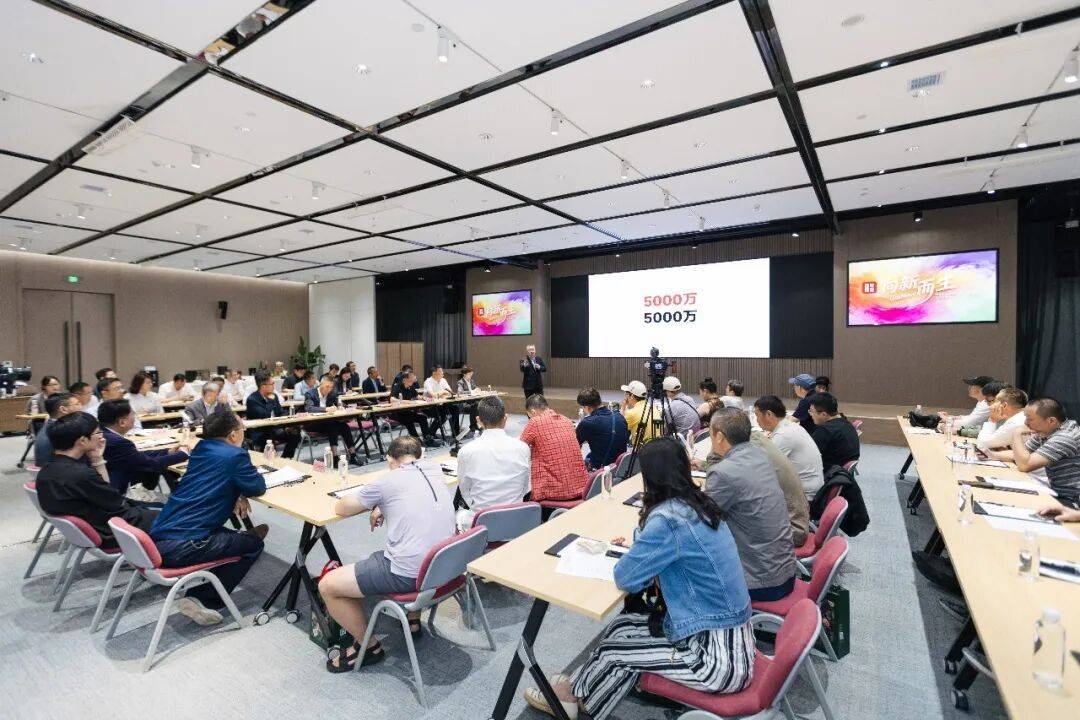
然而,正是在这样的行业深寒中,5月22日于烟台张裕酒文化博物馆召开的张裕2025年度股东大会,传递出一股截然不同的气息。周洪江将去年的工作评价为“不合格”,而孙健则用一张清晰的“向新而生”蓝图,向股东展示了这家百年企业的突围逻辑。
他观察到,苏州河水流缓慢,每流动10米需要60秒;而黄浦江水流湍急,每流动10米仅需8秒。“我们现在面对不是苏州河,而是黄埔江,”孙健说,“在黄浦江里逆势向上游划船,即使拼尽全身力气,也划不动多远;但顺江而下猛烈用力地划,船的速度就会非常快。”
根据张裕管理层对目标消费人群的分析,喝葡萄酒的三类人群正在发生结构性变化:公务消费基本根除,商务消费明显降档降频,大众消费受经济影响同步回落,但相对是最具韧性的,场景与习惯仍处在初级阶段。
孙健在股东会上也以白酒作为参照系进行分析。剔除茅台、五粮液、汾酒后,剩余18家上市白酒企业2025年营收合计下降24%,利润合计下降43%。2026年一季度,18家酒企营收同比仍下降19%,利润下降26%。他指出,白酒的体量几乎是葡萄酒的100倍,在酒席桌上呈现出“碾压式”优势。“这一延续性的下降趋势,值得我们思考和重视。”
即便在这样的背景下,张裕管理层依然选择“不找客观、只谈主观”。孙健坦言,去年张裕做得差强人意,根本原因是“创新业务的增长,弥补不了传统业务的下降”。2025年创新业务仅占3%左右,没有起到足够的支撑作用;传统业务在总体下行的趋势下,也没有超预期表现。对2026年的全年趋势,张裕给出的基本判断是:“预计将持续承压,好转概率偏低。”
面对严峻形势,张裕在去年下半年董事会专题会议上确立了“守正创新”的战略总基调。孙健强调,“即便是‘守正’,也要用‘创新’的手法。如果沿用旧的模式,基本盘也守不住。”
孙健在报告最后明确了目标:“用打仗攻城的话来说,就是要‘撕开口子、一拥而上、分割包抄、全面占领’。”目标是打破传统业务与创新业务97%比3%的失衡格局,“力争把创新业务占比,提升到10%、20%、30%,甚至50%”。
孙健坦言,创新业务面临两大挑战:一是团队要转变成“跑终端、做C端”,“我相信大部分团队成员能够转型,但是也会有主动缴械的”;二是经销商网络与新产品的渠道需求存在错位,“可能只有三成或者少于三成的合作伙伴是能够很快地承接过来”,需要重建生态。
孙健介绍:将管理服务经销商的市场人员从1000人压缩至200人左右,职责明确为招商、维护、价格、库存、分销等,释放更多人员转向C端服务;引入“快递小哥计件”薪酬考核制度,以烧烤店推广为例,推广时长和效果直接与收入挂钩,“有的烧烤店营业到晚上12点,我们就要给驻店营销经理提供足够的激励”;引入知名啤酒品牌的新零售总监,3月初以来已铺开16个新零售系统,新进驻16110家门店;在线上事业部基础上成立创新事业部,开设几个省的线下市场作为实验田,快速验证新品牌、新模式。
周洪江在投资者交流阶段补充道:“公司今年提出一个很重大的变化,叫‘营’、‘销’分离。更多的人要做营销,更少的管理经销商。张裕的董事长和总经理首先是1名营销经理,如果这点做不到,就不合格,没有未来。”
周洪江则分享了具体成效:“乌啦啦的效果就非常好,乌啦啦传播事件后,我们负责男人四十销售的线上运营公司,到目前为止,已经干了去年全年的销量,为此信心大增。”他还提到,马克龙点赞龙谕后,烟台机场的张裕1892体验馆里,“我就见到有旅客主动点名,要买马克龙同款”;爱斐堡霞多丽干白成为接待特朗普、普京的国宴用酒后,“在京东平台已经实现了干白销量第一”。
孙健表示,“未来几年,我们会一直坚持‘非必要不投资’”。过去三五年每年投资额平均约5000万元,其中相当部分是橡木桶等刚性需求。目前每年折旧约3.1亿元,“按道理每年投资额只要不高于折旧额,就是比较安全的”,但现阶段要让现有装备产出更大效能,“这时候一定要‘非必要不投资’”。他进一步提出,要让2026年成为“压缩费用年”,力争压缩费用1000万元以上,并将责任人员的收入与目标“强绑定”。
他坦言,2025年的工作“是不合格的,评价是不及格,答卷我们自己也不满意”。面对危机,他列出几条措施:公司上下全员营销,“牢牢地把用户至上作为第一选择”;控制成本,非必要不投资,“不产生效益的要严控、砍掉”;简化流程、快速反应;最重要的是创新。
他特别提到自己给干部大会报告时讲的四句话:一是坚定信心不气馁,“作为百年企业,手上有很多牌,不光有葡萄酒,还有白兰地”;二是推进改革不放松,生产及管理岗位只退休不增加人,新增人就在营销系统上增,“新零售一把手就是新招的,熊司令这个版块的线上营销就招了1位女士,在上海工作,我们要把这个门打开”;三是守正创新不止步,“守正,也要用创新的手法去守”;四是守住底线不动摇,“我们的负债率是历史上最低的,不到12%,保障了公司的经营和现金流”。最后他表示,“相信在各位的支持、关心下,明年我们再见面的时候都高兴”,并请大家多关注,“大家抱怨也罢,埋怨也罢,我们都要听进去,有则改之,无则加勉”。
在行业产量较最高点萎缩93%的背景下,张裕的选择——从“逆流而上”到“顺江而下”,从“管理经销商”到“服务消费者”,从传统产品到场景化创新——正在为行业探索一条突围路径。
这条路径能否走通,将取决于张裕能否将2026年以来积累的品牌势能,真正转化为创新业务的规模化增长,从而打破传统与创新97%比3%的失衡格局。正如一位股东在交流环节所言,“张裕的落难不是永久性的”。而张裕管理层给出的回应是:用“向新而生”四个字,押注未来。
For China’s domestic wine industry, 2025 was nothing short of a “darkest year.” Data from the National Bureau of Statistics show that production by above-scale domestic wine enterprises fell to 97,000 kiloliters, a 17.1% year-on-year decline. General Administration of Customs figures reveal that imports of bottled wine in containers of 2 liters or less dropped to approximately 133,000 kiloliters, a 19.6% decrease. During a shareholder meeting, Sun Jian revealed that the number of wine bottles opened daily across the industry had fallen from 1.04 million the previous year to just 840,000.
Excluding Changyu, the remaining 10 listed wine companies posted total revenue of RMB 1.032 billion, a year-on-year drop of 19.8%. Among them, two new companies were designated as Special Treatment (ST), bringing the total to three ST firms, one was delisted, and the group recorded a combined loss of RMB 299 million.
Looking at a longer cycle, Sun Jian offered comparative data: China’s baijiu market has fallen 47% from its 2016 peak, beer has dropped 30% from its 2013 peak, but wine has cratered 93% from its 2011 high—leaving only 7% of that peak volume. Changyu’s revenue has been cut in half since its 2012 high.
Yet, amid this deep freeze, the atmosphere at Changyu’s 2025 Annual Shareholder Meeting, held on May 22 at the Changyu Wine Culture Museum in Yantai, was distinctly different. Zhou Hongjiang rated the company’s performance the previous year as “unqualified,” while Sun Jian presented a clear blueprint for “transformation through innovation,” showing shareholders how this century-old enterprise intends to break out.
The Industry Is No Longer on the Suzhou River, But the Huangpu River
At the shareholder meeting, Sun Jian used a vivid metaphor to capture the current market dynamics of China’s alcoholic beverage sector. He observed that the Suzhou River flows slowly—advancing 10 meters takes 60 seconds. In contrast, the Huangpu River runs fast—10 meters in just 8 seconds. “We are no longer facing the Suzhou River; we are facing the Huangpu River,” Sun said. “Rowing upstream against the current in the Huangpu River is futile, even if you exhaust all your strength. But if you row aggressively downstream, the boat will move very fast.”
Changyu management’s analysis of target wine consumers shows structural shifts among three groups. Government banquet consumption has been largely eliminated. Business entertainment consumption has significantly decreased in both frequency and spending. Mass-market consumption has also declined due to economic pressures, but it remains the most resilient, though consumption habits and occasions are still nascent.
Sun also used baijiu as a reference. Excluding Moutai, Wuliangye, and Fenjiu, the remaining 18 listed baijiu enterprises saw total revenue fall 24% in 2025, with profits down 43%. In the first quarter of 2026, those 18 companies’ revenues were still down 19% year-on-year, with profits dropping 26%. “The scale of baijiu is nearly 100 times that of wine,” he noted, “and its dominance at the dining table is crushing. This persistent downward trend warrants our serious reflection.”
Against this backdrop, Changyu management chose not to blame external factors. Sun admitted the company’s performance the previous year was only mediocre, with the fundamental problem being that “growth in innovative businesses could not offset the decline in traditional operations.” In 2025, innovative businesses accounted for only about 3% of revenue, providing insufficient support, while traditional businesses underperformed amid the overall downturn. For 2026, Changyu’s basic forecast is “continued pressure, with a low probability of improvement.”
“Maintaining the Core with Innovation”: Four New Products to Rebuild Growth
Facing severe conditions, Changyu established a strategic direction of “maintaining the core with innovation” at a board special meeting in the second half of last year. Sun emphasized, “Even when we maintain the core, we must do so using innovative methods. Using old models won’t even defend the base.”
This innovative thinking is embodied in four differentiated products:
-
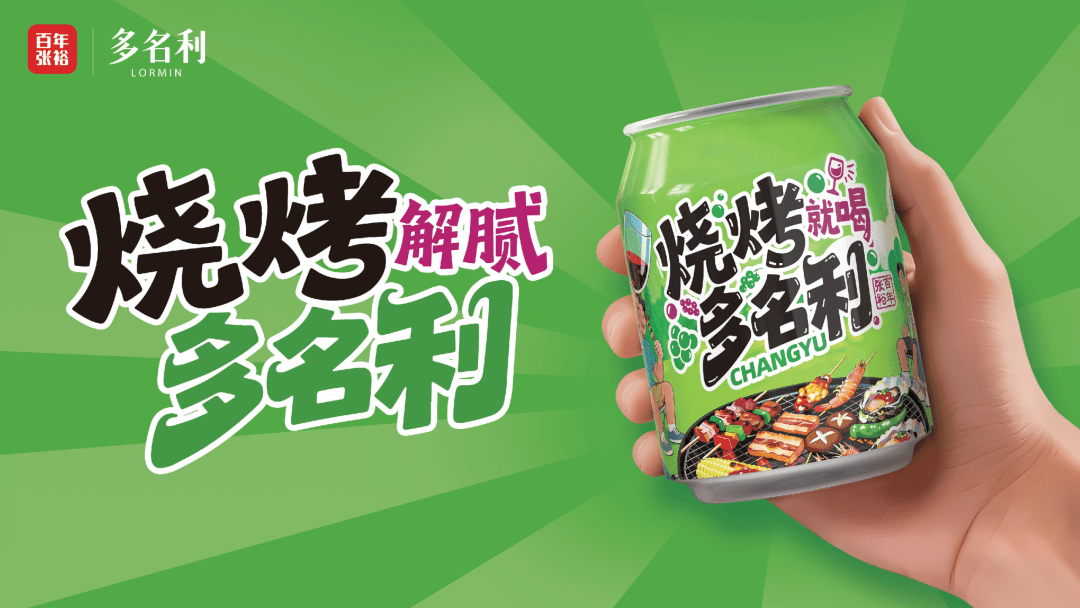
Duolingli BBQ Wine: Specifically crafted for barbecue settings. Sun noted that barbecue restaurants are one of the few food and beverage segments in China unaffected by the economic downturn. With 520,000 BBQ eateries nationwide, “this mass-market, lively scene is worth cultivating.” Duolingli is already being rolled out in select markets; for example, nine sales staff have been assigned to target 100 BBQ restaurants in Beijing’s Shijingshan district.
-
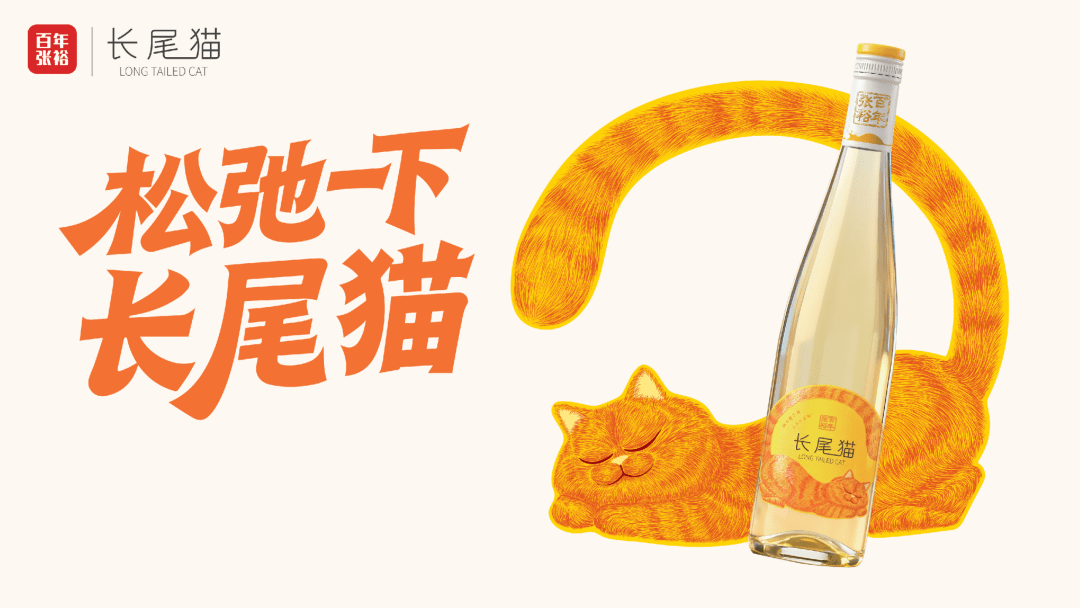
Longwei Mao White Wine: Since its launch in August 2025, sales have exceeded RMB 90 million, with over RMB 60 million from online channels. Sun said that after building online momentum, the brand will target 350,000 river-fish and seafood restaurants, leveraging white wine’s ability to “enhance freshness and remove fishiness.” Brand endorser Yu Shi has generated 900 million views in social media interactions with Changyu.
-
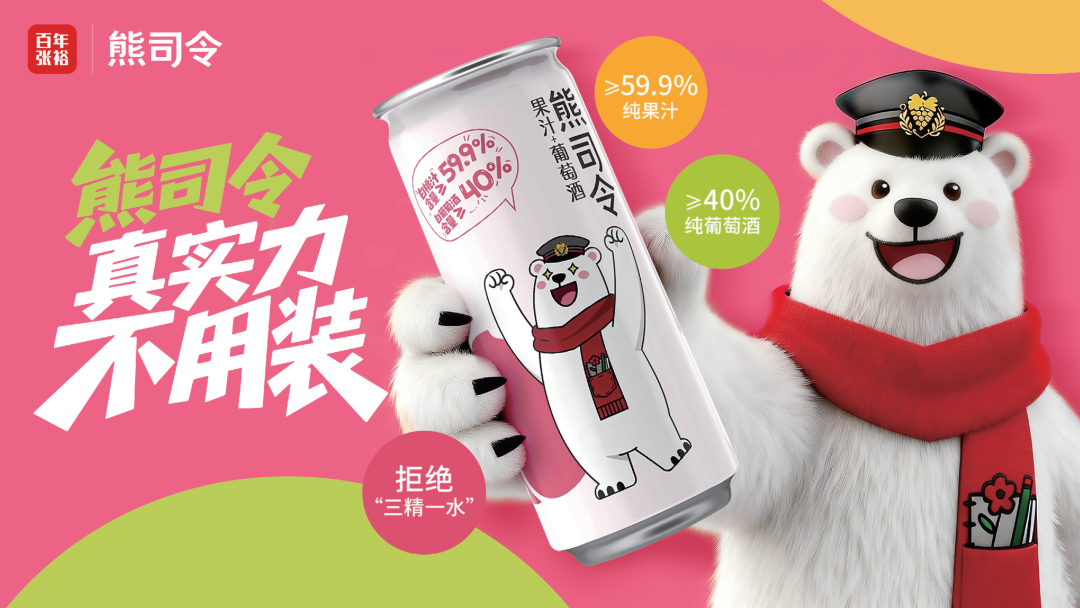
Xiong Siling Juice Wine: A complete departure from traditional wine, this product contains over 59.9% pure fruit juice plus 40% pure wine, with 4.5% ABV, slightly sparkling, and served chilled. Sun explained that the initial focus is online; once brand awareness is established, it will enter the hot pot restaurant channel. With over 400,000 hot pot restaurants nationwide, “Xiong Siling’s flavor profile is a perfect match with the spicy, numbing heat of hot pot.”
-
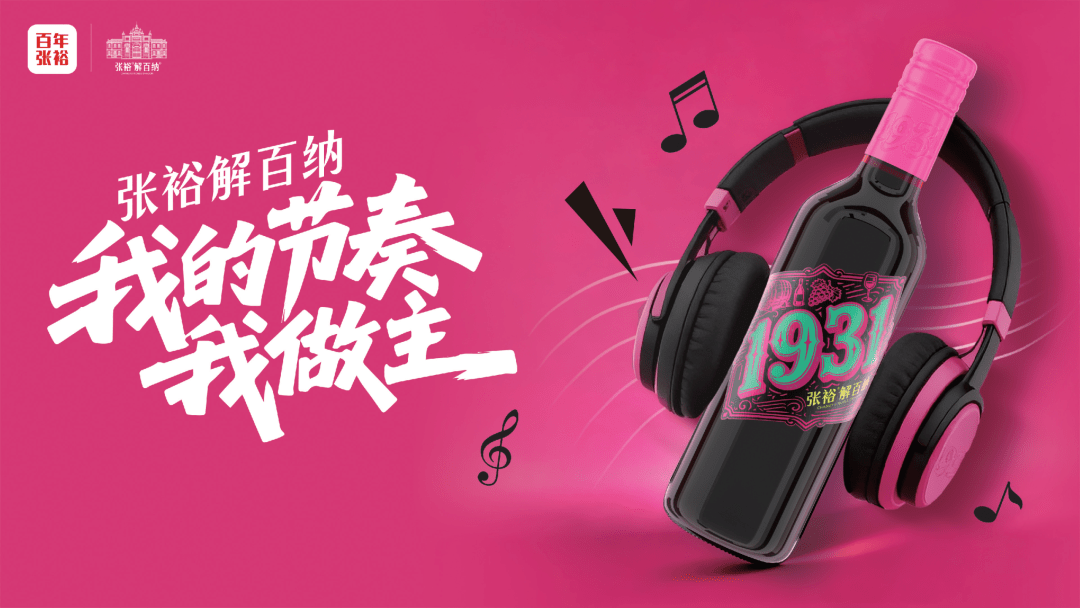
1931 Cabernet Gernischt Refresh Small Bottle: This 95-year-old heritage brand now offers a small-bottle, screw-cap version. “No decanting needed, just twist and drink,” designed to expand consumption occasions, including solo drinking, camping, picnics, and quiet small gatherings.
Sun closed this section with a military analogy: “To use the language of taking a city, we must ‘rip open a gap, swarm in, surround and cut off, then fully occupy.’” The goal is to break the current 97% traditional to 3% innovative business ratio. “We strive to raise the share of innovative businesses to 10%, 20%, 30%, or even 50%.”
Organizational Transformation: From Managing Distributors to Serving Consumers
Sun admitted innovative businesses face two major challenges. First, teams must transform into “frontline, consumer-facing” operators. “I believe most team members can make the transition, but some will voluntarily surrender.” Second, the distributor network is misaligned with the channel needs of new products. “Perhaps only 30% or fewer of our partners can adapt quickly,” requiring a rebuilt ecosystem.
To address this, Changyu is implementing a sweeping organizational restructuring:
-
Reducing personnel who manage and serve distributors from 1,000 to about 200, focusing solely on recruitment, maintenance, pricing, inventory, and distribution. Freed-up staff will shift to consumer-facing roles.
-
Introducing a “piece-rate” compensation system modeled on delivery couriers. For BBQ restaurant promotion, for example, compensation is directly tied to time spent and results. “If a BBQ restaurant stays open until midnight, our in-store marketing managers need sufficient incentives to be there.”
-
Recruiting a new retail director from a well-known beer brand. Since early March, 16 new retail systems have been deployed, entering 16,110 new stores.
-
Establishing an innovation business unit alongside the existing e-commerce unit, launching pilot offline markets in several provinces to rapidly test new brands and models.
Zhou Hongjiang added during the investor Q&A: “This year, the company is making a major shift: separating ‘marketing’ from ‘sales.’ More people will focus on marketing; fewer will manage distributors. Changyu’s chairman and general manager must first be marketing managers. If they cannot do that, they are unqualified and have no future.”
Converting Buzz into Sales
Since early 2026, Changyu has experienced a series of brand breakout moments. Sun listed: French President Macron praising Changyu’s Longyu at the Paris wine fair, Donald Trump making an exception to drink Changyu’s Château Changyu AFIP Global, Vladimir Putin drinking the same on multiple visits to China, along with influential social media figures and俞敏洪 (Yu Minhong) showing enthusiasm for Changyu products. “This string of high-profile endorsements and celebrity buzz has generated tremendous momentum for us.”
On converting that buzz into sales, Sun said offline operations must maximize their take-up. “As long as we go deep in one city—either don’t do it, or do it thoroughly—we can capture that buzz well.” Zhou shared a concrete result: “The effect from the influencer Wulala was excellent. After his video went viral, the e-commerce operator responsible for our ‘Man 40’ sales has already sold as much in 2026 as in all of last year, and their confidence has soared.”
Zhou also noted that after Macron praised Longyu, at the Changyu 1892 experience store in Yantai’s airport, “I saw travelers specifically asking to buy the same wine Macron had.” After Château Changyu AFIP Global Chardonnay was served to Trump and Putin as a state banquet wine, “it became the top-selling dry white wine on JD.com.”
Long-Term Financial Discipline
On financial strategy, Changyu has adopted a strict “no unnecessary investment” policy. “For the next several years, we will stick to this principle,” Sun said. In the past three to five years, annual investment averaged about RMB 50 million, much of it for essential items like oak barrels. Current annual depreciation is about RMB 310 million. “In theory, as long as annual investment doesn’t exceed depreciation, it’s relatively safe.” But given the current environment, the priority is getting more output from existing assets. “So we must absolutely avoid unnecessary investment.”
He further proposed making 2026 a “year of cost reduction,” aiming to cut at least RMB 10 million in expenses, with managers’ compensation tightly linked to those targets.
Closing Remarks: Confidence, Reform, Innovation, and Discipline
In his closing comments during the shareholder Q&A, Zhou Hongjiang frankly stated that the company’s 2025 performance “was unqualified—a failing grade. We ourselves are dissatisfied with the results.” In response to the crisis, he outlined several measures: company-wide, all-hands marketing; “putting customer first as the top priority”; controlling costs and cutting non-essential investments; simplifying processes for faster response; and most importantly, innovation.
He shared four key messages from his internal management report:
-
Stay confident and not discouraged. “As a century-old company, we still have many cards to play—not just wine, but also brandy.”
-
Push reform without hesitation. Production and management positions will be filled only through retirement, not new hires. New hires will be in marketing. “Our new retail head was recruited externally. For Xiong Siling, we hired a woman in Shanghai to lead online marketing. We are opening the door.”
-
Keep innovating while maintaining the core. “Even when we preserve the core, we do it with innovative methods.”
-
Hold the bottom line unwaveringly. “Our debt ratio is the lowest in our history—below 12%—which protects our operations and cash flow.”
He concluded with optimism: “I believe that with your support and concern, when we meet again next year, we will all be happy.” He also asked shareholders to stay engaged: “Whether you complain or grumble, we will listen. If we are wrong, we will correct it. If not, we will take it as encouragement.”
A Path Forward for China’s Wine Industry
China’s wine industry remains in a deep restructuring phase. With industry production down 93% from its peak, Changyu’s strategic choices—from “rowing upstream” to “rowing downstream,” from “managing distributors” to “serving consumers,” and from traditional products to occasion-driven innovation—are charting a potential breakout path. Whether this path succeeds will depend on Changyu’s ability to convert the brand momentum it has built since early 2026 into scalable growth in innovative businesses, thereby breaking the unbalanced 97-to-3 ratio between traditional and new operations.
As one shareholder put it during the Q&A session: “Changyu’s struggles are not permanent.” Management’s response, summed up in four Chinese characters—向新而生 (transform through innovation)—is to bet the future on that belief.