“现在做经销商是真难!厂家任务一年比一年高,费用核销越来越慢,窜货乱价没人管,终端动不动就绕过你直接找厂家要政策……”
这是过去半年,酒业时报与多地经销商交流时,听到最多的话。很多白酒经销商觉得,自己最大的问题是利润越来越薄,日子越来越难熬。
然而,他们看到的是:比日子更难熬的是:利润薄不是最危险的,最危险的是——经销商这个角色,正在变得不再被需要。
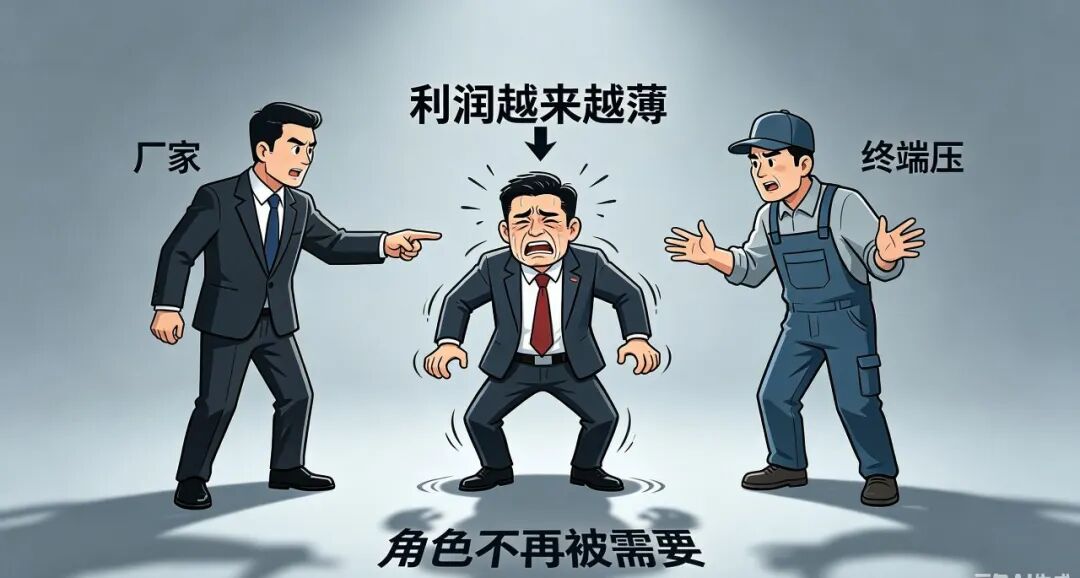
为什么这么说?因为今天的白酒经销商,正在被两头挤压。

品牌“绕开”你,终端“绕过”你
先看上游。
过去,酒厂要触达消费者,必须依靠经销商建网络、铺渠道、做配送。但现在呢?以茅台“i茅台”为代表,一二线名酒纷纷在新零售、直营店、电商直播、会员体系以及渠道扁平化体系越做越深并持续加码,将“全面向C”提升到战略高度。
以茅台为例,2026年一开年,茅台将茅台酒与多款非标酒直接上线i茅台直营,紧接着又将非标茅台从经销制改为代售制——经销商不用再压货囤货,售出后赚取5%固定佣金即可。这一举措的意图虽然并非为替代经销商,但肉眼可见的是:厂家将亲手触达用户,而非仅仅经由经销商。
一面是传统线下场景遭遇严重挤压,烟酒店整体收缩;另一面是线上通路高速增长。数据显示,2025年酒企线上通路高速增长,至少有7家白酒上市企业的新兴渠道收入实现增长,其中6家增速均超10%。
再看下游。
一些连锁酒行、区域强势终端,开始绕过经销商,直接跟酒厂谈定制、谈包销。1919、酒仙网等渠道巨头,谁手里没有几个独家运营的品牌?就连一些地级市的连锁烟酒店,都开始联合起来“抱团集采”,绕开本地经销商,直接找厂家或全国总代谈政策。经销商夹在中间,品牌不想把核心用户交给你,终端不想把利润空间留给你。
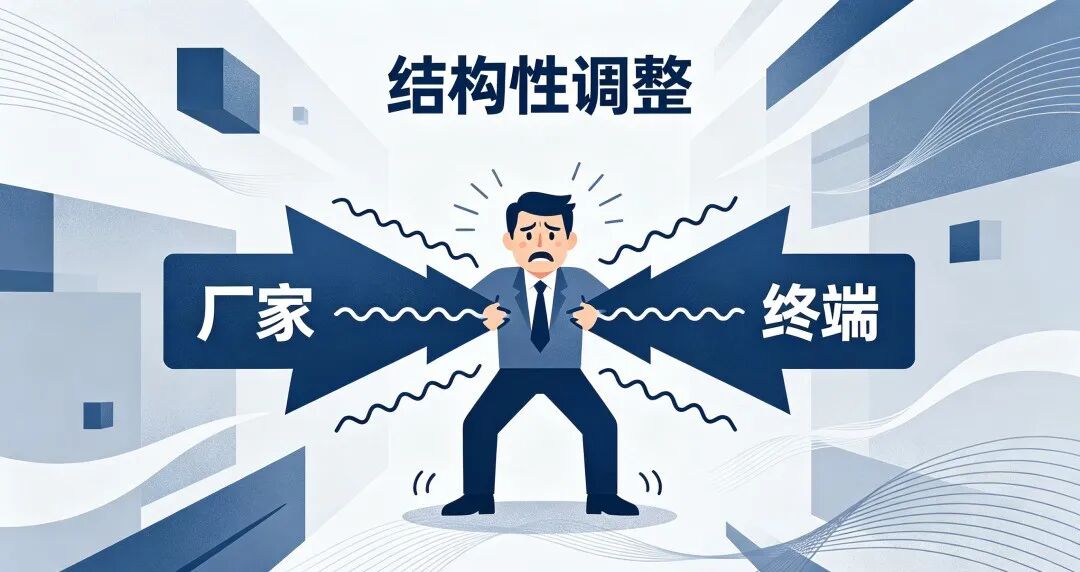
种种迹象表明,经销商正处在厂家和终端两股力量的交汇挤压点上。名酒企业加速自建渠道与直面消费者的能力,产业链利润向品牌方集中;而终端市场则通过电商直购、私域流量等方式不断绕开传统经销商。在这一轮深度结构性调整中,流通环节成了压力最集中的环节之一。

经销商的老一套,正在“失效”
白酒经销商必须承认一个现实是:很多白酒经销商今天遇到的困境,不是市场变差了,而是自己过去那套“搬货、铺货、压货、垫资”的价值逻辑,正在被时代淘汰。
过去经销商靠什么吃饭?
第一,信息差。我知道哪个品牌要涨价,哪个产品要断货,终端不知道,所以我赚钱。但今天,信息满天飞,各种报价小程序一键查价,同行微信群消息比你还快,信息差被算法吃掉。
第二,渠道差。我手里有货,你没有,所以我赚钱。但今天,电商、直播、社区团购、即时零售,消费者随时可以买到酒,价格透明如玻璃。2025年酒类即时零售市场规模已突破500亿元,线上渠道正从传统渠道的补充变为流通渠道的重要引擎。
第三,服务差。我能送货、能摆陈列、能做品鉴,别人做不了,所以我赚钱。但今天,品牌自己做品鉴会,自己派业务员跑终端,连陈列费都直接扫码核销了。
这种变化的背后,是白酒的消费与流通正在发生变化。和君咨询酒水事业部副总经理郭胜利曾一针见血地指出行业当下的结构性痛点:经销商如今被下游分销商成长、大型经销商竞争以及厂家严苛要求三方共同挤压。这种“三面受敌”的窘境是传统经销逻辑崩塌的必然结果。
2026年5月21日,中国酒业协会第六届理事会第八次(扩大)会议在北京召开。会议披露的数据显示,2025年中国酿酒产业已全面进入深度结构性调整期——产业整体呈现“量价利同步收缩、结构分化显著、新旧动能转换阵痛凸显”的特征,全年酿酒产业呈现“总量回落、效益承压、分化加剧、集中度提升”的运行态势,存量博弈已成为市场主基调。
从市场来看,白酒产业面临的“量价齐跌、库存高企、动销困难”等挑战,本质是“传统增长逻辑与新消费需求之间的系统性错配”——传统“悦人”社交场景萎缩与新生代“悦己”需求兴起之间的结构性断层。从深层次看,困扰产业发展的核心问题在于消费结构发生了根本性变化,“老的喝不动了,小的不想喝”,这是产业发展面临的最深层次问题。

对于大多数经销商而言,你不是不努力,而是你过去赖以生存的“功能”,正在被技术、平台和品牌自己逐一替代。

从“分蛋糕”到“一起做蛋糕”
那是不是经销商就没有机会了?当然不是。
白酒这个行业,永远需要“最后一公里”的服务能力,永远需要理解本地市场的人。但问题是,你的角色必须变。过去,经销商和厂家的关系是“渠道关系”——你给我货,我帮你铺,我们分利润。本质上是在分一个存量蛋糕。但现在,行业进入存量竞争时代,厂家要的是“共荣关系”——你能不能跟我一起,把蛋糕做大?
什么叫共荣?就是你不能只做一个“搬砖”的,你要能精耕市场,能服务好终端和消费者,能把厂家的战略在本地落地。
活下来的经销商,正在用实践回答这个问题。先看酒小二的案例。这个从传统啤酒经销商转型为即时零售平台的团队,2025年GMV突破60亿元,实现50%的年增长。
目前,酒小二已覆盖全国500多个县市,拥有2000多家门店,前置仓超2000家,平均15分钟送达。创始人黎永新坦言,“做经销商时只是一个垫资的搬运工,我深刻体会到没有自有品牌和私域用户池的被动”。
酒小二的转型路径给出了一个关键启示:当经销商能够洞察用户需求、升级服务模式、成为链接品牌与消费者的高效桥梁,他就从一个赚取差价的中间商,进化为一个区域的数据决策与服务枢纽。
再来看一个传统经销商的案例:西南酒商老李,在行业剧烈收缩的2025年,公司依然保持增长。他靠什么活下来?
第一,近乎固执的专注。自创业开始,老李代理的品牌固定的只有两个一二线名酒,公司的核心精力与资源也围绕这两个品牌开展,在厂家指导下,协作精耕本地市场,也让公司能够获得来自企业的更多支持。
第二,敏锐捕捉消费下移的趋势。老李是很早观察到市场中高端产品增长趋势的人,因此较早代理了合作品牌的一款中高端产品,名牌背书、大众价位段、包装精美,让这款产品在老李所在的区域销售稳定。
第三,清醒认知旧模式的终结。看到行业调整的压力,不再盲目扩张产品线,而是通过加大批发力度和线上流量合作,保证公司现金流保持正向。
从酒小二到老李,他们为什么能活得好?因为他们告别旧经销商的身份,不再把自己当成“渠道中间商”,而是把自己当成了“本地市场的运营商”,从差价思维转向价值思维的经销商。
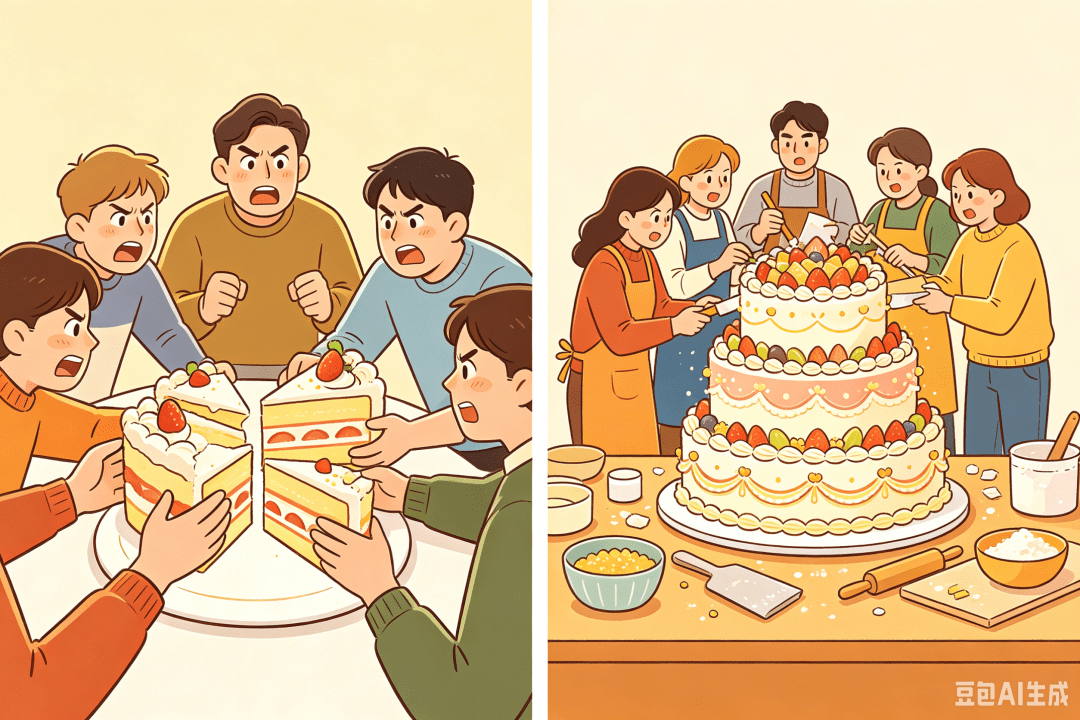
一个成熟的行业,必须以“让优质经销商健康地剩下去”为核心目标,厂家必须从“管理”转向“赋能与服务”,经销商则必须从“搬货”转向精耕本地市场,只要能够深入服务终端的、能够读懂本地消费者的、能够成为厂家战略在区域的支撑点的经销商,就能在行业重组后的新格局中占据核心位置。

未来白酒经销商的三条路
广发证券分析师符蓉在解析行业压力时指出,若酒企延续强业绩诉求,大型经销商凭借过往积累短期内仍有较强抗风险能力,但中小经销商可能选择在库存清仓后持币观望。而西部证券消费首席分析师于佳琦同样观察到,随着价格下行,2025年白酒经销商整体盈利情况不乐观,经销商可能会减少动销困难品种的打款以收敛亏损。
结合长期的观察和走访,酒业时报认为,未来活得好的白酒经销商,至少要走以下三条路中的一条:
第一条,做品类的精耕者:从“白酒供货商”到“酒水品类运营家”。
不要再问我手里有多少个品牌、多少款产品,而是要问:我这个区域,到底什么价格带在起量?什么香型在增长?什么场景在爆发?是宴席驱动还是自饮驱动?我的终端客户,哪个需要高毛利产品,哪个需要流量产品?
老李提供了这个方向的范本——专注少数品牌,在品牌内部精准切分产品结构,盯紧刚需价格带,将本地市场做深做透。
第二条,做场景的服务商:从“区域代理商”到“场景服务商”。
餐饮、宴席、团购、社群、社区零售、即时配送……这些场景,都需要有人真正理解本地用户。总部看的是全国数据,但你知道本地哪个乡镇的红白喜事用酒量大,你知道哪个工业园区的企业年底要发福利,你知道哪个社区的消费者喜欢扫码领红包。
酒小二的实践说明:当经销商能够卖服务而非仅仅卖酒,能够理解“为什么喝、和谁喝、在什么场景喝”,他就从一个被动的搬货者变成了主动的链接者。
第三条,做厂家的“地面部队”:从“渠道中间商”到“本地化价值服务商”。
厂家要控盘分利,你能不能配合做数字化扫码?厂家要做消费者培育,你能不能执行标准化品鉴会?厂家要做终端分级管理,你能不能精准筛选核心店?厂家要打击窜货,你能不能提供本地市场的情报和线索?
茅台2026年的代售制改革已经指明了方向——经销商不再需要垫付巨额货款、承担价格倒挂风险,而是按约5%固定佣金收取服务费,从“投机囤货者”向“专业服务商”转型。你不再是厂家的“客户”,而是厂家在本地市场的“合伙人”。
白酒行业这五年,最大的变化不是酱酒热,不是光瓶酒升级,也不是电商冲击,而是——厂家和经销商的关系,正在被重新定义。

过去,厂家离不开你,是因为你手里有渠道。现在,厂家离不开你,只能是因为你对本地市场有不可替代的价值。
那些还在抱怨厂家压货、费用难报、利润太薄的经销商,不妨问自己一个问题:如果明天厂家真的可以绕过你,直接服务你的终端和消费者,你还能做什么?
这个时代,不会再奖励只会搬货的人。
未来最值钱的,不是你仓库里的酒,而是你对本地用户和终端的理解与服务能力。
别等到厂家不需要你了,才想改变。
“Being a distributor today is brutal. Manufacturers keep raising annual targets while slowing down expense reimbursements. No one polices cross-channel selling or price chaos. And retailers are bypassing us altogether — going straight to the brand for better deals.”
That’s the refrain we’ve heard over the past six months while talking to distributors across multiple regions. Many baijiu distributors feel their biggest problem is shrinking profits and tougher days ahead.
But here’s what they’re missing: shrinking profits aren’t the most dangerous part. What’s truly dangerous is that the distributor’s role itself is slowly becoming unnecessary.
Why? Because today’s baijiu distributor is being squeezed from both ends.
Brands bypass you. Retailers go around you.
Let’s start upstream.
In the past, brands had to rely on distributors to build networks, stock channels, and handle logistics. But today? Take Moutai’s “iMoutai” as a prime example. Tier-1 and tier-2 names are doubling down on new retail, direct-operated stores, e-commerce livestreaming, membership systems, and flatter channel structures — elevating “direct-to-consumer” to a strategic priority.
Right at the start of 2026, Moutai listed standard Moutai and several non-standard SKUs directly on iMoutai. Shortly after, it shifted non-standard Moutai from a traditional distribution model to a consignment model. Distributors no longer need to stockpile inventory; they simply earn a fixed 5% commission after each sale. While the move isn’t explicitly intended to replace distributors, the message is clear: manufacturers want to reach users themselves, not just through middlemen.
On one hand, traditional offline channels are shrinking — tobacco-and-liquor shops are closing down. On the other, online channels are booming. Data shows that in 2025, baijiu companies saw sharp growth in digital channels, with at least seven listed baijiu firms reporting rising revenue from emerging channels, six of them growing by over 10%.
Now look downstream.
Some major liquor retail chains and strong regional retailers are starting to bypass distributors entirely, going directly to brands for customized or exclusive products. Who doesn’t have an exclusive brand? 1919, Jiuxian.com — the list goes on. Even small regional chains are banding together for group buying, bypassing local distributors to negotiate directly with manufacturers or national wholesalers.
Distributors are caught in the middle. Brands don’t want to hand over their core customers. Retailers don’t want to leave you any margin. All signs point to one reality: distributors are being squeezed between two powerful forces — manufacturers building direct-to-consumer capabilities, and retailers seeking to cut out the middleman.
The old playbook is failing
Distributors must face a hard truth: their current struggles aren’t because the market has gotten worse. It’s because the old logic of “move inventory, push stock, tie up capital” is being made obsolete by the times.
What did distributors rely on in the past?
First, information asymmetry. You knew which brand was about to raise prices or which product would run out. Retailers didn’t — so you profited. Today, information travels instantly. Price-checking mini-programs and WeChat groups spread news faster than you can act. Algorithms have eaten the information gap.
Second, channel advantage. You had the stock, others didn’t — so you profited. Now, e-commerce, livestreaming, community group-buying, and instant retail mean consumers can buy liquor anytime, anywhere. Prices are as transparent as glass. In 2025, the instant retail market for liquor exceeded RMB 50 billion, and online channels have evolved from a supplement to a core engine of distribution.
Third, service advantage. You could deliver, arrange displays, host tastings — others couldn’t — so you profited. Today, brands host their own tastings, send their own sales reps to retail points, and even reimburse display fees via direct QR code scanning.
Behind these shifts lies a fundamental change in how baijiu is consumed and circulated. Guo Shengli, Deputy GM of the Wine Division at Hejun Consulting, put it bluntly: Distributors are now being squeezed from three sides — by downstream distributors growing their own power, by larger distributors competing aggressively, and by manufacturers’ stricter demands. This “three-front war” is the inevitable outcome of a crumbling traditional distribution model.
On May 21, 2026, the China Alcoholic Drinks Association (CADA) held its 8th expanded meeting of the 6th council. Data released there showed that in 2025, China’s alcoholic beverage industry entered a deep structural adjustment — characterized by simultaneous declines in volume, price, and profit; sharp structural divergence; and clear growing pains from old-to-new transition. The industry overall saw falling total output, profit pressure, intensified fragmentation, and rising concentration. Zero-sum game has become the new normal.
From a market perspective, challenges such as “falling volume and price, high inventory, and sluggish sell-through” are essentially a systemic mismatch between traditional growth logic and new consumer demand — a structural rift between shrinking “face-oriented” social drinking occasions and the rise of younger consumers’ “self-pleasing” drinking habits. At a deeper level, the core issue is a fundamental shift in consumption structure: older generations are drinking less, and younger generations don’t want to start. That’s the industry’s deepest challenge.
For most distributors, the problem isn’t a lack of effort. It’s that the very functions you once performed are being systematically replaced by technology, platforms, and the brands themselves.
From carving up the pie to baking a bigger one
So are distributors out of luck? Not at all.
The baijiu industry will always need last-mile service and people who understand local markets. But here’s the catch: your role must change. In the past, the relationship between distributor and brand was a channel relationship — you gave me stock, I helped you distribute, we split the profit. Essentially, you were carving up an existing pie. But now, with the industry in a zero-sum era, brands want a symbiotic relationship: can you help me bake a bigger pie together?
What does symbiosis mean? It means you’re no longer just a “brick hauler.” You must intensively cultivate your local market, serve retailers and consumers well, and execute the brand’s strategy on the ground.
Distributors who are surviving — and thriving — are already answering this question. Take the case of Jiu Xiao’er.
This team, which transformed from a traditional beer distributor into an instant-retail platform, achieved RMB 6 billion in GMV in 2025, with 50% annual growth. Jiu Xiao’er now covers over 500 counties and cities across China, with 2,000+ stores and 2,000+ micro-warehouses, delivering within 15 minutes on average. Founder Li Yongxin admitted: “As a traditional distributor, I was just a cash-advancing mover of goods. I deeply felt the pain of having no proprietary brand and no private user pool.”
Jiu Xiao’er’s transformation offers a critical lesson: When a distributor shifts from earning a price difference to becoming an efficient bridge between brand and consumer — one that understands user needs and upgrades service models — it evolves into a regional data and decision hub.
Now consider a more traditional distributor: Old Li from Southwest China.
In the tough contraction year of 2025, his company still grew. How?
First, near-stubborn focus. From the start, Old Li represented just two tier-1 or tier-2 baijiu brands. His energy and resources revolved entirely around them. By working closely with the brands to cultivate his local market, he earned more support from his suppliers.
Second, a sharp eye on the downward consumption shift. Old Li was early to spot rising demand in the mid-to-premium segment. So he launched a mid-premium product under his partner brand — strong brand endorsement, mass-market price, elegant packaging — which sold steadily in his region.
Third, a clear-eyed realization that the old model was over. Instead of blindly expanding his portfolio, he kept cash flow positive by increasing wholesale volumes and partnering for online traffic.
Why do Jiu Xiao’er and Old Li thrive? Because they shed the old “middleman” identity. They stopped thinking of themselves as channel intermediaries and started acting as operators of their local market. They moved from a “margin mindset” to a “value mindset.”
A mature industry must aim to let good, healthy distributors survive. Manufacturers must shift from “managing” distributors to “enabling and serving” them. Distributors must shift from “moving goods” to intensively cultivating local markets. Those who can deeply serve retail points, understand local consumers, and act as a strategic anchor for brands in their region will occupy a core position in the industry’s reshaped landscape.
Three paths forward for baijiu distributors
Furong Fu, analyst at GF Securities, recently noted that if brands continue demanding aggressive performance, large distributors — thanks to their accumulated resilience — can still weather the storm in the short term. But smaller distributors may choose to clear inventory and sit on cash. Jiaqi Yu, Lead Consumer Analyst at Western Securities, similarly observed that as prices fall, distributor profitability in 2025 remains bleak, and many may cut back on orders for slow-moving products to limit losses.
Based on long-term observation and field research, we believe that the distributors who thrive going forward will take at least one of three paths:
1. Become a category cultivator: from “baijiu supplier” to “beverage category operator”
Stop asking how many brands or SKUs you carry. Ask instead: In my region, what price points are moving? What aroma profiles are growing? Which consumption occasions are heating up — banquets or self-drink? Which retail clients need high-margin products, and which need traffic drivers?
Old Li’s approach is a model: focus on a few brands, fine-tune your portfolio within each, zero in on the must-have price points, and own your local market end-to-end.
2. Become a scene-based service provider: from “regional agent” to “occasion service partner”
Dining, banquets, corporate gifting, community groups, neighborhood retail, instant delivery — every scene requires someone who truly understands local users. Headquarters sees national data. But you know which towns need large volumes for weddings and funerals, which industrial parks need year-end employee gifts, which communities love scanning QR codes for red-envelope rewards.
Jiu Xiao’er’s success shows that when distributors sell service — not just bottles — and truly understand why, with whom, and in what scene customers drink, they evolve from passive movers into active connectors.
3. Become the brand’s “ground force”: from “channel middleman” to “local value-added service partner”
Can you support digital QR code scanning for the brand’s inventory and profit-sharing system? Can you execute standardized tasting events to build consumer education? Can you accurately identify and manage tiered retail accounts? Can you provide local intelligence to help the brand crack down on cross-channel selling?
Moutai’s 2026 consignment reform points the way forward — distributors no longer need to tie up huge amounts of capital or bear the risk of price inversion. Instead, they earn a fixed commission of roughly 5% for services rendered. They are no longer the brand’s “customer” but its “local partner.”
Conclusion
The biggest change in the baijiu industry over the past five years is not the sauce-aroma frenzy, not the premiumization of bottled liquor, not even the rise of e-commerce. It’s this: the relationship between manufacturer and distributor is being redefined.
In the past, brands needed you because you controlled the channels. In the future, brands will need you only if you offer irreplaceable value in your local market.
To those distributors still complaining about inventory pressure, slow reimbursement, and razor-thin margins, ask yourself one question: If the brand could truly bypass you tomorrow and serve your retailers and consumers directly, what else could you do?
This era will no longer reward those who just move boxes.
The most valuable thing in the future isn’t the liquor in your warehouse. It’s your understanding of — and ability to serve — your local users and retail points.
Don’t wait until the brands don’t need you anymore to start changing.
原创文章版权归本网所有;转载文章归原作者所有。发布者:酒业时报,转载请注明出处:https://www.thewinetimes.com/deep/10846