白酒行业的半年报季,向来是观察企业成色的窗口。
8月25日,迎驾贡酒交出了一份看似平淡、实则暗流涌动的成绩单:上半年营收34.16亿元,同比增长8.08%;归母净利润11.62亿元,同比增长2.79%。在白酒行业深度调整、多数区域酒企利润承压甚至大幅下滑的2026年,这份“双增”答卷本身就足以说明问题。

但真正值得深挖的,是藏在利润表背后的一组数据:经营活动产生的现金流量净额10.75亿元,同比增长239.52%。
在酒业时报看来,这不是一个简单的财务数字,而是迎驾贡酒经营质量发生结构性变化的信号弹——当一家酒企的现金回流速度以近2.4倍的速度狂奔时,它在行业寒冬中握住的筹码,远比账面上的利润数字更有分量。
现金流的“含金量”:比利润更诚实的语言
白酒行业有个共识:利润可以“做”出来,但现金很难“骗”出来。
上半年,迎驾贡酒销售收现38.43亿元,同比增长10.18%。这个增速跑赢了营收增速,意味着每一块钱的销售收入背后,都有真金白银落袋为安。公司财报解释,现金流大幅增长主要系销售商品收到的现金增加及购买商品支付的现金减少所致。
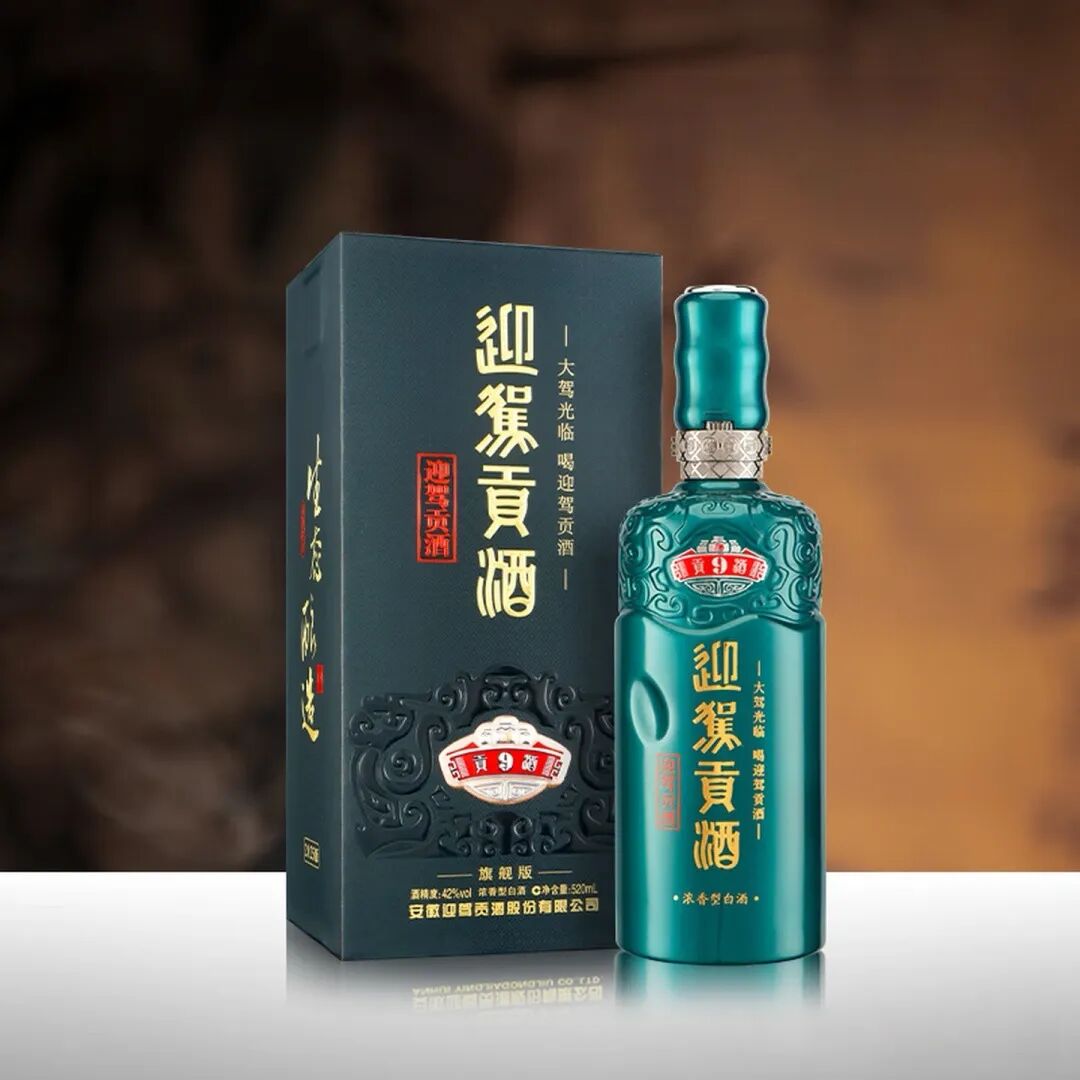
对比一下行业大环境就更能理解这个数据的分量。中国酒业协会发布的《2026中国白酒市场中期研究报告》指出,超86%的调研企业营业利润同比下滑,终端动销复苏乏力。在渠道库存高企、经销商打款意愿低迷的行业背景下,迎驾贡酒的现金回款能力逆势走强,说明渠道端的信心在恢复,终端动销在改善。
截至6月末,公司合同负债为4.2亿元,虽同比微降,但渠道蓄水池维持良性。部分机构分析指出,合同负债的季节性变化系预收款确认节奏所致,并非需求萎缩的信号。
更值得注意的是,二季度单季经营活动现金流净额为0.60亿元,但较去年同期的1.79亿元大幅收窄。二季度通常是白酒行业的传统淡季,现金流为负是行业常态,但收窄幅度本身就在说明问题——迎驾贡酒的回款节奏正在从“被动等账期”转向“主动收现金”。
洞藏撑腰,省外突围:增长的底层逻辑
现金流不会凭空而来,它根植于产品和市场的真实表现。
分产品看,上半年中高档白酒(洞藏系列、金星系列、银星系列等)收入27.48亿元,同比增长8.35%,占总营收比重达80.46%。普通白酒收入4.85亿元,同比增长7.23%,在激烈竞争中逐步企稳。其中,洞藏6、洞9维持高个位数到双位数增长,成为增长的核心引擎。
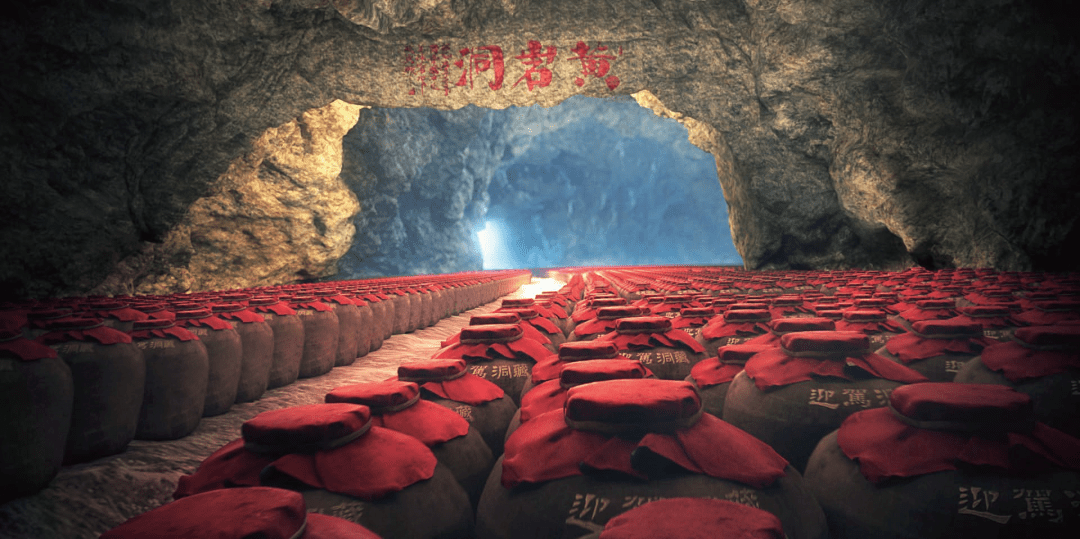
洞藏系列的势能,正在从“省内基本盘”向“省外增长极”延伸。这是迎驾贡酒区别于其他区域酒企的关键变量。
分区域看,上半年省内市场收入25.65亿元,同比增长8.53%,大本营优势稳固。真正值得关注的是省外市场——二季度单季省外收入同比大增15.95%,占比提升至31.32%。而在2025年同期,省外市场受行业深度调整影响明显承压,据券商拆分测算,该季度省外收入同比下滑36.38%。从深度调整到大幅修复,这一逆转意味着迎驾贡酒的省外扩张逻辑正在被市场验证。
中金公司研报指出,省外得益于洞藏强性价比而在江苏等地有突破,省外市场的恢复是公司全年维持较强表现的重要支撑。招商证券也认为,省外低基数下高增亮眼,江苏等外围市场复制省内洞藏打法初见成效。
直销渠道的表现同样可圈可点。二季度直销(含团购)收入同比增长30.7%。直销比例的提升,不仅意味着对终端价格的掌控力增强,也意味着品牌力的实质性提升——消费者愿意直接为品牌买单,而不是仅仅依靠渠道铺货。
短期“以费换量”与长期主义的平衡术
当然,这份财报并非没有瑕疵。
上半年净利润增速明显跑输营收增速。核心原因是销售费用大幅增长——上半年销售费用3.84亿元,同比增长24.95%,其中广告宣传费2.38亿元,同比增长约41.5%。

有行业观察人士将这种策略概括为“以费换销”。在酒业时报看来,这个判断只说对了一半。短期看,费用前置确实在挤压利润空间;但拉长周期看,在行业低谷期敢于逆势投品牌,恰恰是一家企业具备战略定力的体现。
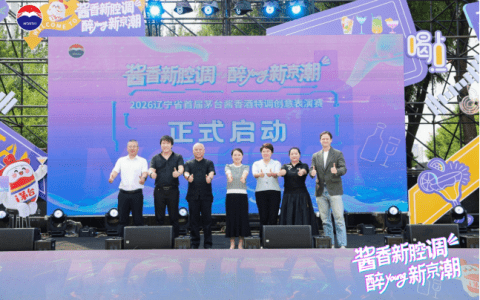
迎驾贡酒的钱花在了哪里?音乐焰火晚会、大学生短视频大赛、群星演唱会……一系列品牌活动围绕“文化迎驾”战略展开。这不是撒钱,而是在消费者心智中锚定“生态酿造”的差异化认知。
迎驾贡酒最早在行业内提出并践行生态酿造理念,构建了“生态产区、生态剐水、生态酿艺、生态循环、生态洞藏、生态消费”六位一体的完整体系。从大别山门户霍山的独特生态禀赋,到酿造废水的沼气发电、酒糟的饲料化利用,迎驾把“生态”从一个营销概念做成了全产业链的硬核能力。
当消费者开始为“生态”买单,这些品牌投入就不再是费用,而是资产。
穿越周期的底气
2026年对白酒行业意味着什么?
中国酒业协会副秘书长刘振国给出的判断是:存量博弈格局延续,产业态势分化,消费动能偏弱。白酒消费正从商务宴导向日常自饮、悦己消费转变,消费者愈发看重质价比。
在这个背景下,迎驾贡酒的“双增”含金量在于——它不是靠压货给经销商换来的账面增长,而是靠产品力和品牌力驱动的真实动销。
广发证券研报指出,公司自2024年四季度起率先降速出清表端业绩,较早推动渠道库存有效去化。申万宏源也认为,经过2025年连续四个季度的调整,2026年一季度公司重回增长周期。
在别人恐慌时主动调整,在别人收缩时逆势投入——这本身就是一种穿越周期的能力。
二季度,公司毛利率同比提升2.86个百分点至71.19%,净利率同比提升0.49个百分点至27.59%。这说明,随着洞藏系列占比提升和费用投放效率改善,盈利能力正在边际修复。
多家券商给出了积极展望。西南证券维持“买入”评级,预计20262028年归母净利润分别为21.2亿元、23.6亿元、26.9亿元。中金公司认为二季度利润略超预期,结构升级与经营杠杆是主要驱动因素。
在白酒行业从“规模竞赛”转向“质量竞赛”的新周期里,迎驾贡酒正在用一份现金流暴增239%的半年报,悄悄改写区域酒企的生存法则——不是谁跑得快,而是谁跑得稳、跑得久。
The baijiu industry’s interim reporting season has always served as a window for assessing corporate performance.
On August 25, Yingjia Gongjiu delivered a set of results that appeared unremarkable on the surface but carried significant undercurrents: first-half revenue of RMB 3.416 billion, up 8.08% year-on-year; net profit attributable to shareholders of RMB 1.162 billion, up 2.79% year-on-year. In 2026, with the baijiu industry in a deep adjustment and most regional distillers under pressure or seeing sharp profit declines, this “double growth” performance speaks for itself.
But what truly warrants deeper investigation is a figure hidden behind the income statement: net cash flow from operating activities of RMB 1.075 billion, up 239.52% year-on-year.
In the view of JiuYe Times, this is not a simple financial metric, but a signal that a structural change is underway in Yingjia Gongjiu’s operational quality – when a distiller’s cash collection velocity surges by nearly 2.4 times, the leverage it gains in the industry winter carries far more weight than the profit figures on paper.
The “Substance” of Cash Flow: A More Honest Language Than Profit
There is a consensus in the baijiu industry: profits can be “manufactured,” but cash is hard to “fake.”
In the first half, Yingjia Gongjiu’s cash received from sales reached RMB 3.843 billion, up 10.18% year-on-year. This growth rate outpaced revenue growth, meaning that every yuan of sales revenue was backed by actual cash in hand. The company’s earnings report explained that the significant cash flow growth was mainly driven by increased cash received from goods sold and decreased cash paid for goods purchased.
The significance of this figure becomes even clearer when placed alongside the broader industry environment. The 2026 China Baijiu Market Mid-Year Report released by the China Alcoholic Drinks Association noted that over 86% of surveyed enterprises saw operating profit decline year-on-year, with terminal sell-through recovery remaining sluggish. Against a backdrop of high channel inventory and weak distributor payment willingness, Yingjia Gongjiu’s cash collection strength bucked the trend, indicating that channel confidence is recovering and terminal sell-through is improving.
As of the end of June, the company’s contract liabilities stood at RMB 420 million – a slight year-on-year decline, but the channel buffer remains healthy. Some institutional analyses suggest that the seasonal change in contract liabilities reflects the timing of advance payment recognition rather than a signal of weakening demand.
Notably, Q2 net operating cash flow was negative at -RMB 60 million, but this was a significant improvement from -RMB 179 million in the same period last year. Q2 is traditionally a slow season for the baijiu industry, and negative cash flow is the norm – but the narrowing of the deficit itself speaks volumes: Yingjia Gongjiu’s collection rhythm is shifting from “passively waiting for payment cycles” to “actively collecting cash.”
Backed by Dongzang, Breaking Through Outside the Province: The Underlying Logic of Growth
Cash flow does not materialise from nowhere – it is rooted in genuine product and market performance.
By product category, in the first half, mid-to-high-end baijiu (Dongzang series, Jinxing series, Yinxing series, etc.) generated revenue of RMB 2.748 billion, up 8.35% year-on-year, accounting for 80.46% of total revenue. Ordinary baijiu revenue reached RMB 485 million, up 7.23% year-on-year, gradually stabilising amid fierce competition. Among these, Dongzang 6 and Dongzang 9 maintained high single-digit to double-digit growth, becoming the core engine of growth.
The momentum of the Dongzang series is extending from the “home province base” to the “provincial growth pole” – a key differentiator setting Yingjia Gongjiu apart from other regional distillers.
By region, in the first half, provincial market revenue reached RMB 2.565 billion, up 8.53% year-on-year, with the home base remaining solid. What truly deserves attention is the provincial market – in Q2 alone, provincial revenue surged 15.95% year-on-year, increasing its share to 31.32%. In the same period of 2025, the provincial market was clearly under pressure from the industry downturn, with brokerages estimating a 36.38% year-on-year decline for that quarter. From deep correction to significant recovery, this reversal suggests that Yingjia Gongjiu’s provincial expansion thesis is being validated by the market.
CICC research noted that the provincial market is benefiting from Dongzang’s strong value-for-money proposition in regions like Jiangsu, and that the provincial market’s recovery is an important pillar supporting the company’s overall performance throughout the year. China Merchants Securities also observed that the provincial market’s high growth off a low base is impressive, with peripheral markets like Jiangsu beginning to show early results in replicating the province’s Dongzang playbook.
Direct sales channel performance was also commendable. In Q2, direct sales (including group buying) revenue grew 30.7% year-on-year. The increase in direct sales share not only means greater control over terminal pricing, but also a tangible lift in brand power – consumers are willing to pay directly for the brand, rather than relying solely on channel distribution.
The Balancing Act Between Short-Term “Expense-for-Volume” and Long-Termism
Of course, this earnings report is not without its flaws.
Net profit growth in the first half significantly lagged behind revenue growth. The core reason was a sharp increase in selling expenses – first-half selling expenses reached RMB 384 million, up 24.95% year-on-year, with advertising and promotional expenses at RMB 238 million, up approximately 41.5% year-on-year.
Some industry observers have characterised this strategy as “expense-for-volume.” In the view of JiuYe Times, this assessment is only half correct. In the short term, front-loaded expenses do compress profit margins. But over a longer horizon, the willingness to invest boldly in branding during an industry downturn is precisely a reflection of a company’s strategic resolve.
Where has Yingjia Gongjiu spent its money? Music and fireworks galas, college student short video competitions, star-studded concerts – a series of brand events centred around the “Cultural Yingjia” strategy. This is not indiscriminate spending, but an effort to anchor the differentiated perception of “eco-brewing” in consumers’ minds.
Yingjia Gongjiu was the first in the industry to propose and implement an eco-brewing philosophy, building a comprehensive “six-in-one” system encompassing “eco-producing region, eco-water, eco-brewing, eco-cycle, eco-cave-ageing, and eco-consumption.” From the unique ecological endowment of Huoshan at the gateway to the Dabie Mountains, to the use of brewing wastewater for biogas power generation and the conversion of distiller’s grains into animal feed, Yingjia has turned “eco” from a marketing concept into a hard-core capability spanning the entire industry chain.
When consumers begin to pay for “eco,” these brand investments cease to be expenses and become assets.
The Confidence to Transcend Market Cycles
What does 2026 mean for the baijiu industry?
Liu Zhenguo, Deputy Secretary-General of the China Alcoholic Drinks Association, offered this assessment: the stock-market game continues, industry dynamics are diverging, and consumer momentum remains weak. Baijiu consumption is shifting from business banquets to everyday self-consumption and pleasure-seeking, with consumers increasingly prioritising value for money.
Against this backdrop, the true value of Yingjia Gongjiu’s “double growth” lies in the fact that it is not paper growth achieved by forcing inventory onto distributors, but genuine sell-through driven by product strength and brand power.
Guangfa Securities research noted that the company began slowing down and clearing out reported performance as early as Q4 2024, proactively driving effective inventory reduction in the channel. Shenwan Hongyuan also observed that after four consecutive quarters of adjustment in 2025, the company returned to a growth cycle in Q1 2026.
Adjusting proactively when others panic, investing counter-cyclically when others retreat – this is itself a capability to transcend market cycles.
In Q2, the company’s gross margin increased by 2.86 percentage points year-on-year to 71.19%, while net margin increased by 0.49 percentage points year-on-year to 27.59%. This indicates that as the Dongzang series share increases and marketing efficiency improves, profitability is undergoing marginal repair.
Several brokerages have offered positive outlooks. Southwest Securities maintains its “Buy” rating, projecting net profit attributable to shareholders of RMB 2.12 billion, RMB 2.36 billion, and RMB 2.69 billion for 2026–2028 respectively. CICC believes Q2 profits slightly exceeded expectations, with structural upgrading and operating leverage being the key drivers.
In the new cycle of the baijiu industry, which is shifting from a “scale race” to a “quality race,” Yingjia Gongjiu is quietly rewriting the survival rules for regional distillers with an interim report showing a 239% surge in cash flow – not about who runs fastest, but who runs most steadily and most sustainably.
原创文章版权归本网所有;转载文章归原作者所有。发布者:酒业时报,转载请注明出处:https://www.thewinetimes.com/gongsi/12194