8月23日傍晚,沈阳浑河外滩正门广场,调酒师手中的摇壶上下翻飞,茅台王子酒的酱香与果汁、气泡水,在冰块碰撞之间完成一场“跨界联姻”。台下,举着特调酒杯的年轻人围了满满好几层。
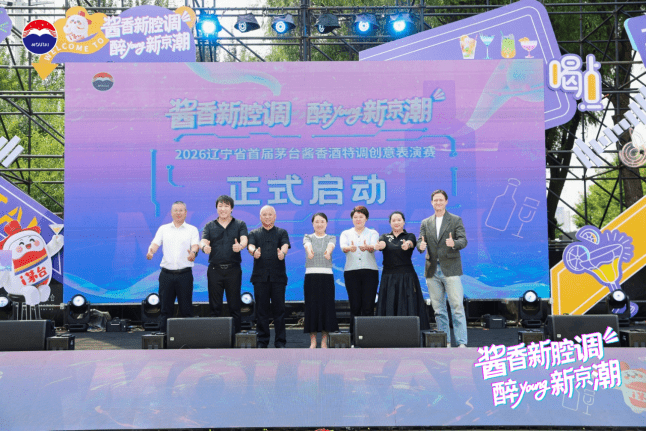
这是“酱香新腔调・醉young新京潮”——2026辽宁省首届茅台酱香酒特调创意表演赛的现场。活动由贵州茅台酱香酒营销有限公司辽宁省区主办,沈阳市酒类流通商会协办。
以“酱香+特调+潮流”为主线,设置调酒竞技、大众评审、自助体验、狂欢派对等多元环节,面向Z世代年轻消费群体,以“全面向C”为导向,拓展酱酒年轻化、新潮化的饮用场景。
白酒行业仍处在深度调整的2026年,一场特调赛事本身算不上行业重磅事件。但放到茅台“全面向C”战略转型的大背景之下,这件事便有了不一样的解读。
在酒业时报看来,这场沈阳夏夜的特调赛,本质上是一次“场景实验”:茅台正在用年轻人听得懂的语言、乐于参与的玩法,把酱香白酒从宴席、礼品清单里解放出来,搬进夜市、音乐现场、DIY调酒这类生活化场景。
从“你买我卖”到“你玩我陪”
传统白酒销售,核心逻辑离不开铺货、陈列、压货。如今,茅台的经销商群体正在切换营销思路。
回看今年5月全国茅台市场系列活动不难发现,品牌与消费者的关系正在发生转变:过去是单向的“你买我卖”,现在转向“你玩我陪”。不再单纯比拼价格,体验感与创意成为新的竞争抓手。
新一代茅台经销商,已经把酱香体验搬进音乐节、城市商业街、湿地公园。沈阳这场特调赛,正是全国布局中的其中一站。在此之前,茅台王子酒“乐味同行・开心一‘虾’”主题活动,已经落地贵阳、南京、合肥、武汉、长沙等多座城市。每一座城市,都匹配年轻人喜爱的音乐内容,搭配当地特色美酒美食。
南京站,十三香小龙虾搭配“茉汽十足”特调;长沙站,冰镇小龙虾邂逅“辣么快乐”特调。年轻人不再是酒桌上被动应酬,而是在松弛热闹的氛围中,主动接触白酒。
今年7月16日31日,全国各地茅台经销商落地各类线下市场化活动共计987场。这不是零散的营销造势,而是茅台“向C而行”战略的集体落地。当品牌放下姿态,从单向文化输出转向双向的场景陪伴,白酒年轻化才算真正落地到现实场景。
在酒业时报看来,茅台这场“场景革命”的核心逻辑,是把品牌从“远方的礼物”变成“身边的陪伴”——让消费者喝酒,不再出于人情与面子,而是被场景和体验打动,发自内心想要饮用。
为什么是“特调”?
不少行业读者会提出疑问:白酒本就适合纯饮,为什么要做特调?
答案藏在消费数据之中。
美团《2026酒饮即时零售经营风向标》显示,2025年酒饮即时零售用户,2035岁群体占比已经达到65.5%,“此刻就要、即时享用”正在替代传统的“囤货慢饮”消费习惯。抖音平台“便利店调酒”话题总播放量突破51.6亿次。
年轻人习惯用气泡水、青柠、西瓜汁改造白酒饮用方式,配方不拘一格,万物皆可用来搭配。
深挖消费动机,行业变化更加深刻。
《2026中国白酒市场中期研究报告》显示,今年上半年,47.6%白酒企业反馈,消费动机已经从“社交驱动”向“悦己为主”转变;86.4%企业感知到消费者日趋理性,优先看重质价比。波士顿咨询等机构调研同样表明,85后至00后选购白酒,“情感共鸣度”的决策权重,已经从2020年的18%提升至43%,成为首要考量因素。
换句话说,年轻人喝酒,不再是为了陪别人,而是满足自我的饮用需求。
长久以来,酱香白酒被贴上“风味厚重,不适合做鸡尾酒基底”的标签。茅台却用实践给出另一种可能性。
今年4月消博会上,茅台1935调制的鸡尾酒,成为展馆打卡热点。到访的西班牙红酒贸易商现场品鉴后感慨,酱香与果香彼此融合,刷新了自己对中国白酒的固有认知。上海青年陈悦的感受更直白:原本以为茅台只适配宴席场合,没想到可以做成时尚鸡尾酒,酱香藏在清爽口感里,彻底颠覆固有印象。
特调不是对白酒的简单稀释,而是消费场景的扩容,让酱香走出宴席,走进夜市,从酒桌走向年轻人的社交朋友圈。
“分龄运营”:茅台拒绝年轻化一刀切
就在沈阳特调赛举办前两天的8月21日,贵州茅台2026半年度业绩说明会上,官方完整阐释了“分龄运营”这套年轻化策略。
茅台方面表示,看待年轻人喝不喝白酒这件事需要客观理性,要区分背后是年龄、场景,还是文化层面的制约。企业正瞄准文化、口味、触达、价格、场景五大年轻化壁垒,逐项寻求突破。
茅台的用户分层规划十分精细:1825岁属于白酒消费引导期,核心目标是建立品牌美誉度;2530岁处于导入期,寻找适配其事业、生活的消费切入点;3035岁为成长期,推动稳定消费行为形成;3545岁进入稳定期,持续强化用户品牌粘性。
这套分层运营思路,和茅台总经理王莉在股东大会提出的“不做网红,做长红品牌”理念一脉相承。王莉曾坦言,茅台冰淇淋、酱香拿铁、巧克力等年轻化尝试,虽然取得一定传播效果,但并没有给品牌带来实质加持。未来在品牌联名、联营业务上,茅台会保持高度审慎。
告别流量型网红联名之后,茅台找到了适配自身定位的年轻化路径:不用单一产品覆盖全部年轻群体,而是针对不同年龄段、不同生活场景精准触达。
在酒业时报看来,茅台“分龄运营”真正价值,不在于向更多年轻人卖出产品,而是用差异化方式完成用户心智触达:让18岁群体觉得品牌足够新潮,25岁群体觉得可以融入日常,35岁群体感知到产品价值。
茅台vs同行:白酒年轻化的三条路径
白酒赛道里,不止茅台在布局年轻化,各家企业走出了截然不同的路线。
五粮液主打IP联名+星座文化,携手QQ音乐推出狮子座星座酒,联合品酒达人打造狮子月专属特调;旗下“一见倾心”系列采用29度柔和酒体,希望让年轻人第一口就能体会五粮液的底蕴。
泸州老窖侧重冰饮+低度化,早在2009年就提出白酒冰饮概念,锁定812摄氏度饮用黄金温度;2026年推出28度高光,打出“两分微醺,八分开心”的主张,支持纯饮、冰饮、调饮多种喝法。
茅台选择的是场景+体验路线:不刻意推出年轻化新品,不追逐大规模联名,把茅台王子酒、茅台1935等现有产品,放到年轻人真实生活场景中,依靠特调、音乐节、夜市、露营等形式,让酱香融入普通人日常。
三条路径没有高下之分,但茅台的选择具备独特性:没有为讨好年轻人改动产品本体,而是改变产品与消费者相遇的场景。酱香酒体本身没有变化,只是饮用的环境发生改变。
今年4月上市的茅台王子酒(酱香经典)2026版,官方零售价258元/瓶,对比2.0版本398元/瓶,下调幅度达到35%。价格门槛的下降叠加消费场景拓宽,构成茅台“让年轻人喝得上、愿意喝”的双轮驱动。
沈阳:夜经济与酱香的化学反应
把特调赛落地浑河外滩,并不是随机选择。
今年4月30日,“越夜越沈阳——2026沈阳市夜经济街区开街暨浑河外滩市集开集”正式启幕。浑河外滩市集是沈阳夜经济升级的重要载体,今年完成迭代更新,新增文化体验、非遗手作、生活美学等板块,打造全时段沉浸式滨水消费目的地。
茅台把特调赛放在沈阳夜经济核心地标,意图十分清晰:酱香要融入的,不只是酒杯,更是一座城市夜晚的烟火气息。
茅台在辽宁市场的布局不止这一场赛事。7月中旬,辽宁当地经销商联动43家专卖店,把城市露营活动搬进钢琴广场,一排排主题天幕、露营帐篷搭建完成,普通市民路过就可以打卡体验。12座城市打造12大主题互动区,串联成一张辽宁全省露营巡礼地图。
从城市露营到特调大赛,茅台正在东北市场完成从“卖酒”向“输出生活方式”的转型。
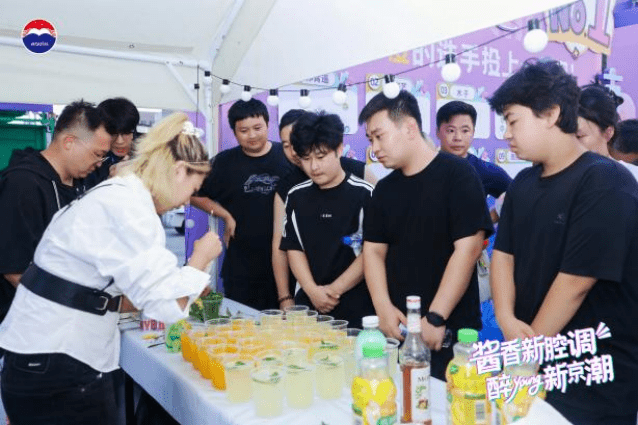
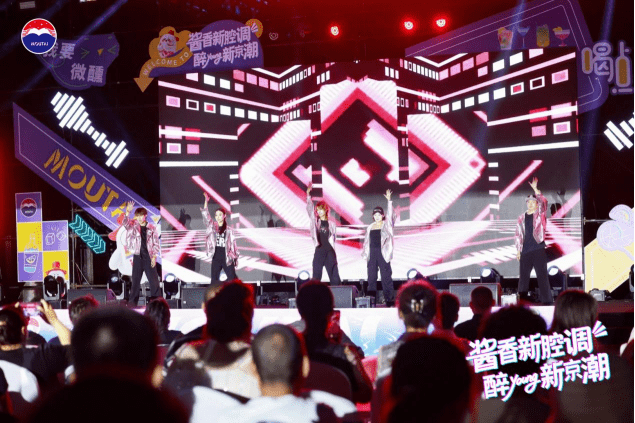
当晚赛事现场,乐队LIVE、街舞表演、花式调酒、DJ派对轮番上演。大众评审现场投票,普通观众可以参与自助调酒体验。整场活动没有生硬的品牌宣讲,也没有冗长领导致辞。年轻人举着特调酒杯拍照打卡,酱香就这样悄悄走进他们的相册与社交圈。
这正是茅台“全面向C”最生动的注脚:不是强行把酒卖给年轻人,而是创造机会,让年轻人主动选择和一杯酱香酒相遇。
2026年是茅台推进“十五五”规划的开局之年,也是全面向C战略转型的攻坚之年。从沈阳浑河外滩的特调赛,到全国987场线下活动;从精细化的分龄运营策略,到“不做网红”的长期定力,茅台用一套组合拳,回应行业共同难题:如何吸引年轻人爱上白酒。
答案或许不在酒液本身,而在酒之外的场景、体验与陪伴之中。
On the evening of August 23, at the main gate plaza of Hunhe Bund in Shenyang, the cocktail shaker in the bartender’s hands flew up and down, as the sauce-aroma of Moutai Prince Liquor blended with fruit juices and sparkling water in a “cross-border marriage” over clinking ice. Below the stage, young people holding signature cocktail glasses crowded several layers deep.
This was the scene at “New Notes of Sauce-Aroma · Young Vibe of New Capital” – the 2026 Liaoning Province inaugural Moutai Sauce-Aroma Liquor Signature Cocktail Creative Competition. The event was hosted by the Liaoning regional office of Guizhou Moutai Sauce-Aroma Liquor Marketing Co., Ltd., and co-organised by the Shenyang Liquor Circulation Chamber of Commerce.
Centred on the theme of “sauce-aroma + signature cocktails + trendy culture,” the event featured multiple segments including bartending competitions, public judging, self-service tasting, and a carnival party, targeting Gen Z consumers with a “fully C-end oriented” approach to expand the drinking scenarios of sauce-aroma baijiu in youthful and trendy directions.
In 2026, with the baijiu industry still in deep adjustment, a signature cocktail competition alone would not qualify as a major industry event. But placed against the backdrop of Moutai’s “fully C-end oriented” strategic transformation, this takes on a different meaning.
In the view of JiuYe Times, this signature cocktail competition on a summer night in Shenyang was essentially a “scenario experiment”: Moutai is using the language young people understand and the activities they enjoy to liberate sauce-aroma baijiu from banquet tables and gift lists, bringing it into lifestyle scenarios like night markets, live music venues, and DIY cocktail-making.
From “You Buy, I Sell” to “You Play, I Accompany”
Traditional baijiu sales have always revolved around distribution, display, and inventory loading. Now, Moutai’s distributor network is pivoting its marketing approach.
Looking back at the nationwide Moutai market activities in May this year, a shift in the brand-consumer relationship is evident: the old one-way “you buy, I sell” model is giving way to “you play, I accompany.” Price competition alone is no longer enough – experience and creativity have become the new battleground.
The new generation of Moutai distributors has already brought sauce-aroma experiences into music festivals, city commercial streets, and wetland parks. The Shenyang signature cocktail competition is just one stop in this national rollout. Prior to this, the Moutai Prince Liquor “Joyful Together · Happy Crayfish” themed events had already landed in Guiyang, Nanjing, Hefei, Wuhan, Changsha, and other cities. In each city, the events paired youth-friendly music content with local specialty food and drink. In Nanjing, thirteen-spice crayfish was matched with a “Jasmine Fizz” signature cocktail; in Changsha, iced crayfish met a “Spicy Happy” signature creation. Young people were no longer passive participants at formal banquets, but actively engaging with baijiu in a relaxed and lively atmosphere.
From July 16 to 31 this year, Moutai distributors across the country executed a total of 987 offline market activities. These were not scattered marketing stunts, but a collective implementation of Moutai’s “C-end oriented” strategy. When a brand sets aside its aloofness and shifts from one-way cultural output to two-way scenario-based companionship, the goal of making baijiu relevant to young people finally moves into real-world settings.
In the view of JiuYe Times, the core logic of Moutai’s “scenario revolution” is to transform the brand from a “distant gift” into a “nearby companion” – enabling consumers to drink not out of social obligation or saving face, but because they are moved by the scenario and experience, and genuinely want to drink.
Why “Signature Cocktails”?
Many industry readers may ask: baijiu is best enjoyed neat – why use it in cocktails? The answer lies in consumer data.
Meituan’s 2026 Alcohol Instant Retail Business Compass shows that in 2025, the 20–35 age group already accounted for 65.5% of alcohol instant retail users. The consumption habit of “I want it now, I want it immediately” is replacing the traditional “stock up and sip slowly” approach. On Douyin, the hashtag “convenience store cocktail” has amassed over 5.16 billion total views. Young people are accustomed to transforming baijiu with sparkling water, lime, and watermelon juice – there are no fixed recipes; almost anything can be paired.
Delving deeper into consumption motivations reveals even more profound industry shifts. The 2026 China Baijiu Market Mid-Year Report shows that in the first half of this year, 47.6% of baijiu enterprises reported that consumer motivation had shifted from “socially driven” to “self-pleasing as the priority”; 86.4% of enterprises perceived that consumers had become more rational, prioritising value for money. Research by Boston Consulting Group and others similarly shows that for consumers born after 1985 through 2000, the decision-making weight of “emotional resonance” when choosing baijiu has increased from 18% in 2020 to 43%, making it the primary consideration.
In other words, young people are no longer drinking to please others, but to satisfy their own needs.
For a long time, sauce-aroma baijiu has been labelled as “too heavy-flavoured to work as a cocktail base.” But Moutai has demonstrated another possibility through practice. At the China International Consumer Products Expo in April this year, cocktails made with Moutai 1935 became a hotspot at the exhibition hall. A Spanish wine trader who visited the expo remarked after tasting that the fusion of sauce-aroma and fruit flavours had completely reshaped his perception of Chinese baijiu. A young Shanghai consumer, Chen Yue, put it more directly: she had previously thought Moutai was only suitable for formal banquets, but was surprised to find it could be made into a stylish cocktail, with the sauce-aroma hidden beneath a refreshing taste that completely subverted her expectations.
Signature cocktails are not a simple dilution of baijiu, but an expansion of consumption scenarios – taking sauce-aroma out of formal banquets and into night markets, from the dining table into young people’s social circles.
“Age-Based Engagement”: Moutai Rejects a One-Size-Fits-All Approach to Youth Marketing
Just two days before the Shenyang signature cocktail competition, on August 21, at Moutai’s 2026 half-year performance briefing, the company fully articulated its “age-based engagement” youth strategy. Moutai stated that the question of whether young people drink baijiu needs to be viewed objectively and rationally, distinguishing whether the constraints are rooted in age, scenario, or culture. The company is targeting five barriers to youth engagement – culture, taste, accessibility, price, and scenario – and seeking breakthroughs on each front.
Moutai’s user segmentation is highly refined: ages 18–25 represent the “guidance phase” of baijiu consumption, where the core goal is to build brand awareness; ages 25–30 are the “introduction phase,” identifying consumption entry points suited to their careers and lifestyles; ages 30–35 are the “growth phase,” fostering stable consumption habits; and ages 35–45 enter the “stability phase,” continuously reinforcing brand loyalty.
This layered engagement approach is consistent with the philosophy articulated by Moutai General Manager Wang Li at the shareholder meeting: “Do not be a flash-in-the-pan internet sensation, but a brand that endures.” Wang Li acknowledged that previous youth-oriented experiments such as Moutai ice cream, sauce-aroma lattes, and chocolates, while generating some buzz, did not materially strengthen the brand. Going forward, the company will remain highly cautious in brand collaborations and co-branded ventures.
Having moved past traffic-driven viral collaborations, Moutai has found a youth engagement strategy that fits its identity: not using a single product to cover all young consumers, but precisely targeting different age groups and different life scenarios.
In the view of JiuYe Times, the true value of Moutai’s “age-based engagement” lies not in selling more products to young people, but in reaching their minds through differentiated approaches – making 18-year-olds feel the brand is trendy, 25-year-olds feel it can be part of their daily lives, and 35-year-olds perceive the product’s genuine value.
Moutai vs. Peers: Three Paths to Youth Engagement in Baijiu
Moutai is not alone in pursuing youth engagement – different distillers have taken distinctly different routes.
Wuliangye focuses on IP co-branding and zodiac culture, partnering with QQ Music to launch Leo zodiac-themed liquor, and collaborating with tasting experts to create exclusive cocktails for Leo month. Its “Love at First Sight” series uses a gentle 29-degree body, aiming to let young people appreciate Wuliangye’s depth from their very first sip.
Luzhou Laojiao emphasises iced drinking and lower alcohol, having proposed the concept of iced baijiu as early as 2009, targeting an optimal drinking temperature of 8–12 degrees Celsius. In 2026, it launched 28-degree Gaoguang with the slogan “two parts tipsy, eight parts happy,” supporting neat, iced, and mixed consumption.
Moutai has chosen the “scenario + experience” path: not deliberately launching new youth-oriented products, not chasing large-scale co-branding, but placing existing products like Moutai Prince Liquor and Moutai 1935 into young people’s real-life settings – using signature cocktails, music festivals, night markets, and camping to integrate sauce-aroma into everyday life.
There is no hierarchy among the three approaches, but Moutai’s choice is distinctive: it does not alter the product itself to cater to young people, but changes the context in which the product meets consumers. The sauce-aroma liquor itself remains unchanged; only the drinking environment has shifted.
The 2026 edition of Moutai Prince Liquor (Sauce-Aroma Classic), launched in April this year, has an official retail price of RMB 258 per bottle – a 35% reduction from the 2.0 version’s RMB 398. The combination of a lower price barrier and expanded consumption scenarios constitutes a dual-engine strategy to “make it affordable and desirable for young people to drink.”
Shenyang: The Chemical Reaction Between Night Economy and Sauce-Aroma
The choice of Hunhe Bund for the signature cocktail competition was not random. On April 30 this year, “The Night Gets Better in Shenyang – 2026 Shenyang Night Economy District Opening and Hunhe Bund Market Launch” officially kicked off. The Hunhe Bund Market is a key platform for Shenyang’s night economy upgrade, having been iteratively renewed this year with new sections including cultural experiences, intangible heritage handicrafts, and lifestyle aesthetics, creating an all-day immersive waterfront consumption destination.
Moutai’s decision to place the signature cocktail competition at the heart of Shenyang’s night economy sends a clear message: sauce-aroma is meant to blend not only with the glass, but with the vibrant night-time spirit of the city.
Moutai’s presence in the Liaoning market extends beyond this single event. In mid-July, local distributors in Liaoning collaborated with 43 brand stores to bring urban camping activities to the Piano Plaza, setting up rows of themed canopies and camping tents where ordinary citizens could drop in and experience them. Across 12 cities, 12 themed interactive zones were created, forming a province-wide camping tour map.
From urban camping to the signature cocktail competition, Moutai is completing its transformation in the Northeast market from “selling liquor” to “delivering a lifestyle.”
At the competition venue that evening, live bands, street dance performances, flair bartending, and DJ parties followed one after another. The public judged on-site, and ordinary audience members could participate in self-service cocktail experiences. The entire event featured no stiff brand presentations and no lengthy executive speeches. Young people snapped photos with their signature cocktail glasses, and sauce-aroma quietly entered their photo albums and social circles.
This is the most vivid footnote to Moutai’s “fully C-end oriented” strategy: not forcing liquor onto young people, but creating opportunities for them to choose to encounter a glass of sauce-aroma baijiu on their own terms.
2026 marks the first year of Moutai’s “15th Five-Year Plan” and a critical year for its full C-end strategic transformation. From the signature cocktail competition on Shenyang’s Hunhe Bund to 987 offline activities nationwide; from the refined age-based engagement strategy to the long-term resolve of “not chasing internet fame” – Moutai has responded to the industry’s shared challenge of attracting young people to baijiu with a comprehensive approach. The answer may lie not in the liquor itself, but in the scenarios, experiences, and companionship that surround it.
原创文章版权归本网所有;转载文章归原作者所有。发布者:酒业时报,转载请注明出处:https://www.thewinetimes.com/gongsi/12206