7月30日,百威亚太(01876.HK)交出2026年上半年成绩单。归母净利润4.73亿美元,同比增长15.6%——单看这个数字,似乎还不错。但拆开细看,事情远没有那么简单。
净利润涨了,但别被“数字游戏”骗了
4.73亿美元的归母净利润,15.6%的同比增幅,第一眼极具吸引力。
但这份高增长依托2025年上半年低基数:去年同期集团内部重组产生大额资本利得税,叠加多笔新增投资项目,形成一次性损益扰动。剔除特殊项目影响后,正常化归母净利润4.81亿美元,同比仅微增1.5%,主业盈利几乎停滞。
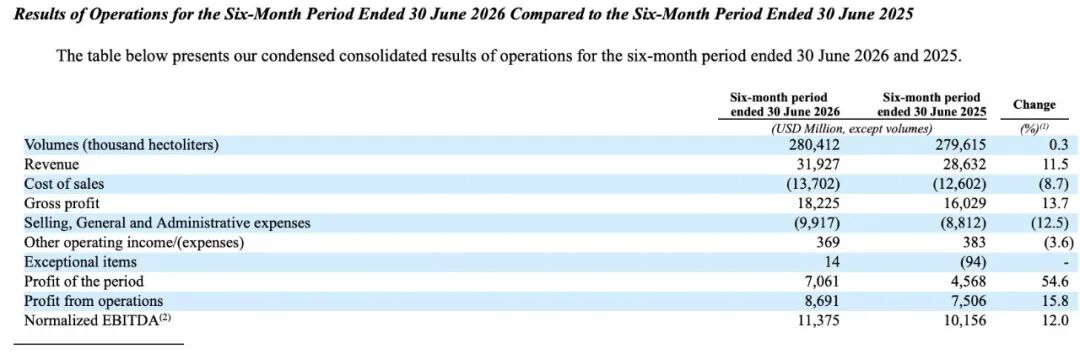
消费志认为,用“低基数红利”包装出来的账面利润增长,本质上是一场财务数字的障眼法。真正反映核心经营盈利能力的正常化EBITDA,才是衡量基本面最诚实的指标。
事实也确实如此。上半年正常化EBITDA 9.26亿美元,同比下滑5.8%(内生增长-8.9%);正常化EBITDA利润率同比收窄236个基点至29.2%,增收不增利,规模效应持续弱化。
中国“失速”vs韩印“狂奔”
区域市场极端分化,是这份财报最刺眼的标签。
先说中国。作为百威亚太第一大单一市场,国内业务表现完全可用“失速”概括。上半年中国市场销量、收入分别同比下滑6.0%、6.4%;第二季度经营压力进一步放大,单季销量骤降9.7%,收入同步下滑8.6%。百威亚太CEO程衍俊在财报中直言,上半年中国业务复苏步伐缓于预期,不利天气叠加即饮渠道持续不振,双重因素直接拖累营收与获利。
这里需要区分一组关键单价数据:上半年整体受下沉渠道投入拖累,中国市场每百升收入同比下降0.4%;但二季度依托高端产品结构优化,单季每百升收入上涨1.2%,高端化策略短期对冲了渠道投入带来的均价压力。
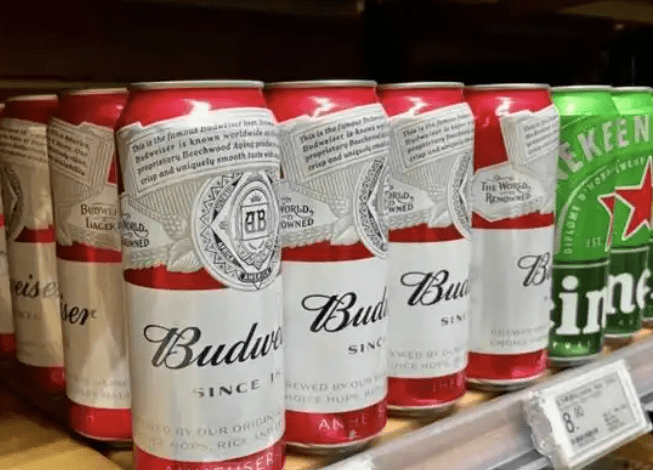
再看韩印市场,和中国市场低迷形成鲜明反差,韩国、印度成为集团增长核心发动机。印度市场收入实现两位数增长;韩国市场销量同比增长10.1%,在即饮、非即饮两大渠道市场份额同步提升。财报分区数据显示,亚太东部市场正常化EBITDA同比增长6.3%,而以中国为核心的西部市场同比下滑12.2%,一东一西业绩走势完全割裂。
渠道失衡:中国市场长期存在的结构性慢性病
国内市场的经营困境,不只是天气、餐饮疲软等外部短期因素,深层症结在于渠道布局失衡。
百威亚太长期依靠一二线城市夜场、高端餐饮作为基本盘,这套模式在消费上行周期优势显著;但消费环境转向后,夜场复苏乏力,居家消费、大众平价餐饮成为市场主流增量赛道,原有渠道优势彻底失效。
酒业专家肖竹青指出,百威在地级市、县城、乡镇的传统分销网络布局薄弱。此前公司尝试联合可口可乐在湖北等区域共享下沉渠道,希望借助快消渠道补齐短板,但最终落地效果不及预期,雷声大、雨点小。反观华润、青岛、燕京等本土头部品牌,搭建了覆盖省、市、县、乡四级完整分销体系,既能守住即饮场景,又能拓展商超、便利店、即时零售等非即饮赛道。
上半年国内市场呈现特殊分化:二季度靠高端产品抬升单季均价,但全年受下沉渠道投放拖累整体单价走弱,量弱价分化,是渠道结构性短板在存量竞争阶段的集中暴露。
连续11届世界杯赞助商,营销红利未能兑现
2026年恰逢美加墨世界杯,百威作为连续11届世界杯啤酒独家官方赞助商,本应迎来一波营销拉动红利。世界杯限定包装、全球统一“敬碰杯时刻”主题营销、面向餐饮渠道打造的“百威夜百味”系列活动全线铺开。
但业绩数据并未体现催化效果,二季度中国区销量跌幅进一步扩大至9.7%。业绩会上有投资者直接追问世界杯营销投入何时转化为销量业绩,管理层回应,本轮国内营销核心目标并非短期拉动销量,而是长期沉淀品牌资产。
消费志认为,“强化品牌资产”的说辞逻辑成立,但在销量连续下滑的背景下,大额品牌投放的转化效率值得重新审视,品牌价值不能持续为经营渠道短板背锅。
投行观点分歧,核心聚焦中国复苏拐点
财报披露后,各大投行给出截然相反的评级判断。光大证券维持“增持”评级,看好公司高端、超高端啤酒赛道竞争壁垒;花旗维持“买入”,给出10.9港元目标价;里昂证券维持“跑赢大市”评级。看空阵营同样明确:大和证券将评级从“买入”下调至“持有”,目标价由9.2港元下调至7港元,机构判断即便去年同期基数偏低,三季度中国市场销量仍将承压,整体表现大概率不及行业预期;招商证券同步下调目标价至7.1港元。
多空分歧的本质,是机构对中国啤酒市场复苏拐点、百威渠道转型见效时间的判断出现巨大差异。
一组值得玩味的长期趋势数据:2018年至2024年,百威亚太中国区销量年均复合增长率为-2.6%;2025年国内销量、收入分别下滑8.6%、11.3%;2026年上半年延续下行,再度录得6%、6.4%的双下滑。向下的增长曲线,至今没有明确扭转信号。
2025年4月,百威亚太迎来首位中国籍CEO程衍俊,市场一度寄望本土管理层盘活国内市场、扭转业绩困局,但一年半经营数据显示,转型成效尚未充分兑现。
截至6月末,集团手握25亿美元净现金,资金储备充足,但资金投放方向、渠道改革落地效率,才是当下最核心的经营命题。
高端化故事还能支撑多久?渠道下沉的短板能否快速补齐?世界杯大额品牌投入何时兑现实际业绩?所有疑问,都要交给2026年下半年财报给出答案。
On July 30, Budweiser Brewing Company APAC (01876.HK) released its first-half 2026 results. Net profit attributable to shareholders reached US$473 million, up 15.6% year-on-year – a number that looks decent at first glance. But a closer look reveals a far more complicated picture.
US$473 million in attributable net profit with a 15.6% year-on-year increase is certainly eye-catching.
However, this high growth is built on a low base from the first half of 2025: the same period last year saw significant one-off income tax charges from internal group restructuring, combined with multiple new investment projects, creating non-recurring profit and loss disturbances. After excluding special items, normalised attributable net profit stood at US$481 million, up a mere 1.5% year-on-year – core earnings are essentially stagnant.
In the view of Xiaofeizhi, the apparent profit growth packaged as a “low-base dividend” is, in essence, a financial illusion. Normalised EBITDA, which truly reflects core operating profitability, remains the most honest measure of fundamentals.
And the reality is telling: normalised EBITDA for the first half reached US$926 million, down 5.8% year-on-year ( -8.9% on an organic basis); the normalised EBITDA margin contracted 236 basis points to 29.2%, with revenue growth failing to translate into profit growth as scale effects continue to weaken.
Extreme divergence across regional markets is the most striking label on this earnings report.
Take China first. As Budweiser APAC’s largest single market, the domestic business performance can be summarised in one word: “stalling.”
In the first half, China market sales volume and revenue declined 6.0% and 6.4% year-on-year respectively; operating pressure further intensified in the second quarter, with quarterly sales volume plunging 9.7% and revenue sliding 8.6% in tandem. Budweiser APAC CEO Cheng Yanjun stated bluntly in the earnings report that the pace of China’s business recovery in the first half was slower than expected, with unfavourable weather combined with persistent weakness in the on-trade channel directly weighing on revenue and profits.
A key data point requires differentiation here: the overall per-hectolitre revenue in China declined 0.4% year-on-year in the first half, dragged down by investment in lower-tier channel expansion; however, in the second quarter, per-hectolitre revenue rose 1.2%, driven by optimisation of the premium product mix – a short-term hedge by the premiumisation strategy against the average price pressure from channel investment.
Now look at Korea and India, which present a stark contrast to China’s sluggishness, serving as the group’s core growth engines. India delivered double-digit revenue growth; Korea achieved 10.1% year-on-year volume growth with market share gains across both on-trade and off-trade channels. Regional data shows that normalised EBITDA in the Asia Pacific East market grew 6.3% year-on-year, while the China-centric West market declined 12.2% – a complete performance split between east and west.
The operational difficulties in the domestic market are not merely about external short-term factors like weather and weak food and beverage demand. The deeper malaise lies in channel imbalance.
Budweiser APAC has long relied on nightlife venues and premium dining in first- and second-tier cities as its core base – a model that worked well during the consumption up-cycle. But as the consumer environment shifted, with nightlife venues recovering slowly and at-home consumption and mass-market dining becoming the main incremental growth channels, the company’s original channel advantage has become obsolete.
Industry expert Xiao Zhuqing pointed out that Budweiser has a weak traditional distribution network in prefecture-level cities, counties, and townships. The company previously attempted to co-share lower-tier channels with Coca-Cola in regions like Hubei, hoping to leverage fast-moving consumer goods channels to fill the gap, but the results fell short of expectations – much ado about nothing.
In contrast, domestic leading brands such as China Resources Beer, Tsingtao, and Yanjing have built complete four-tier distribution systems covering provinces, cities, counties, and townships, enabling them to both hold their ground in on-trade scenarios and expand into off-trade channels including supermarkets, convenience stores, and instant retail.
The domestic market showed a peculiar divergence in the first half: the second quarter saw premium products lift the average quarterly price, but the full year was dragged down by lower-tier channel investment, resulting in a “volume weak, price split” dynamic – a concentrated exposure of structural channel weaknesses in the era of stock-market competition.
2026 coincides with the USA-Mexico-Canada World Cup, and Budweiser, as the exclusive official beer sponsor for 11 consecutive World Cups, should have been enjoying a marketing-driven boost. World Cup-limited packaging, a global “Cheers to the Moment” thematic campaign, and the “Budweiser Night · Hundred Flavours” series targeting the food and beverage channel were all rolled out.
Yet the earnings data showed no catalytic effect, with China sales volume declines widening to 9.7% in the second quarter.
During the earnings call, an investor directly questioned when the World Cup marketing investment would convert into sales. Management responded that the core objective of this domestic marketing push was not to drive short-term volume but to accumulate long-term brand equity.
In the view of Xiaofeizhi, the “brand equity reinforcement” argument is logically sound, but against the backdrop of continuous volume declines, the conversion efficiency of significant brand spending warrants re-evaluation – brand value cannot perpetually serve as a fig leaf for channel deficiencies.
Following the earnings release, major investment banks issued sharply contrasting ratings. Everbright Securities maintained its “Overweight” rating, citing confidence in the company’s competitive moat in the premium and super-premium beer segment; Citi maintained “Buy” with a target price of HK$10.9; CLSA maintained “Outperform.”
The bearish camp was equally unequivocal: Daiwa Securities downgraded from “Buy” to “Hold,” cutting its target price from HK$9.2 to HK$7.0, arguing that even with a low base from the same period last year, China market sales volumes will remain under pressure in the third quarter, with overall performance likely falling short of industry expectations; China Merchants Securities simultaneously lowered its target price to HK$7.1.
The essence of the bull-bear divergence lies in the vastly different institutional views on the inflection point of China’s beer market recovery and the timeline for Budweiser’s channel transformation to bear fruit.
A set of long-term trend data worth noting: from 2018 to 2024, Budweiser APAC’s China sales volume compound annual growth rate was -2.6%; in 2025, domestic volume and revenue declined 8.6% and 11.3% respectively; the first half of 2026 continued the downward trajectory, with another double decline of 6% and 6.4%. The downward growth curve shows no clear reversal signal to date.
In April 2025, Budweiser APAC welcomed its first Chinese CEO, Cheng Yanjun, with the market hoping that local management could revitalise the domestic market and turn around the operational difficulties, but a year and a half of operating data shows that the transformation has yet to bear fruit.
As of the end of June, the group held US$2.5 billion in net cash – ample reserves – but the direction of capital deployment and the efficiency of channel reform execution remain the core operational questions of the moment.
How much longer can the premiumisation narrative hold? Can the channel down-tiering gap be quickly closed? When will the World Cup brand spending convert into tangible business results? All these questions will need to be answered by the second-half 2026 earnings report.
原创文章版权归本网所有;转载文章归原作者所有。发布者:酒业时报,转载请注明出处:https://www.thewinetimes.com/gongsi/11722