白酒行业有个心照不宣的焦虑:年轻一代的餐桌上,白酒的身影越来越少了。
The baijiu industry has an unspoken anxiety: on the dining tables of the younger generation, baijiu is becoming an increasingly rare sight.
毕马威与中酒协联合发布的《2026中国白酒市场中期研究报告》直言,今年上半年行业”量价利承压”,消费场景正从传统商务宴请加速向日常自饮、亲友轻社交延伸。另一组数据更扎心——49.3%受访酒企提及,消费场景正由商务礼赠逐步向日常刚需延伸。
The 2026 China Baijiu Market Mid-Year Report, jointly released by KPMG and the China Alcoholic Drinks Association, states plainly that in the first half of this year, the industry is under “pressure on volume, price, and profit,” with consumption scenarios accelerating their shift from traditional business banquets to everyday self-drinking and casual social gatherings among friends and family. Another set of data hits even harder – 49.3% of surveyed liquor companies mentioned that consumption scenarios are gradually shifting from business gifting to everyday essential needs.
换句话说,白酒不是没人喝了,是喝白酒的场合变了。
In other words, it is not that baijiu is no longer being consumed – it is that the occasions for drinking baijiu have changed.
谁先找到新场合,谁就抢到下一张门票。
Whoever finds the new occasions first secures the next ticket.
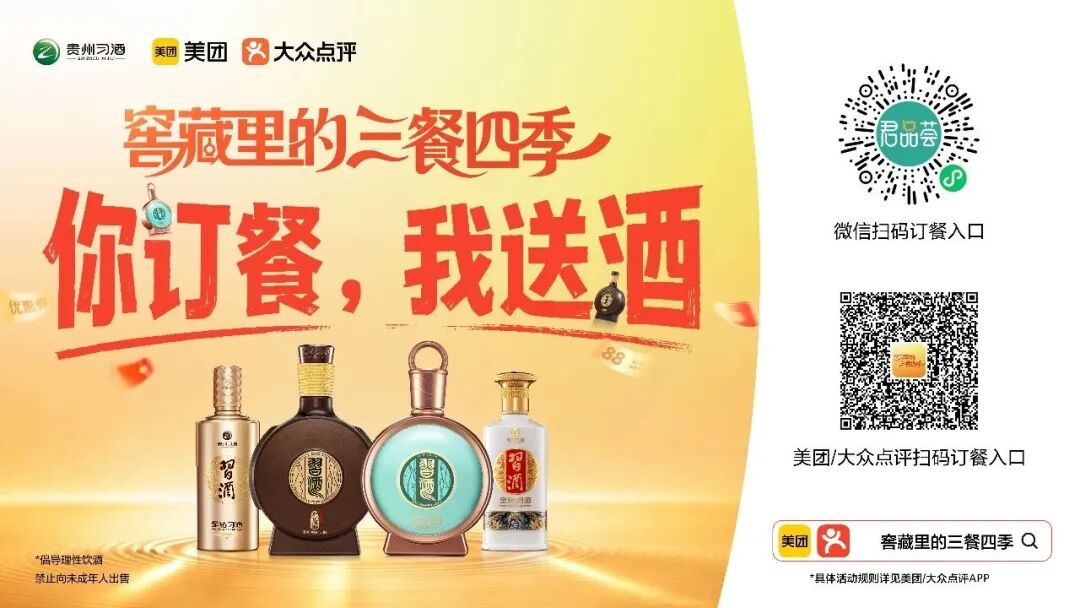
7月22日,习酒”窖藏里的三餐四季”全面焕新升级,君品、窖藏1988、金钻、金质四款核心产品悉数登场,近40万瓶赠酒计划经由全国目标2000家餐饮终端直达消费者餐桌。
On July 22, Xijiu’s “Three Meals and Four Seasons in the Cellar” campaign underwent a comprehensive upgrade, with four core products – Junpin, Cellar 1988, Jinzuan, and Jinzhi – all making their appearance. A gift programme of nearly 400,000 bottles is set to reach consumers’ tables via 2,000 target food and beverage outlets nationwide.
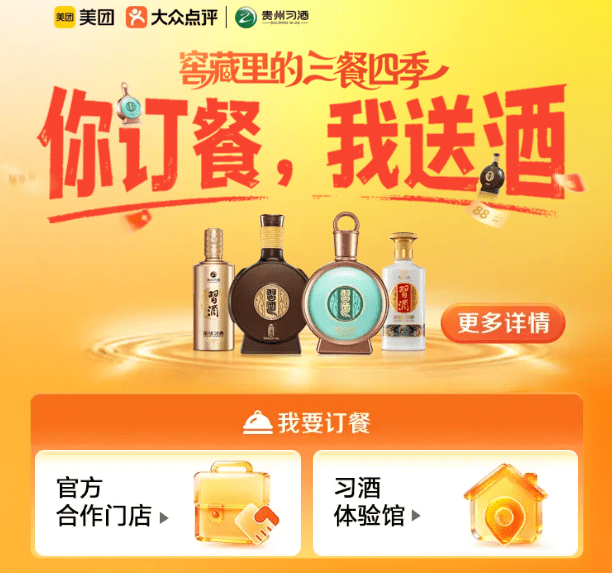
在酒业时报看来,这件事的价值不在于”送了多少酒”,而在于它回答了行业一个核心命题:当”商务局”萎缩,”百姓桌”崛起,酱酒如何以最低门槛进入最高频的场景?
In the view of JiuYe Times, the value of this initiative lies not in “how much liquor was given away,” but in how it answers a core industry question: as the “business banquet scene” shrinks and the “people’s table” rises, how can sauce-aroma baijiu enter the highest-frequency consumption scenarios at the lowest possible threshold?
为什么白酒进不了日常餐桌?
Why Can’t Baijiu Make It to the Everyday Table?
过去十年,白酒行业跑得太快了。产能扩张、渠道下沉、价格带拉长,但一个根本问题始终悬而未决——消费场景太窄。
Over the past decade, the baijiu industry has grown too fast. Production capacity expanded, channels went deeper, and price bands stretched longer – but one fundamental issue has always remained unresolved: the consumption scenarios are too narrow.
酱酒的消费场景长期被框定在三张桌上:商务宴请、节庆礼品、高端品鉴。这三张桌子的共性是”低频”和”高决策成本”。一个人一年可能喝50次酒,但真正主动开一瓶酱酒的次数,掰着手指头数得过来。
The consumption scenarios for sauce-aroma baijiu have long been confined to three types of tables: business banquets, festive gifting, and high-end tastings. What these three have in common is “low frequency” and “high decision-making cost.” A person might drink 50 times a year, but the number of times they actively open a bottle of sauce-aroma baijiu can be counted on one hand.
与此同时,餐饮大盘在疯狂扩张。2025年中国餐饮业整体规模已超5万亿。毕马威《2026年中国餐饮企业发展报告》专门点出一个信号:这张”餐桌”正在发生结构性变化——客单价下行、大众餐饮崛起、下沉市场发力。餐厅越开越多,人均越吃越便宜,但白酒的”上桌率”却没能同步跟上。
At the same time, the food and beverage sector is expanding at a breakneck pace. In 2025, China’s catering industry as a whole exceeded RMB 5 trillion in scale. KPMG’s 2026 China Catering Enterprise Development Report specifically highlights a signal: this “dining table” is undergoing structural changes – average check values are declining, mass-market dining is rising, and lower-tier markets are gaining momentum. More and more restaurants are opening, per-capita spending is getting cheaper, but baijiu’s “table presence” has failed to keep pace.
习酒的做法很简单:既然白酒上不了百姓的桌,那就把酒直接送到桌上去。
Xijiu’s approach is simple: since baijiu cannot make it onto the people’s tables, just send the liquor directly to those tables.
5月至7月,习酒先拿窖藏1988单品试水,依托美团、大众点评两大平台,在周五周六的窗口期完成了近800家优质餐饮网点的合作铺设。数据跑通之后,7月22日的升级一口气放开了三个维度:
From May to July, Xijiu first tested the waters with a single product – Cellar 1988 – leveraging the two major platforms Meituan and Dianping, and during the Friday–Saturday peak window, completed the rollout across nearly 800 quality F&B outlets. After the data proved successful, the July 22 upgrade expanded across three dimensions all at once:
产品从1款变4款。君品锚定商务宴请,窖藏1988覆盖社交聚餐,金钻和金质主攻大众日常。门店根据客群结构自由选择绑定产品,高中低档都能找到匹配项。
Products expanded from 1 to 4. Junpin targets business banquets, Cellar 1988 covers social dining gatherings, while Jinzuan and Jinzhi focus on everyday mass consumption. Outlets can freely choose which products to bind based on their customer profiles – high-end, mid-range, and entry-level all have a suitable match.
时间从周末变全年。兑付从周五周六扩展到周一至周日全天候,活动周期直接拉到2027年一季度。工作日午餐、周末家宴、节假日聚会,统统覆盖。
Time slots expanded from weekends to year-round. Redemption was extended from Friday–Saturday to every day of the week, with the campaign period running directly through to Q1 2027. Working-day lunches, weekend family banquets, and holiday gatherings are all covered.
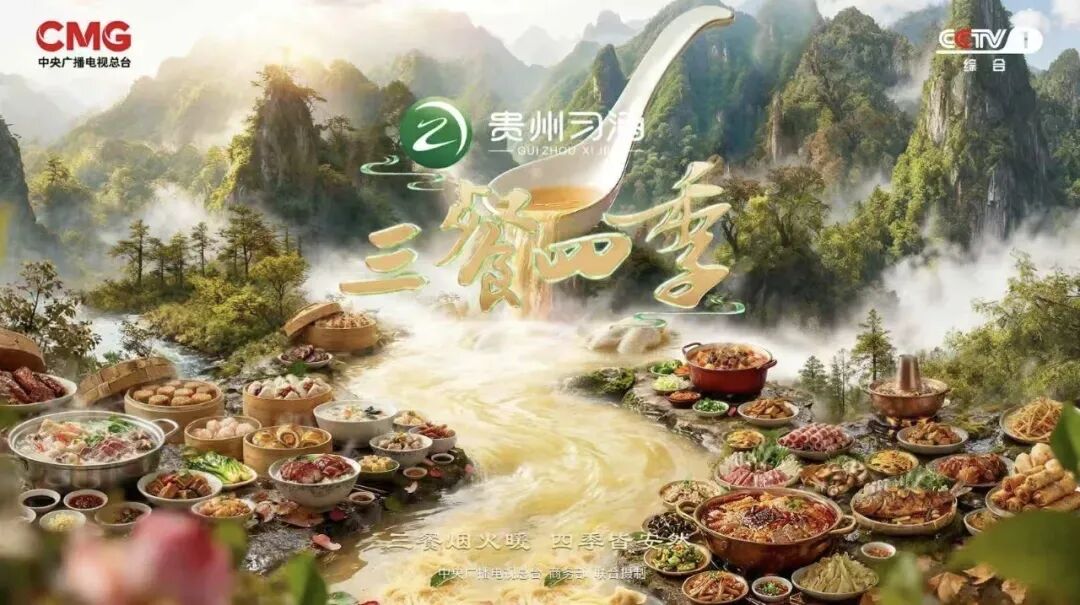
网点计划由试点近800家扩容至2000家,面向全国公开招募合作门店,同步公布四大核心权益——品牌背书、流量扶持、成本分担、物料支持。
The outlet network plan expanded from the pilot of nearly 800 to 2,000 outlets, with open national recruitment for partner stores, accompanied by the announcement of four core benefits – brand endorsement, traffic support, cost sharing, and material support.
这套组合拳打下来,习酒等于在中国最活跃的2000张餐桌上,给自己预留了一个固定席位。
With this combination of moves, Xijiu has effectively reserved a fixed seat for itself on the 2,000 most active dining tables in China.
“送酒”背后的博弈论
The Game Theory Behind “Giving Away Liquor”
很多人第一反应是:送酒谁不会?但仔细拆解就会发现,习酒这步棋的巧妙之处在于用一次投入撬动了三个端的正向循环。
Many people’s first reaction is: who can’t give away liquor? But upon closer examination, the brilliance of Xijiu’s move lies in using a single investment to drive a positive cycle across three ends.
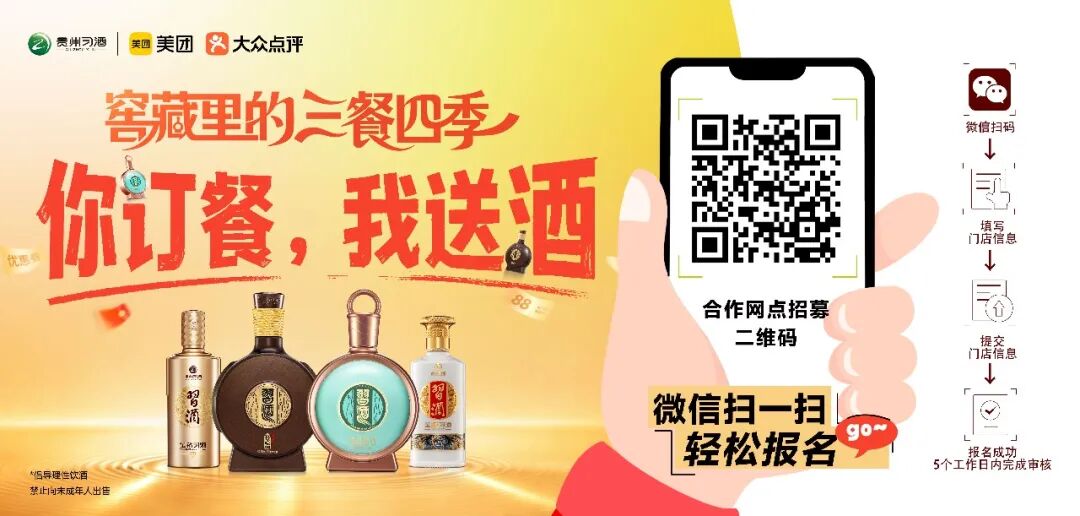
先看B端。传统酒企进餐饮渠道,套路很固定:进场费、买断陈列、压货。餐饮老板心里算的是另一笔账——酒卖不卖得动另说,现金流先被占用了。习酒反其道而行:酒免费送,不压货,不占资金。门店要做的只是把套餐上线平台、消费者到店核销。成本由品牌方承担,门店零成本参与。
First, look at the B-end. Traditional liquor companies entering the F&B channel follow a set playbook: shelf fees, exclusive display contracts, and inventory loading. Restaurant owners calculate the math differently – regardless of whether the liquor sells or not, their cash flow is tied up first. Xijiu does the opposite: liquor is given free of charge, no inventory loading, no capital occupation. All the store has to do is list the set meal on the platform, and consumers redeem it on arrival. Costs are borne by the brand, with zero-cost participation for the stores.
更关键的是流量。活动嵌入美团、大众点评的搜索入口,消费者搜”习酒””三餐四季”就能找到合作门店。平台定向导流+品牌赠品加持,让合作门店的套餐在本地生活页面上天然具备竞争力。对一家餐厅来说,这相当于习酒花钱给它买了曝光、送了赠品、拉了客流。
Even more critical is traffic. The campaign is embedded into the search portals of Meituan and Dianping, so consumers searching for “Xijiu” or “Three Meals and Four Seasons” can find partner stores. Platform-directed traffic + brand gift incentives make the set meals of partner stores naturally competitive on local lifestyle pages. For a restaurant, this is equivalent to Xijiu paying for its exposure, providing free gifts, and bringing in foot traffic.
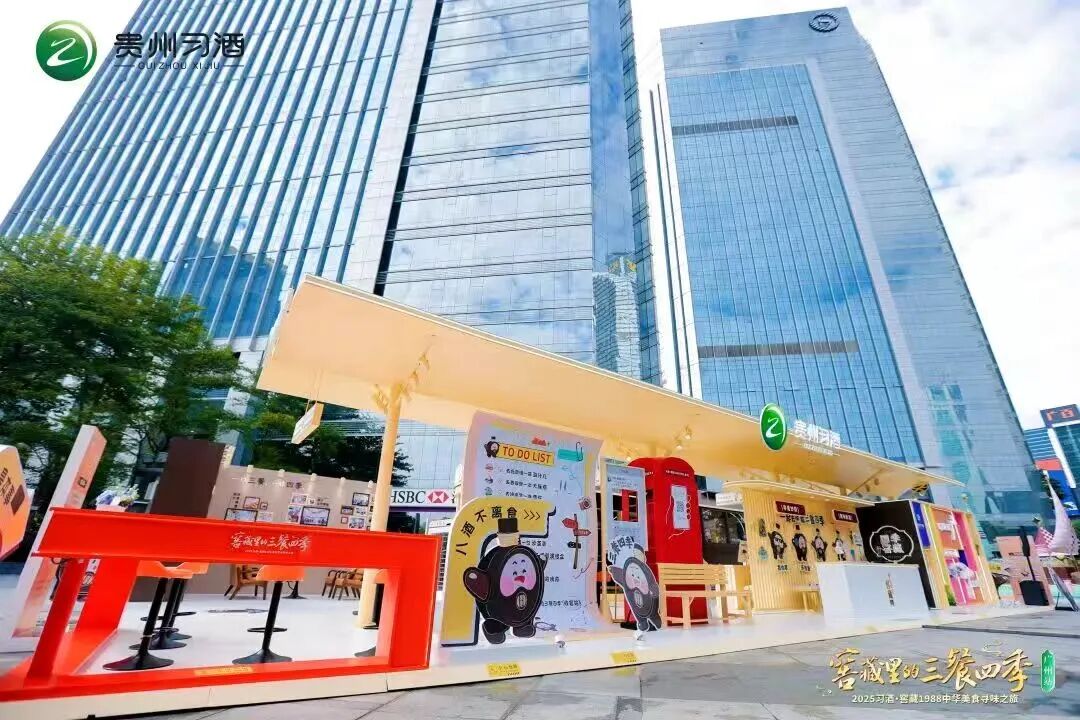
再看C端。消费者通过平台预订专属套餐,到店能拿到三重福利:餐费折扣、免费赠酒、最高88元无门槛代金券。决策门槛被压到最低——不是为了喝酒而吃饭,而是为了吃饭顺便喝瓶酒。 酱香品鉴不再局限于专卖店、主题品鉴会,转移至大众化餐饮场景,大幅降低消费者体验门槛。
Then look at the C-end. Consumers book exclusive set meals through the platform and receive three benefits upon arrival: meal discounts, free liquor, and up to RMB 88 in no-minimum vouchers. The decision threshold is brought to its lowest point – not eating for the sake of drinking, but drinking a bottle while eating. Sauce-aroma tasting is no longer confined to specialty stores and thematic tasting events; it is moved to mass-market dining settings, significantly lowering the barrier for consumer experience.
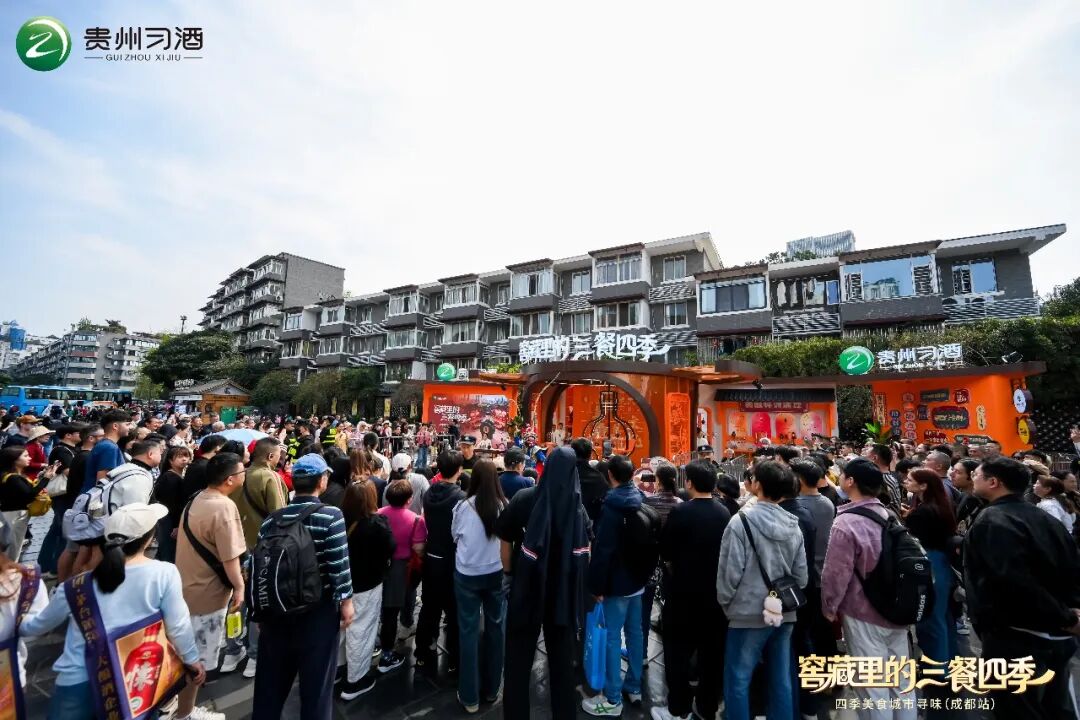
最后看习酒自己。40万瓶酒从仓库进了餐厅,每一瓶都是一个免费品鉴样本。消费者在吃火锅、撸串时开瓶畅饮,酱香口感与美食记忆深度绑定。这不是一次性的促销,而是一次大规模的消费者口感教育。
Finally, look at Xijiu itself. 400,000 bottles have moved from warehouses into restaurants – each bottle is a free tasting sample. Consumers open and enjoy them while having hotpot or barbecue, deeply binding the sauce-aroma taste with food memories. This is not a one-off promotion, but a large-scale consumer palate education initiative.
三方各取所需,形成闭环。这套模式能跑通的核心原因在于:习酒把”赠酒”从成本项变成了投资项。
All three parties get what they need, forming a closed loop. The core reason this model works is that Xijiu has transformed “giving away liquor” from a cost item into an investment item.
一条殊途同归的路径
A Path with Different Routes but the Same Destination
这轮餐酒融合浪潮中,各家酒企各显神通。
In this wave of dining-and-liquor integration, various distilleries are showing their own prowess.
五粮液走的是”重资产”路线。2026年3月在成都开出”五粮炙造”体验店,白天卖68元一杯的五粮液咖啡,晚上切换成烧烤和川菜融合菜。门店为两层独栋建筑,带庭院和陈列馆,这种模式的优势是品牌体验极深。
Wuliangye has taken the “asset-heavy” route. In March 2026, it opened the “Wuliang Zhizao” experience store in Chengdu, selling Wuliangye coffee at RMB 68 a cup during the day, and switching to barbecue and Sichuan fusion cuisine at night. The store is a two-storey standalone building with a courtyard and exhibition hall. The advantage of this model is deep brand immersion.
西凤酒走的是”本地化”路线。围绕陕西特色美食推出”新三秦套餐”——小绿瓶+油泼面、小绿瓶+凉皮+肉夹馍、小绿瓶+泡馍。这套打法地域属性强、文化共鸣深,对消费者的吸引力和号召力更强。
Xifeng Liquor has taken the “localisation” route. Centred on Shaanxi’s signature cuisine, it launched the “New Sanqin Set Menu” – featuring the small green bottle paired with oil-splashed noodles, with cold noodles and roujiamo, and with shredded bread in mutton soup. This approach is highly region-specific and culturally resonant, exerting a stronger pull on local consumers.
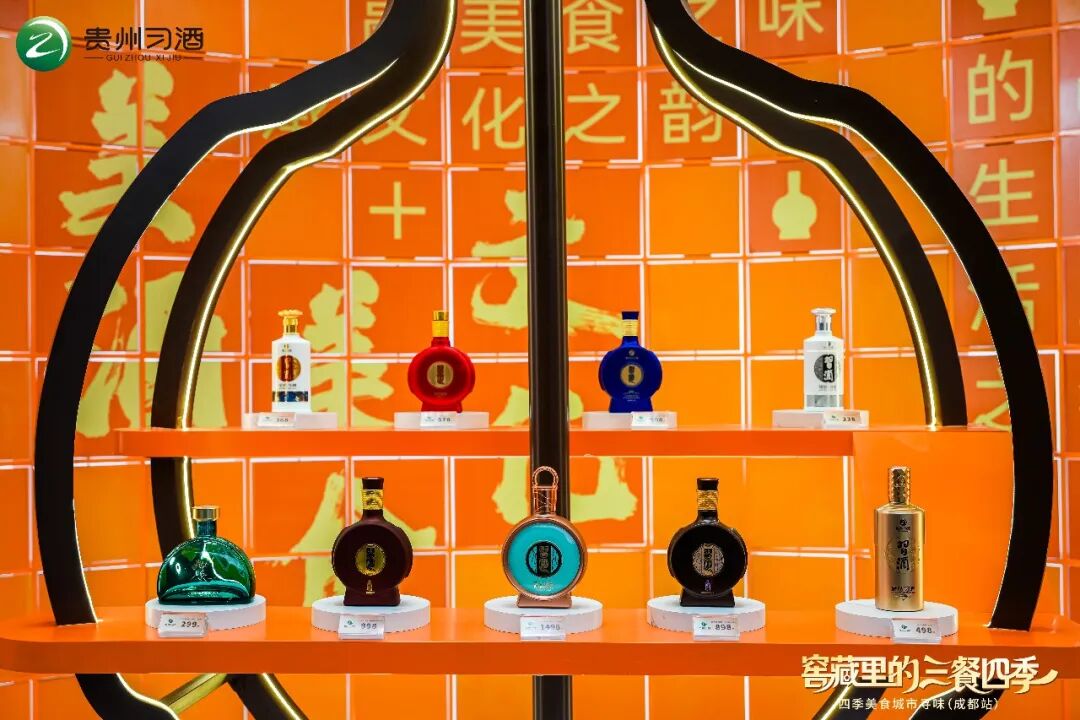
习酒走的是一条轻资产、广覆盖、可复制的路。不自己开店,而是借助美团、大众点评的本地生活基础设施,把赠酒活动嵌入已有的餐饮消费链路。2000家店的覆盖速度,是自建门店模式难以企及的。
Xijiu has taken a different path – one that is asset-light, broad-reach, and replicable. Instead of opening its own stores, it leverages the local-life infrastructure of Meituan and Dianping, embedding the gift-liquor campaign into existing F&B consumption chains. The speed of covering 2,000 stores is unattainable for the self-built store model.
面对”让白酒进入日常餐桌”这个共同目标,包括五粮液、习酒、西凤在内,都是有着共同的目的。其中,习酒的路径在规模化和落地效率做出了新的探索。
Facing the common goal of “bringing baijiu to the everyday table,” Wuliangye, Xijiu, and Xifeng all share the same purpose. Among them, Xijiu’s path has made new explorations in scalability and implementation efficiency.
从”卖酒”到”卖生活”的产业注脚
An Industry Footnote: From “Selling Liquor” to “Selling Lifestyle”
把这件事放到更大的背景下来看,意义会更清晰。
The significance becomes clearer when viewed against the broader backdrop.
2026年7月,贵州省政府办公厅印发《贵州省打造”卖酒向卖生活方式”转变升级版行动方案(2026—2030年)》,提出以酒为媒介、以场景为载体,推动白酒产业业态、产品、经营主体全面升级。在此之前,2025年贵州《政府工作报告》已明确要”加快’卖酒向卖生活方式转变'”,打造10家优质酱酒体验店、提升21个酒旅融合景区、建设5条美酒美食街区。
In July 2026, the General Office of the Guizhou Provincial Government issued the “Guizhou Province Action Plan for the Upgraded Transformation from ‘Selling Liquor’ to ‘Selling Lifestyle’ (2026–2030),” proposing to use liquor as a medium and scenarios as a vehicle to drive comprehensive upgrades across the baijiu industry’s formats, products, and business entities. Prior to that, the 2025 Guizhou Government Work Report had already called for “accelerating the transformation from ‘selling liquor’ to ‘selling lifestyle,'” with plans to establish 10 quality sauce-aroma experience stores, upgrade 21 wine-tourism integrated scenic areas, and build 5 gourmet food and fine wine districts.
省级战略从顶层设计到落地执行,需要一个可量化、可复制、可验证的实践样本。习酒”窖藏里的三餐四季”恰好提供了这样一个样本——40万瓶赠酒、2000家门店、全品系覆盖、全时段开放,每一个数字都是”卖生活方式”这个宏大命题的具体注脚。
A provincial-level strategy, from top-level design to on-the-ground execution, needs a quantifiable, replicable, and verifiable practical model. Xijiu’s “Three Meals and Four Seasons in the Cellar” campaign provides exactly that – 400,000 gift bottles, 2,000 stores, full product coverage, and all-time availability – each number serving as a concrete annotation to the grand proposition of “selling lifestyle.”
在酒业时报看来,习酒这套打法的真正价值不在于短期的销量拉动,而在于它用最朴素的方式回答了行业最核心的焦虑:当商务场景收缩、礼品市场降温,白酒的下一个增长点在哪里?
In the view of JiuYe Times, the true value of Xijiu’s approach lies not in short-term sales stimulation, but in how it answers the industry’s core anxiety in the most straightforward way: when business scenarios contract and the gift market cools, where is baijiu’s next growth driver?
答案是:回到中国人的三餐四季里。
The answer: return to the three meals and four seasons of the Chinese people.
白酒和餐桌的缘分,本就刻在中国人的饮食基因里。过去几十年,行业把太多精力花在了”怎么把酒卖得更贵”上,却忽略了”怎么让酒出现在更多人的桌上”。习酒用40万瓶酒做了一次实验,结果证明——只要把门槛拆掉,白酒在百姓餐桌上的存在感,远比想象中要大。
The bond between baijiu and the dining table has long been etched into the dietary genes of the Chinese people. Over the past decades, the industry has spent too much energy on “how to sell liquor at higher prices” while neglecting “how to get liquor onto more people’s tables.” Xijiu has conducted an experiment with 400,000 bottles, and the results prove – once you remove the barriers, baijiu’s presence on the people’s table is far greater than one might imagine.
这或许才是”窖藏里的三餐四季”升级背后,最值得整个行业深思的东西。
This is perhaps what lies behind the upgrade of “Three Meals and Four Seasons in the Cellar” – the thing most worthy of deep reflection for the entire industry.
原创文章版权归本网所有;转载文章归原作者所有。发布者:酒业时报,转载请注明出处:https://www.thewinetimes.com/gongsi/11602